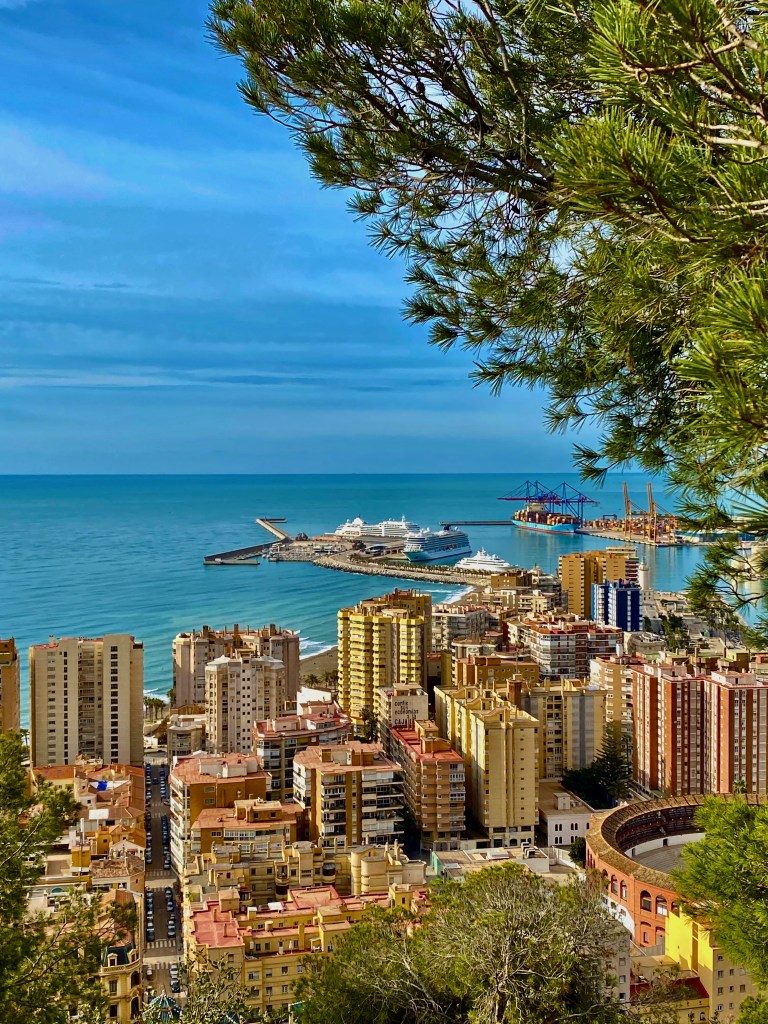
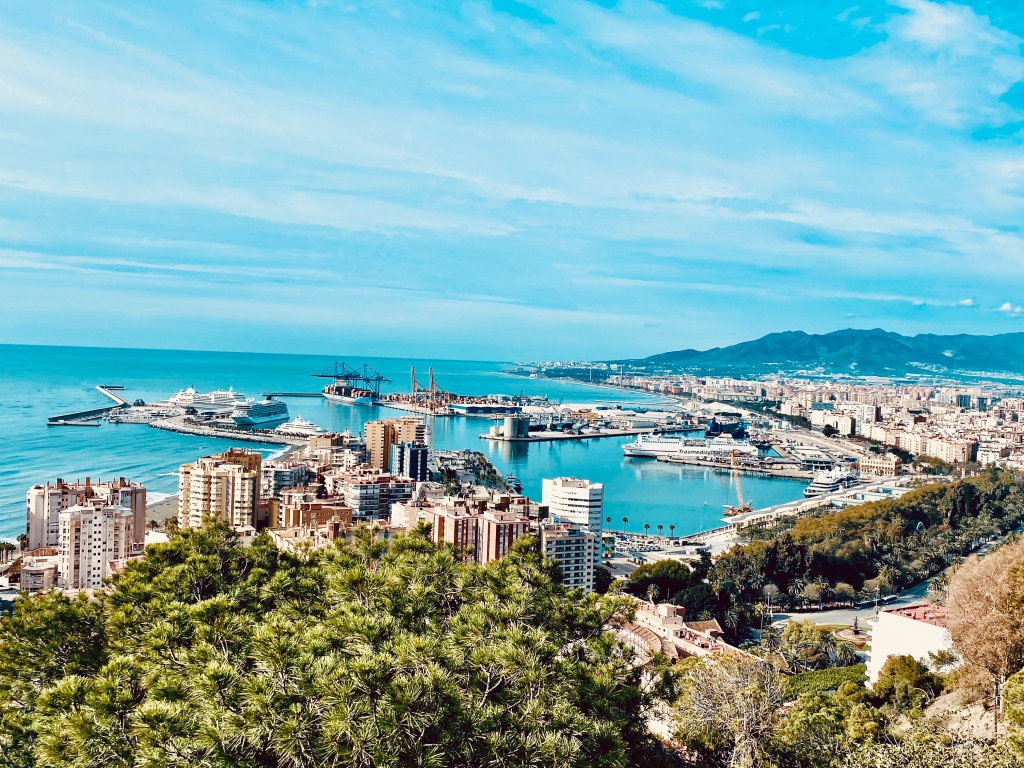
Málaga is a municipality of Spain, capital of the Province of Málaga, in the autonomous community of Andalusia. With a population of 578,460 in 2020, it is the second-most populous city in Andalusia after Seville and the sixth most populous in Spain. It lies on the Costa del Sol (Coast of the Sun) of the Mediterranean, about 100 kilometres (62.14 miles) east of the Strait of Gibraltar and about 130 km (80.78 mi) north of Africa. (Wikipedia)
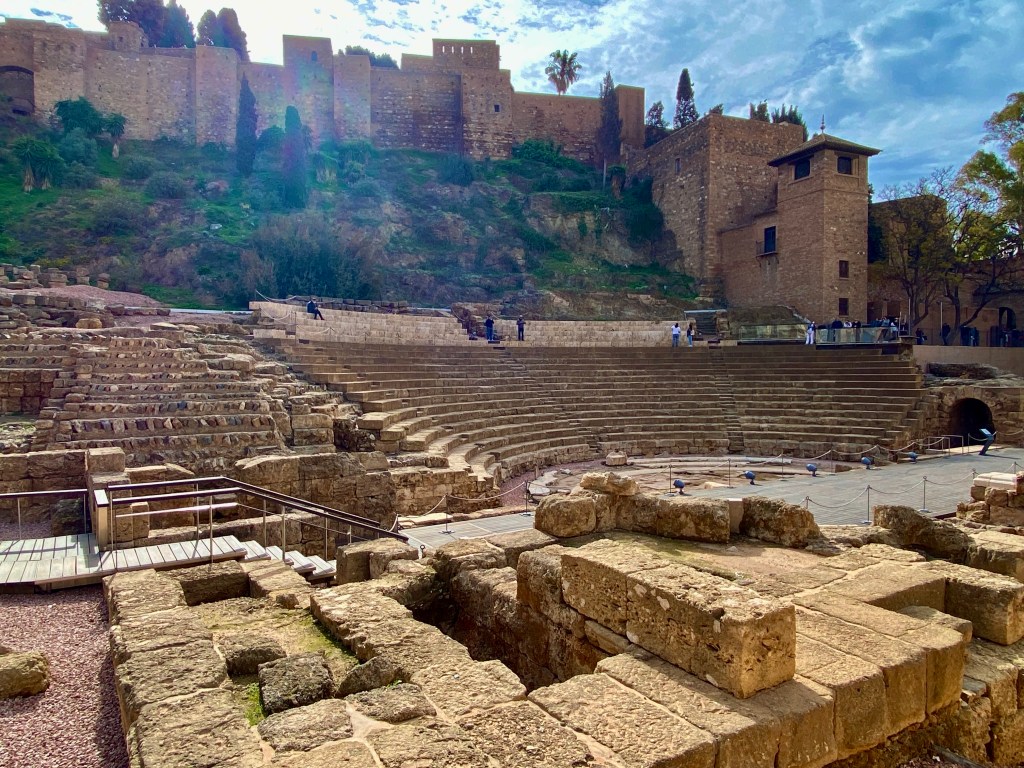
Most of Spain was under Roman and Moorish rule as evidenced by its distinct architecture. After the fall of the Roman Empire, most of Iberia came under the Moors. The archaeological remains and monuments from the Phoenician, Roman, Arabic and Christian eras make the historic center of the city an “open museum”, displaying its history of nearly 3,000 years.
Our tour started with a crisp salty breeze that women would consider “bad hair day“! The temperature was in the high-50 degree Fahrenheit and sunny; however, as the day progressed El Sol was hiding that it was necessary to put our jackets back on again. But this did not deter the tourists and families from eating al fresco enjoying tapas y vino. It was a Sunday so there were a lot of people just wandering about even though most shops were closed.
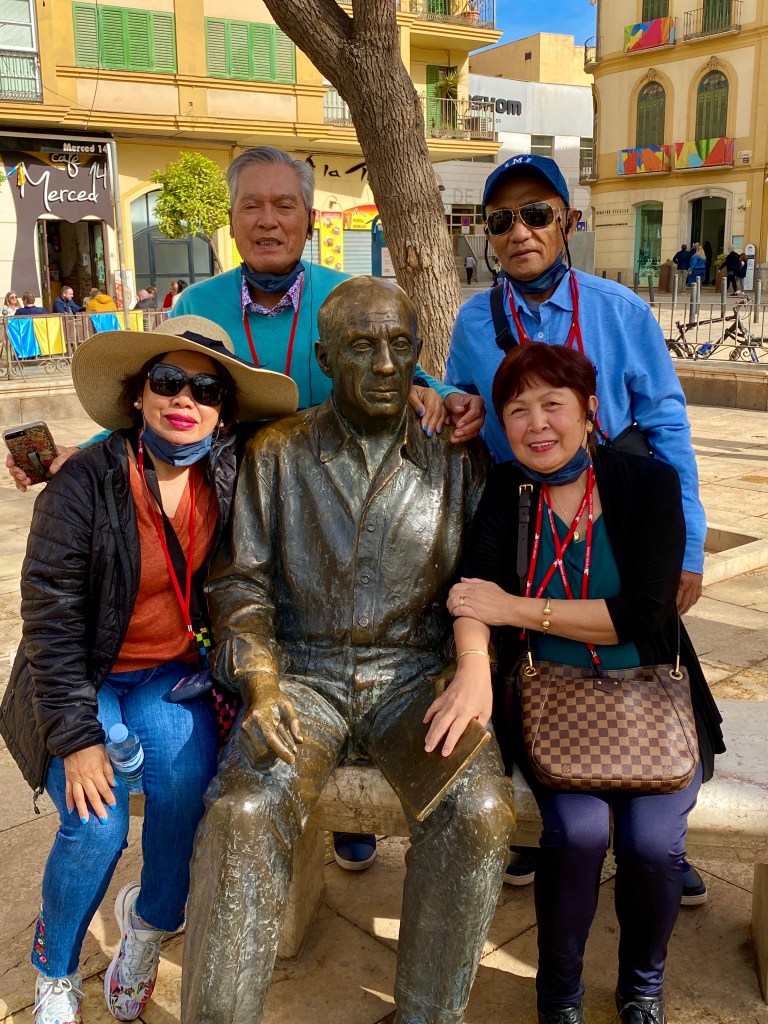
Pablo Picasso was a prolific artist, producing both classical and innovative works, including painting, prints, ceramics, sculpture and experimental forms. He helped developed cubism.

We wandered around the city meandering through its narrow cobblestoned streets. We spotted a tiny restaurant advertising tapas. A gentleman whose name is also Carlos welcomed us and luckily he spoke English (like most business owners). We ordered three types of tapas (fish, adobo and octopus) and bread. The place was empty when we went in but soon was packed and everyone was standing with barely an inch to move about. We finished our tapas and paid the bill and left as fast as we can as we were not comfortable with so many unmasked customers around!
During our exploration of the city, we saw many of the ship’s crew that was able to go ashore before going back aboard to resume their duties as waiters/waitresses, housekeepers, bartenders, cooks, etc. I will try to talk more about these hardworking folks and their sacrifices so they can earn a living at the expense of separating from their loved ones for months or even years at a time. By the way, we’ve been on different cruise ships and it is not a coincidence that the majority of the crew come from the Philippines. They are very industrious, smart and speak English fluently and are skilled seamen.

Shopping is mandatory for Trini and Oya. They browsed the colorful scarves and other female accoutrements while Tommy and I stood around watching and admiring the stylishly fashionable senoritas pass by. The delicious aroma emanating from bakery shops was irresistible that we couldn’t help but go in and try free samples of their products (no, we didn’t buy any, we decided to wait until Barcelona).

Our bus and walking tour took more than three hours taking us to the scenic and historic spots of the beautiful ciudad. It has certainly evolved into a modern metropolitan city since I last set foot more than 40 years ago. Unfortunately, our elderly female tour guide seemed to be suffering from COPD that it was difficult to understand her accented English due to her raspy wheezing voice. She also was not physically fit to walk as we obviously did not go to some parts of some spots that fellow cruisers from another bus visited. The tour guide also was quick to light a cigarette whenever she had a chance.
As I write this blog in bed, the ship is rolling and yawing so bad due to the high waves that Trini was scared to go eat in the restaurant as it was difficult to walk on the deck. So we ordered room service for lunch and may have to do that for dinner again. We are at sea again and will arrive in Valencia (home of the famous paella) tomorrow morning.
As a side note, the Spanish actor, Antonio Banderas is also from Malaga.


 The Senior Travelers' Blog Site