SAN JUAN, PUERTO RICO

Five centuries ago, San Juan was an impenetrable fortified city. Today, it is the capital of Puerto Rico and one of the top destination in the Caribbean welcoming visitors from all over the world! The captivating natural beauty of PR, its vibrant culture and old-world elegance is what attracts tourists from all walks of life.
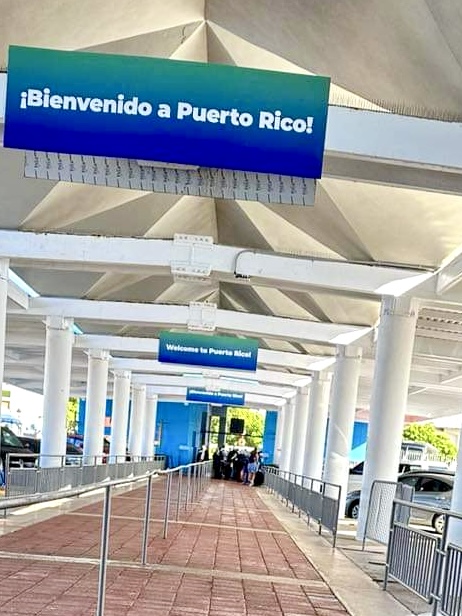
We ended our Caribbean cruise finally and even though we were tired and wanted badly to go back home we still had to stay in San Juan since we purchased an extra 2-day post-cruise (non-refundable). However, we felt re-energized upon seeing our hotel and where it was located! We were booked at Hilton Caribe (4 Star hotel). It is situated right along the turquoise bay with amazing amenities. A very spacious room with an awesome vista of the Atlantic. It included a buffet breakfast with great coffee (very important to me).
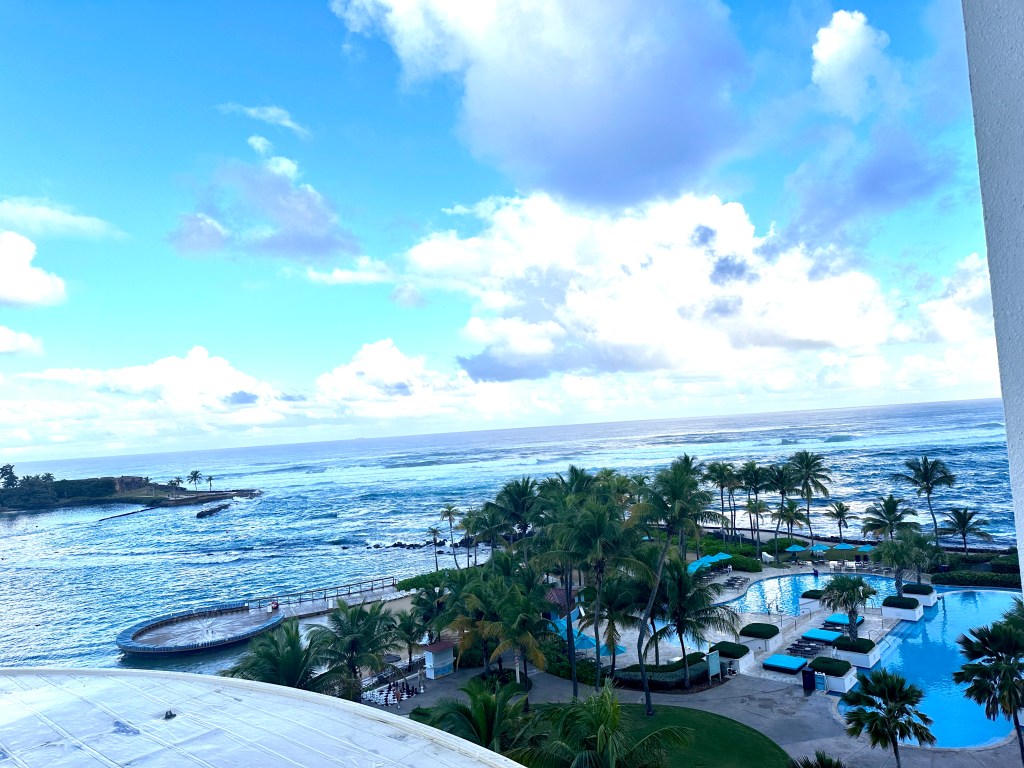
The view from our room before the sun-worshippers woke up

As soon as we checked in, we called a cab and went to Old Town San Juan to explore it one more time. I asked the driver if it was going to rain and he said, “No, but it will tomorrow and the next day”. I asked him where we can try their local delicacy, the mofongo. This was recommended to us by a customs inspector who was very chatty with us. He engaged us in a lengthy conversation as soon as he found out we were Filipinos (he knew a few Tagalog words). The more he became friendly when I told him I was a retired senior chief in the navy. He said he also served in the navy!

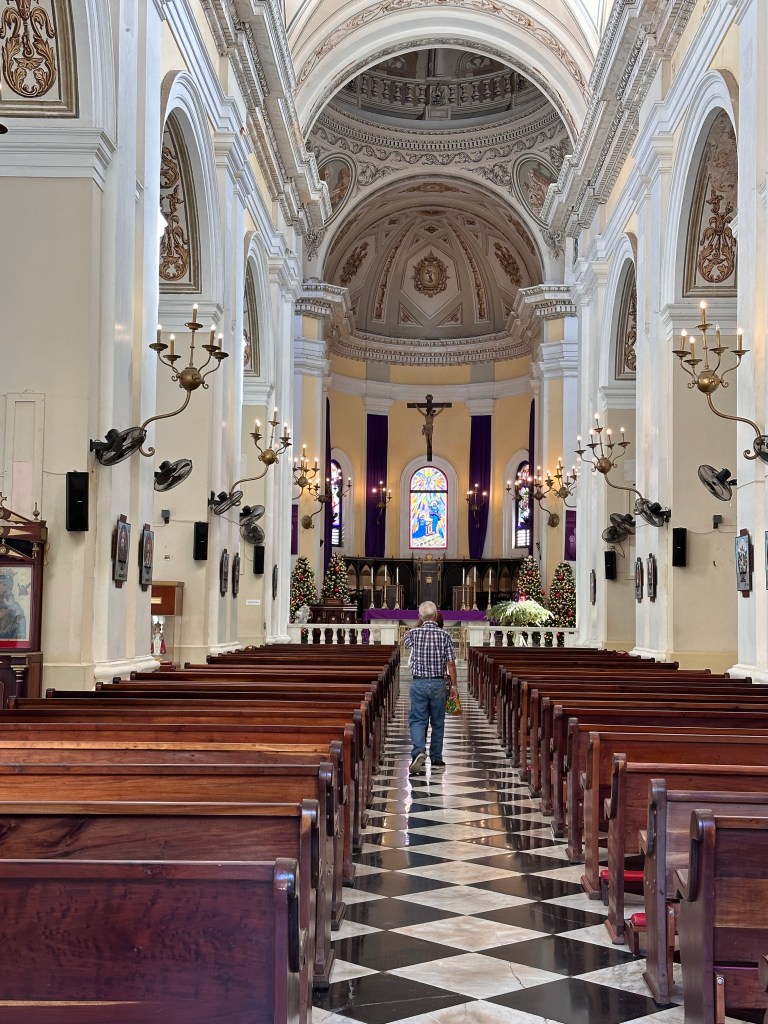
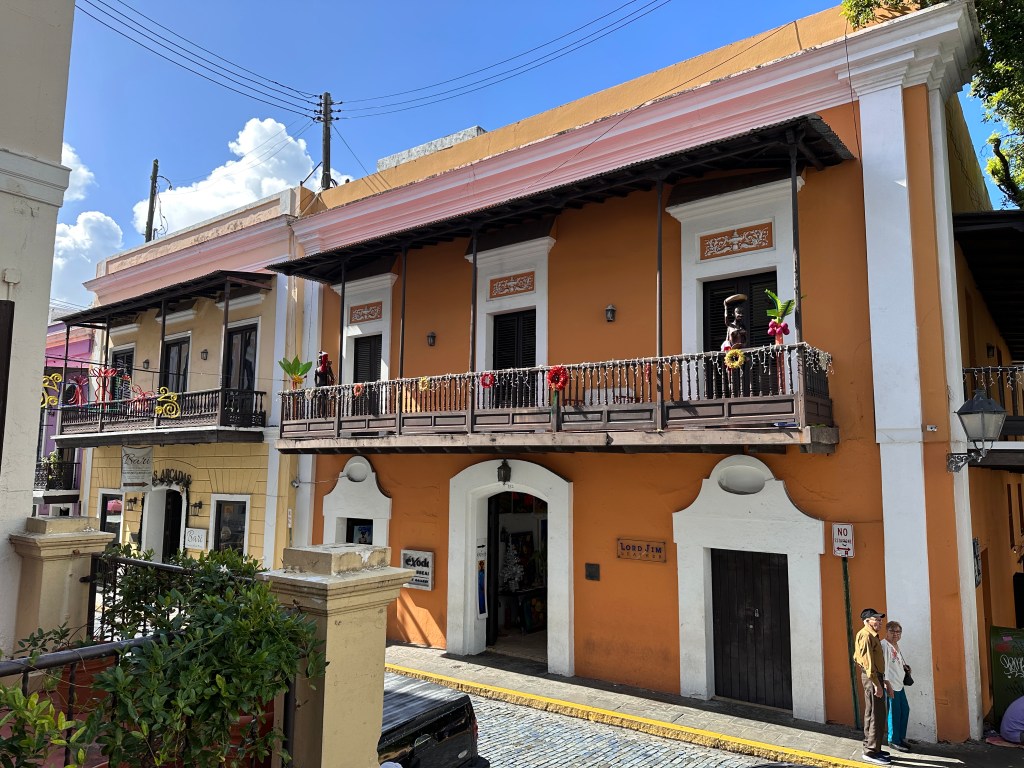
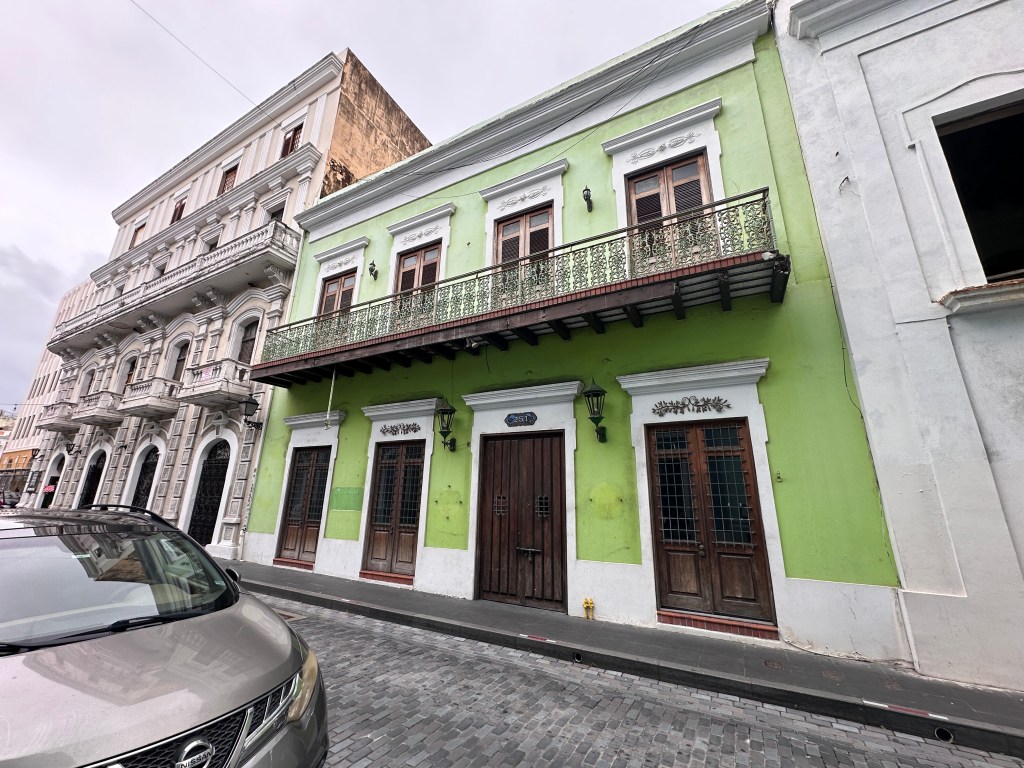
The cab driver dropped us off in the center of San Juan Viejo (Spanish for old). We saw a cathedral and the three went inside while I stayed outside and listened to the guide of a walking tour explaining the history of the cathedral. I noticed a strong resemblance of the historic buildings all over with those in Bourbon Street in New Orleans, Louisiana. Balconied two-story edifices with rustic looks.
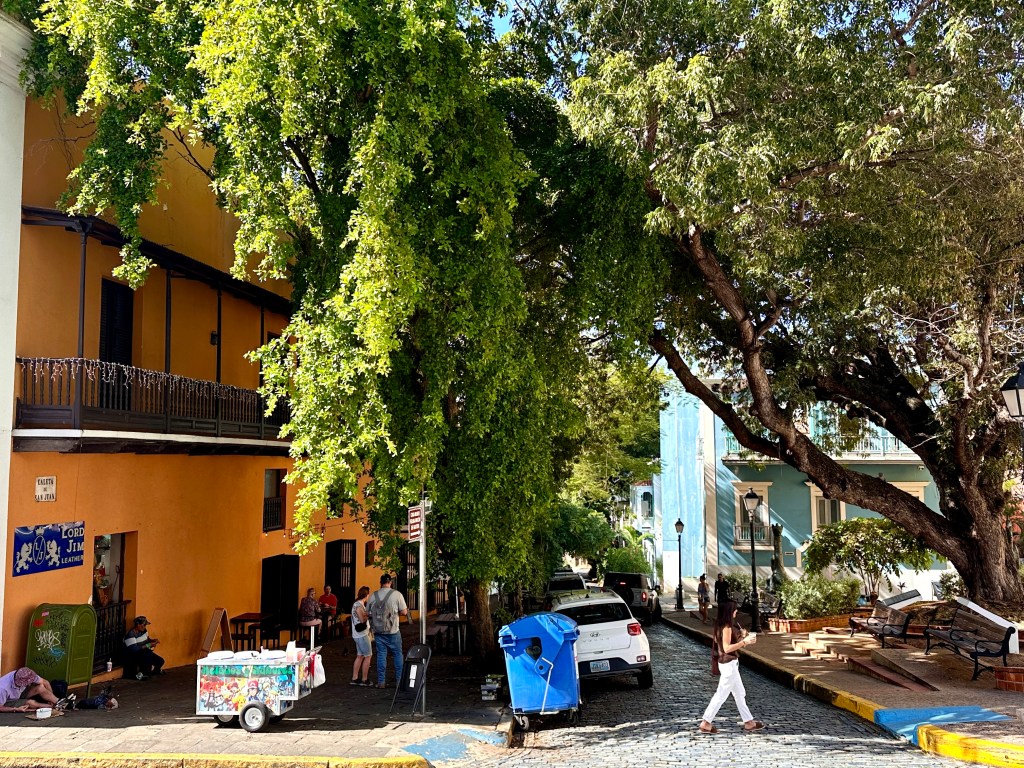
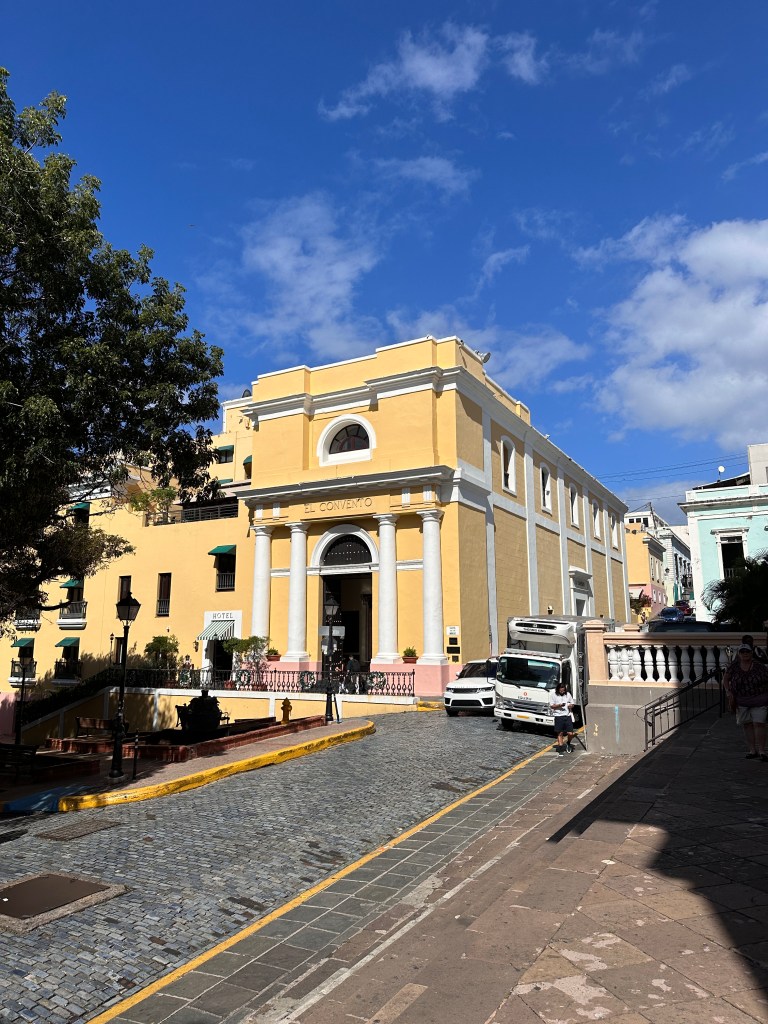
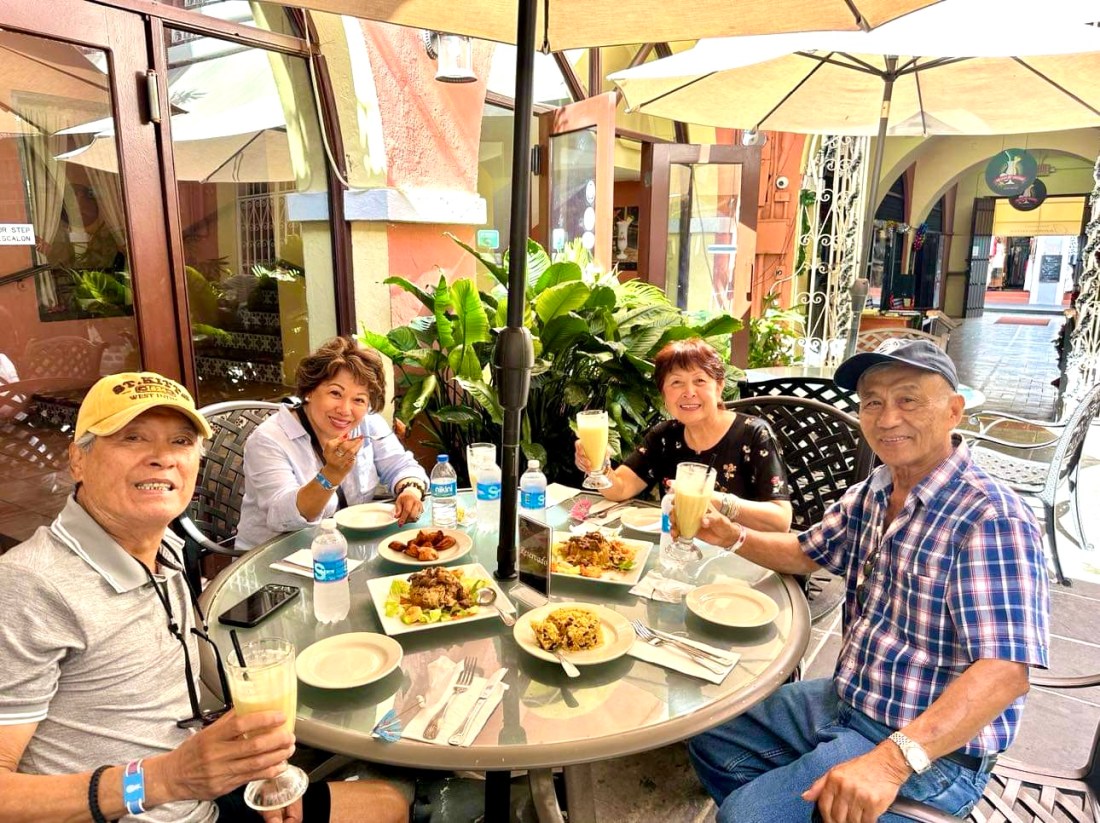
Ruben, our cab driver recommended a restaurant – Barrachina – where we can taste the mofongo.Mofongo is a dish with mashed plantain as its main ingredient and can be ordered with any meats, shrimps, fish or a combination. We ordered the combination. We also ordered refreshing piña coladas. The bartender used Don Q rum which was better than the popular Bacardi. We had a great meal and I noticed Oya getting a little tipsy from the rum so she handed her unfinished cocktail to Tommy. After lunch, we went walking and were barely in the historical site when it started to rain!

We took shelter under the trees but had to move to the buildings as the eaves protected us better. We were wet and cold so I called Uber but the app showed the first driver cancelled then the second driver seemed to take forever to arrive. First, it showed 8 minutes, then 10 minutes, then 13 minutes – counting up not down! So I cancelled the ride. Luckily, Ruben (our taxi driver) gave Oya his number so I called him and he picked us up after almost half hour. In the meantime, we were all shivering like wet kittens under the building.

As soon as I got inside the cab, I told Ruben, “I thought you said it was not going to rain”. He replied, “It stopped now, right”. Grrrrr!

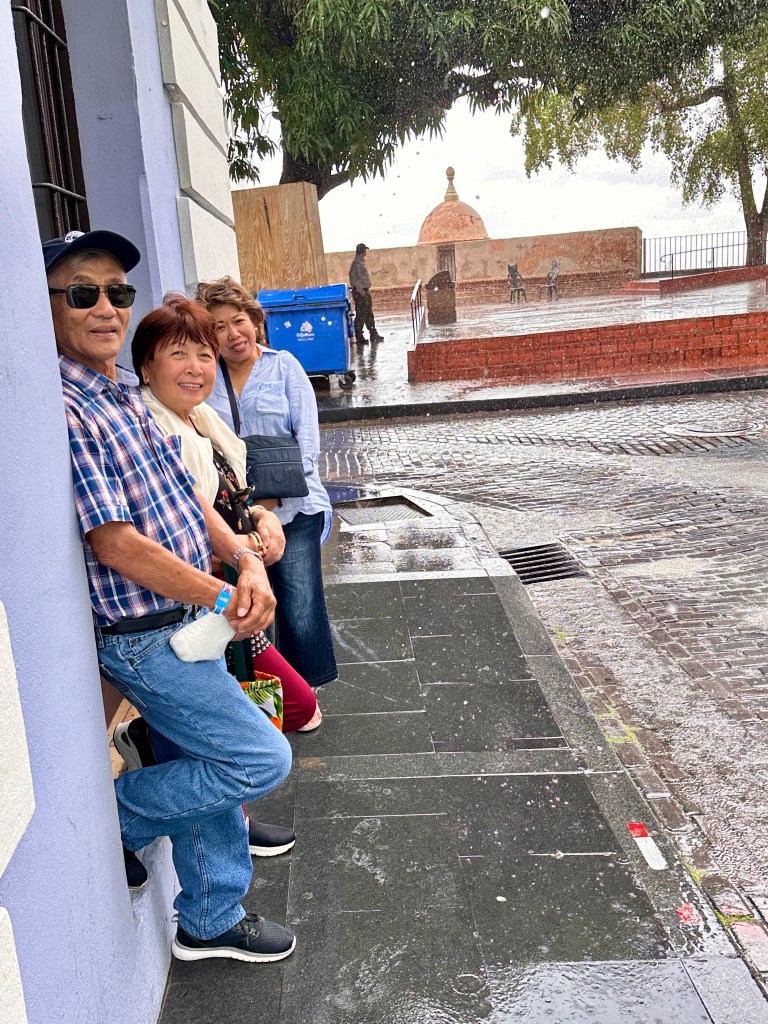
Taking shelter from the rain while waiting for our taxi

Cold and wet, we went back to the warmth of our hotel rooms but the A/C didn’t help so I turned it off. We took a nap and decided that we will go explore and look for a grocery store where we can buy bottled waters. At this time, it wasn’t raining and the sky was clear. We saw winter visitors all over the place enjoying the warmer weather (compared to those in the US). Bikini-clad shapely women basking in the sun. A much better view from the pool deck of the Viking where more than 95 percent of the cruisers were senior citizens (no offense). =)

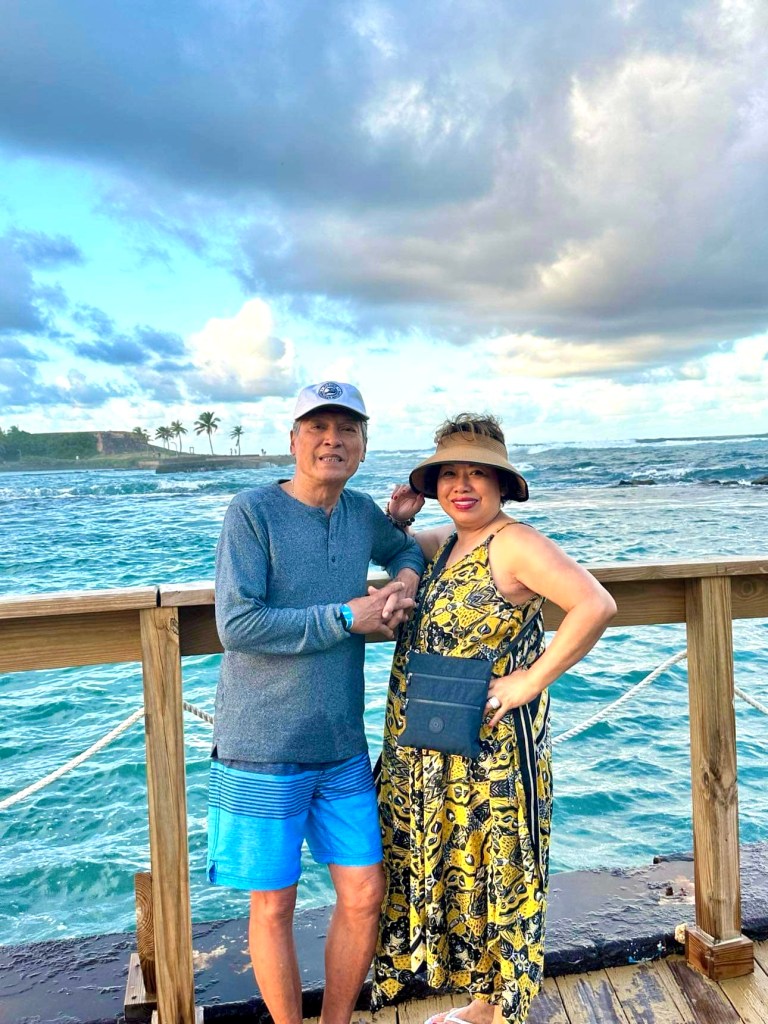
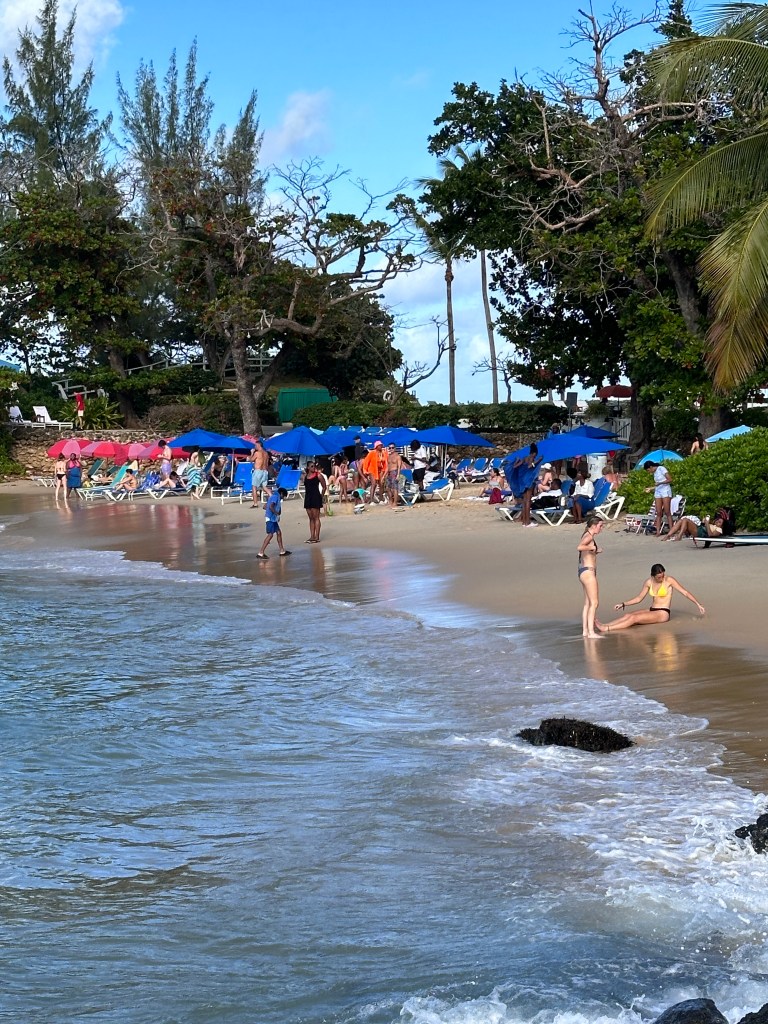
Slowly we walked back to our hotel while admiring the coastal view and observing the tourists that seemed not to have a care in the world, fully enjoying their vacation. Younger folks boldly speeding with their rented Segways and others nonchalantly pedaling through the sidewalks. A bare-chested man in dreadlocks pulling his wares in a cart while latin music is blaring from his boom box. A family of four with cute toddlers holding the city map pretending to navigate to their unknown destinations. What more can one ask in life?

The restaurant where we had the mofongo and piña coladas

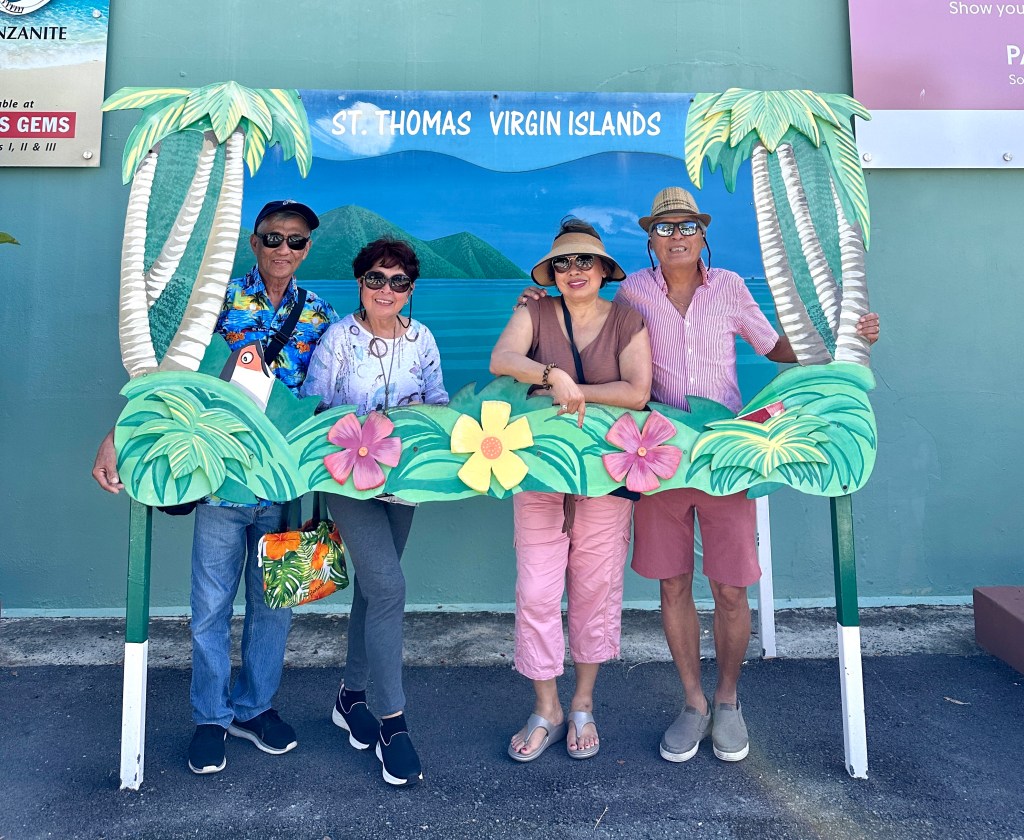
ST. THOMAS, US VIRGIN ISLANDS

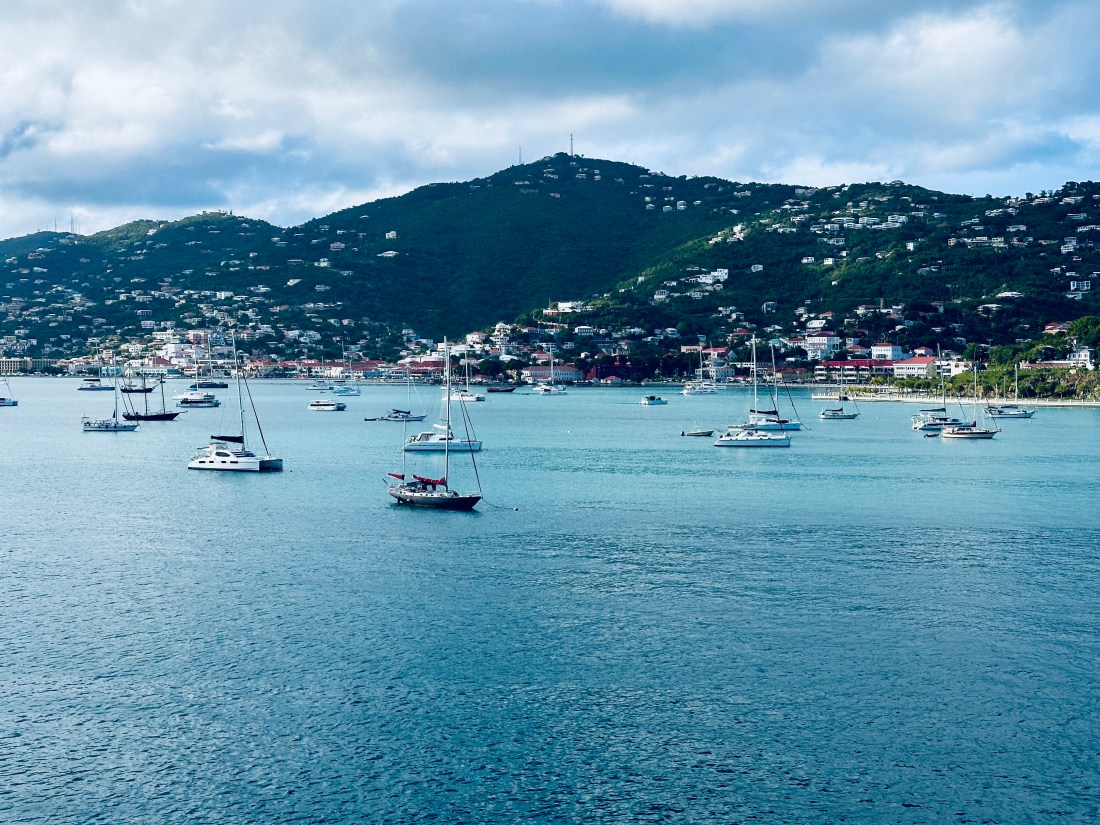
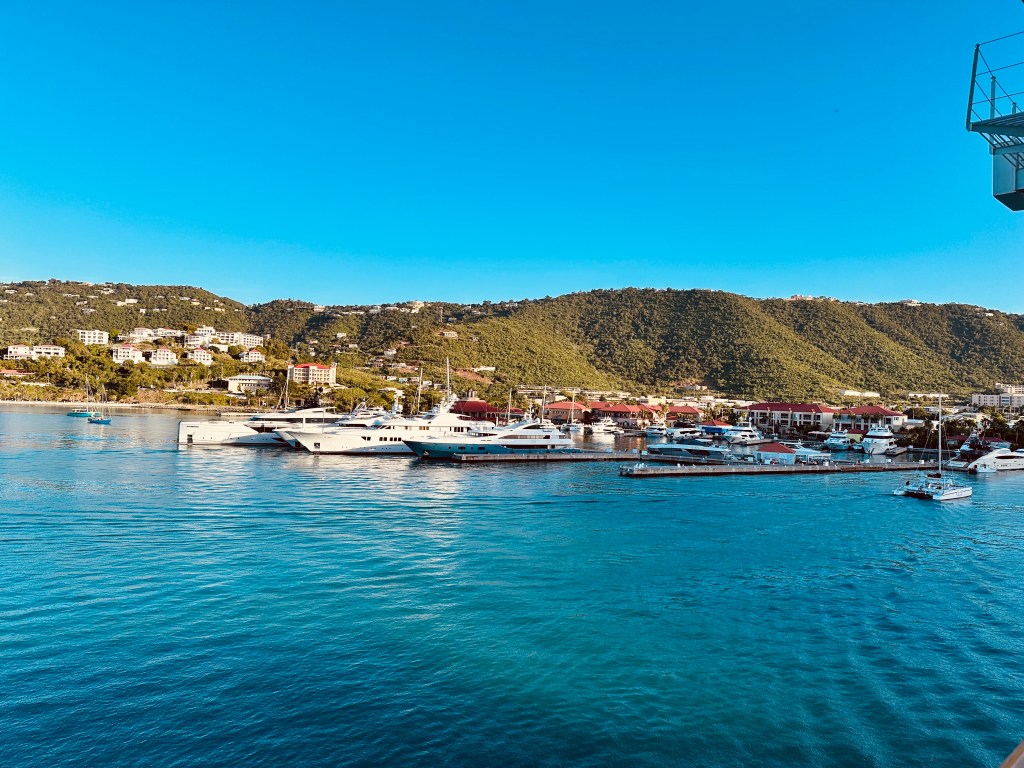
Viking saved the best for last! We pulled in at 7:00 AM in Charlotte Amalie, the capital of the island of St. Thomas. It was carbon copy of yesterday’s beautiful weather – sunny and low-80’s temperature! St. Thomas was purchased by the United States from Denmark in 1917 (I’m glad they did).

St. Thomas is the gateway isle of the U.S. Virgin Islands in the Caribbean. It’s known for its beaches and snorkeling spots. Territorial capital Charlotte Amalie, founded by the Danish in the 1600s, is a busy cruise-ship port. Historic buildings include a 1679 watchtower called Blackbeard’s Castle, in reference to the area’s pirate history. On the harbor, 17th-century Fort Christian is now a local-history museum. ― Google

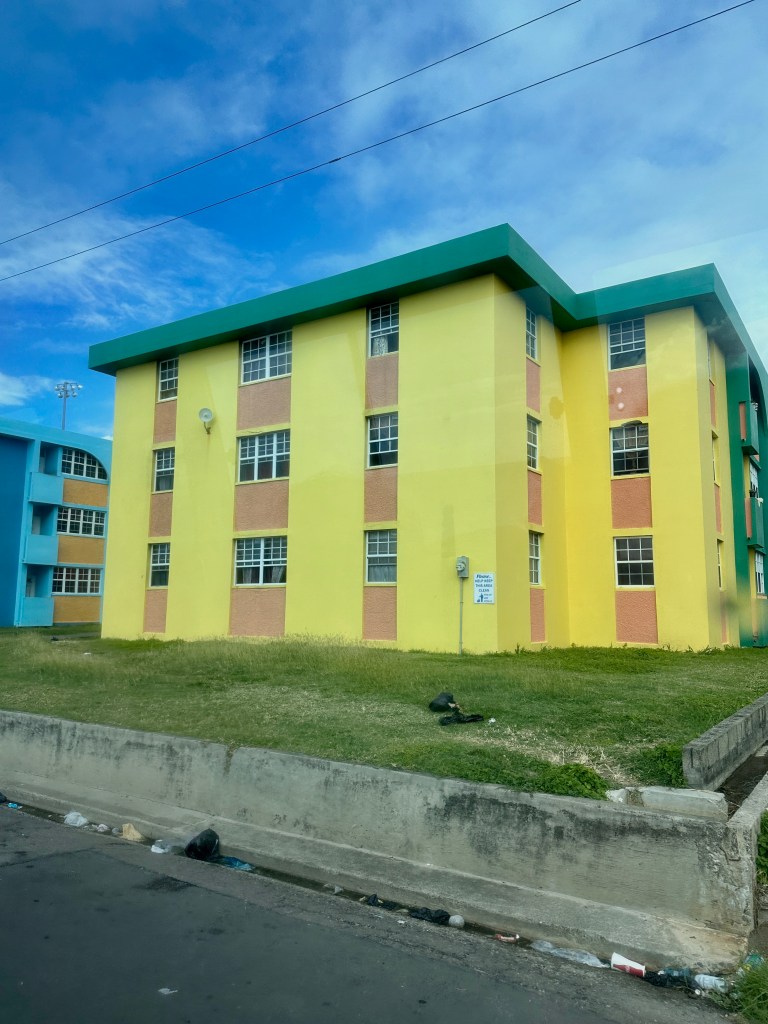
This island is really a paradise and this was so far the best island we visited among all the ten. The roads are well-paved and properly painted median lines. Pastel-hued buildings well kept including the government housing row! I have not seen a single graffiti and virtually no trash along the streets.

What I don’t understand is why do they still drive on the left side if it is a US territory? =)

Our female driver/tour guide Nisla, took us through a scenic drive along one of the most breathtaking routes on St. Thomas. Much of the island’s beauty lies in its endless undulating hills spilling down to stunning bays shining in a hundred shades of blue affording us fantastic views of the Caribbean and Atlantic Ocean!

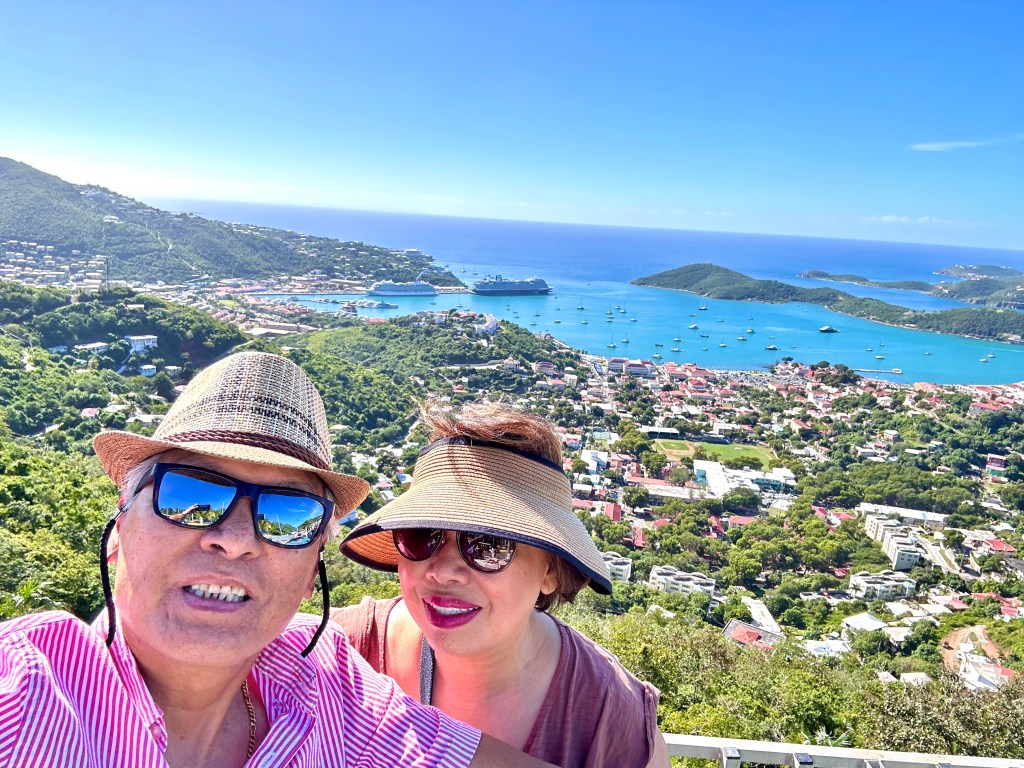
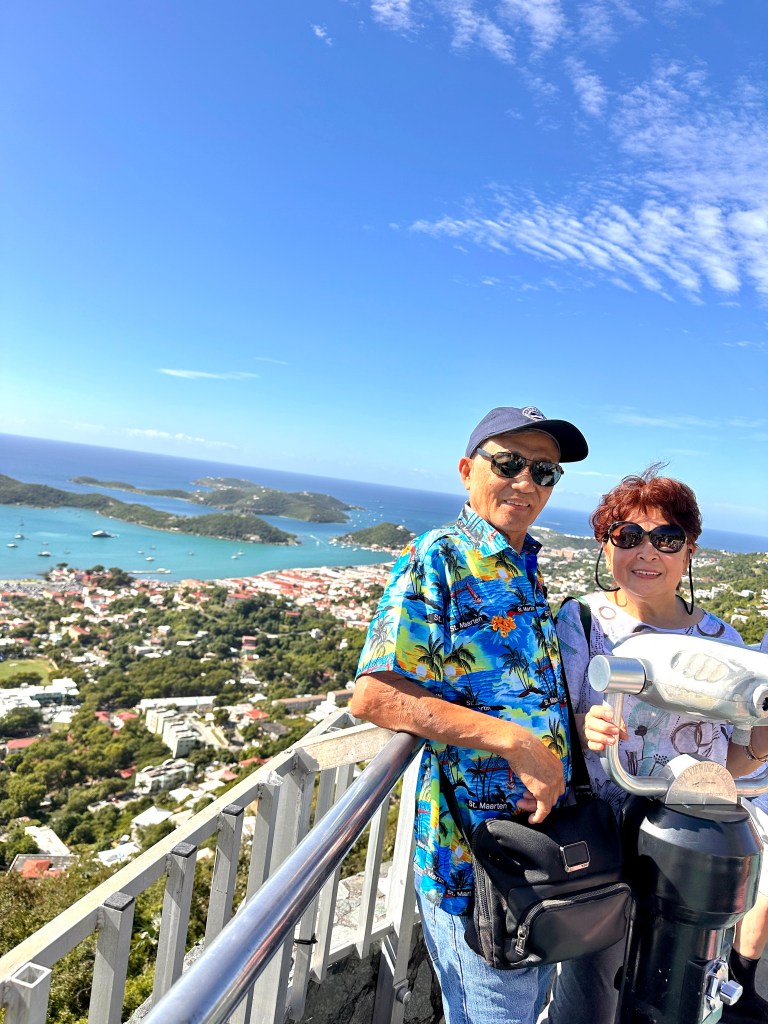
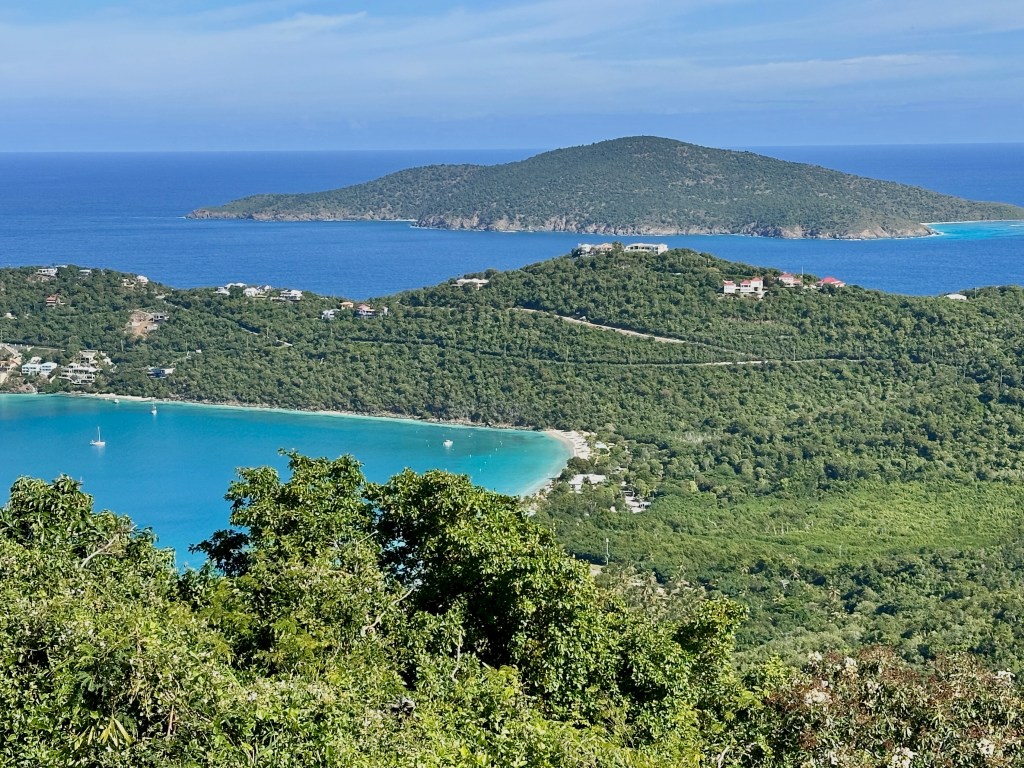
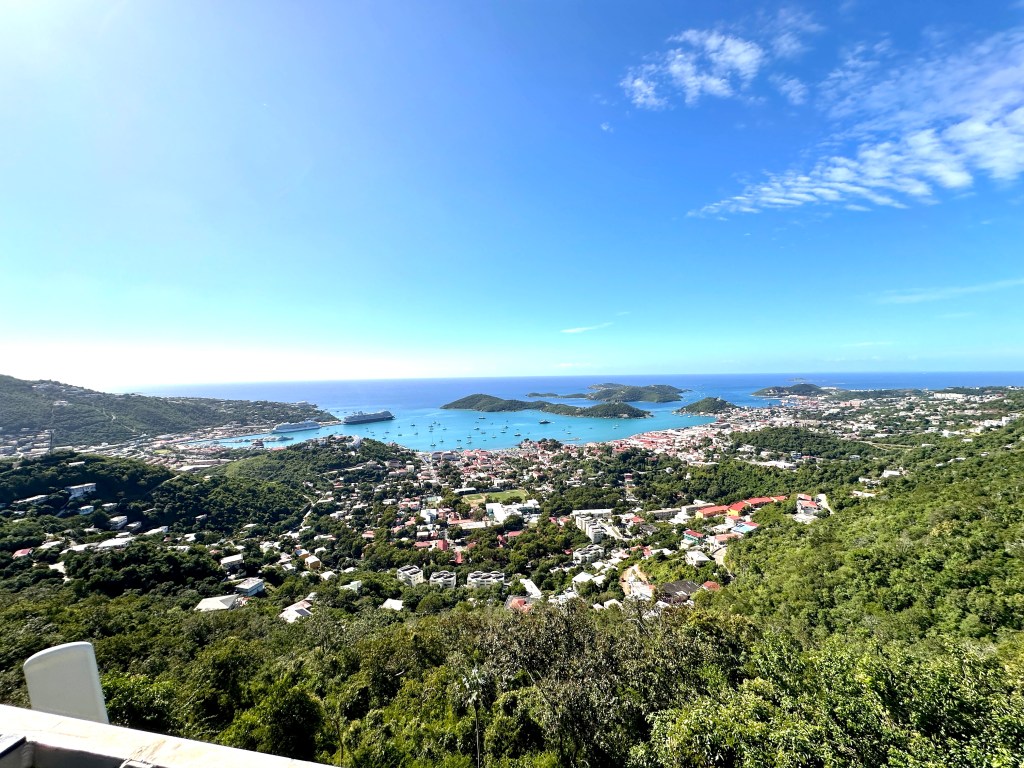
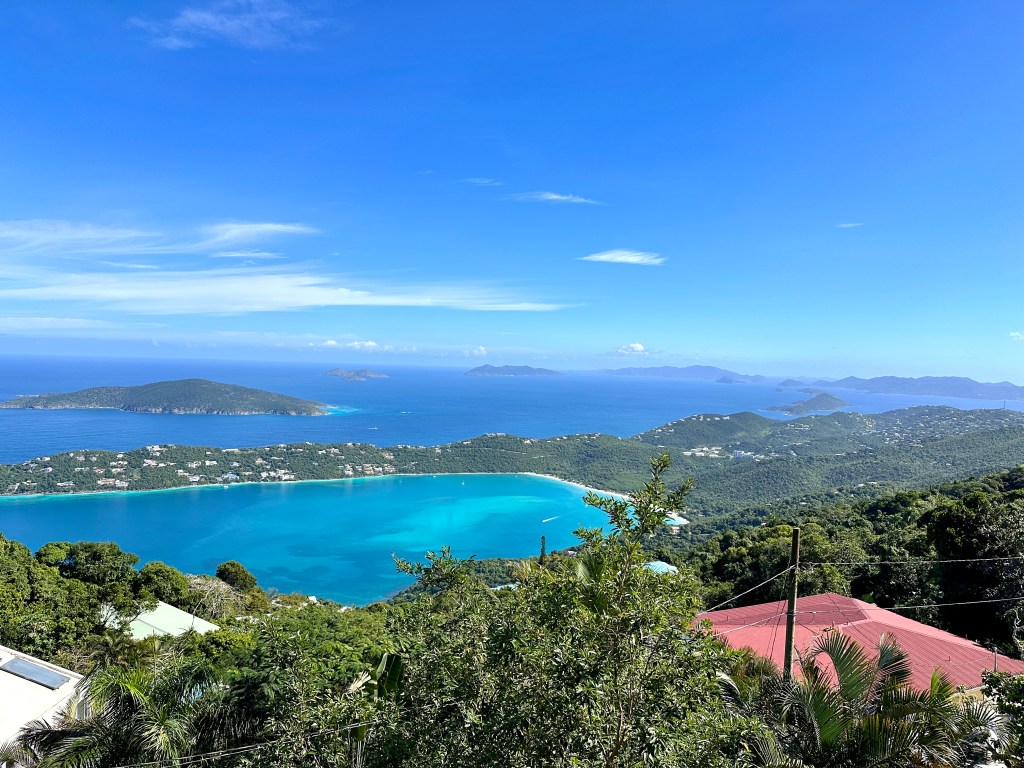
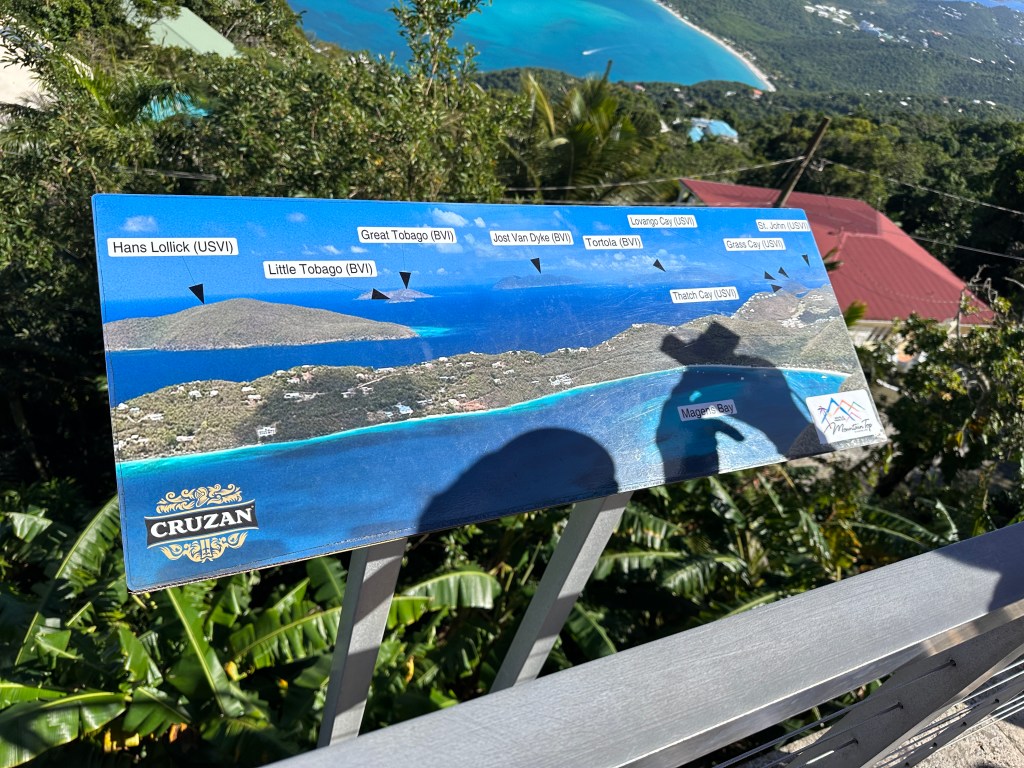
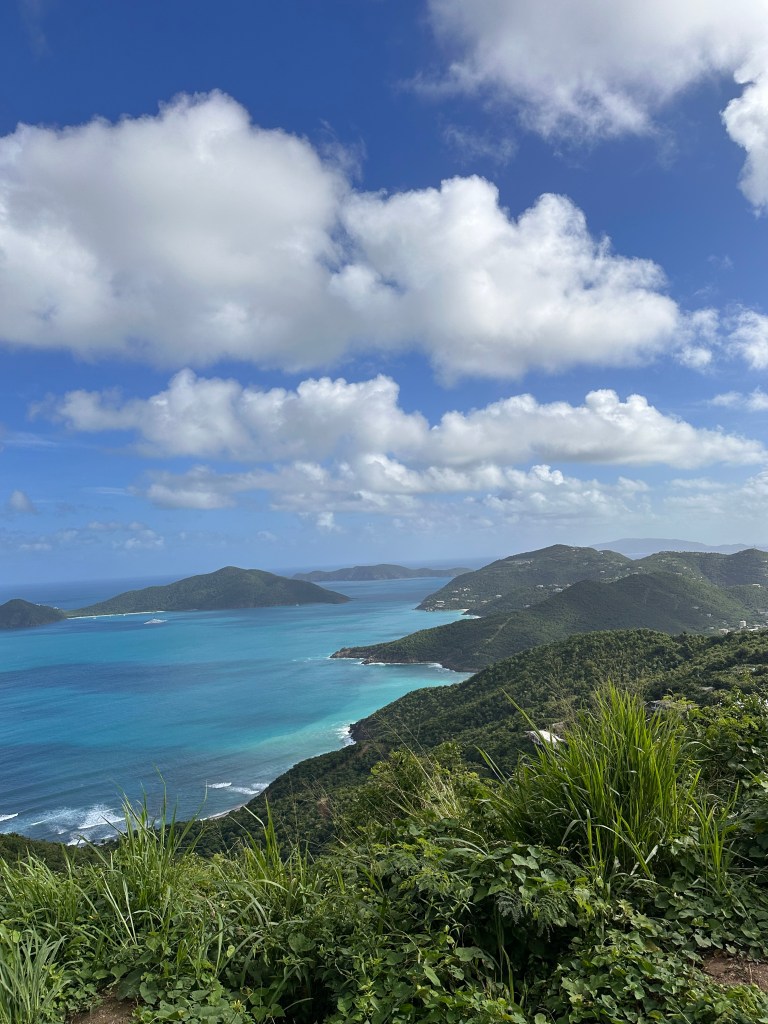
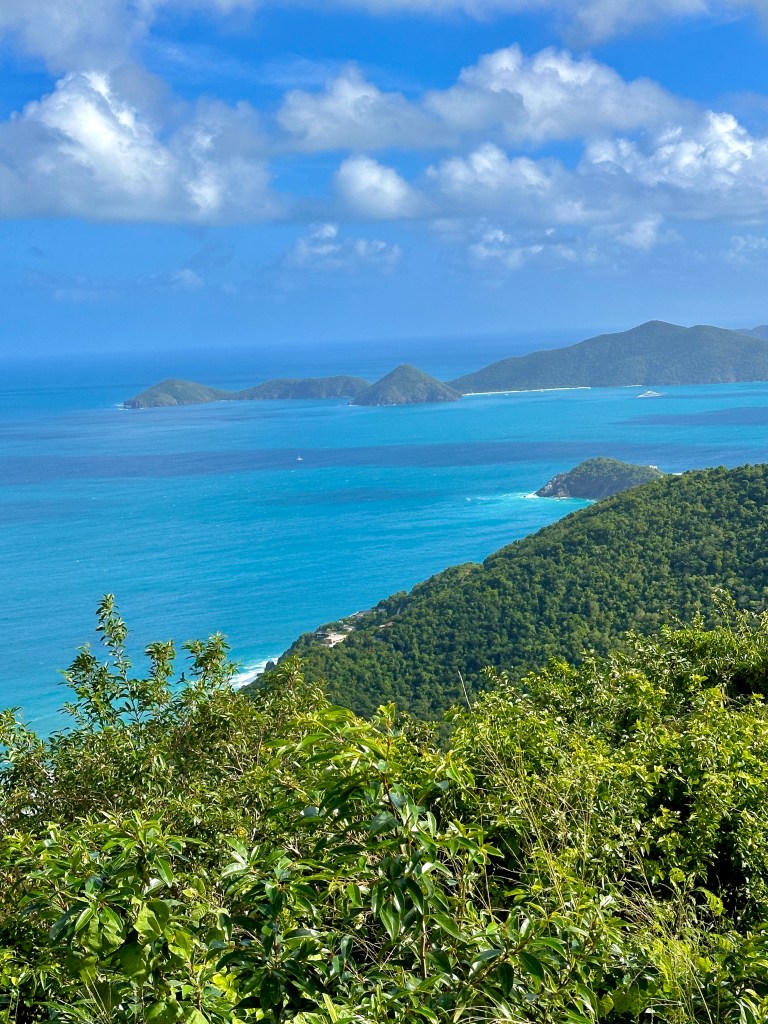
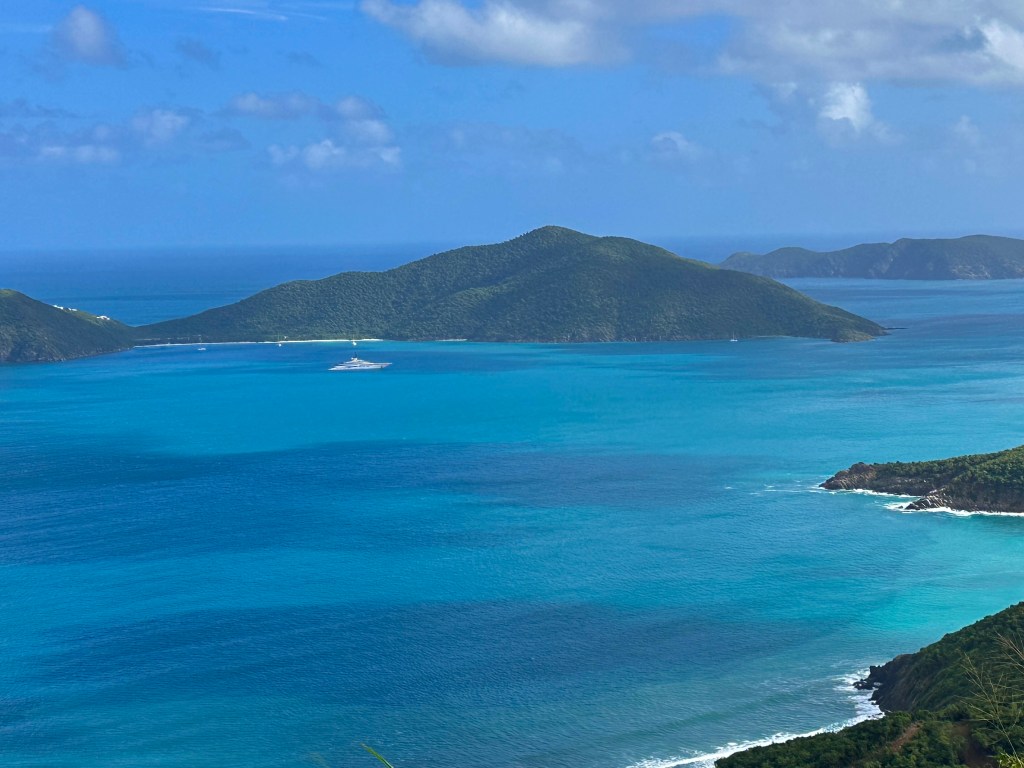
The last stop we did was the world-famous Mountain Top, 2,100 feet above sea level where we admired the spectacular views of Magens Bay and the British Virgin Islands. If we were this close to Tortola why did it take us overnight to reach St. Thomas? =)

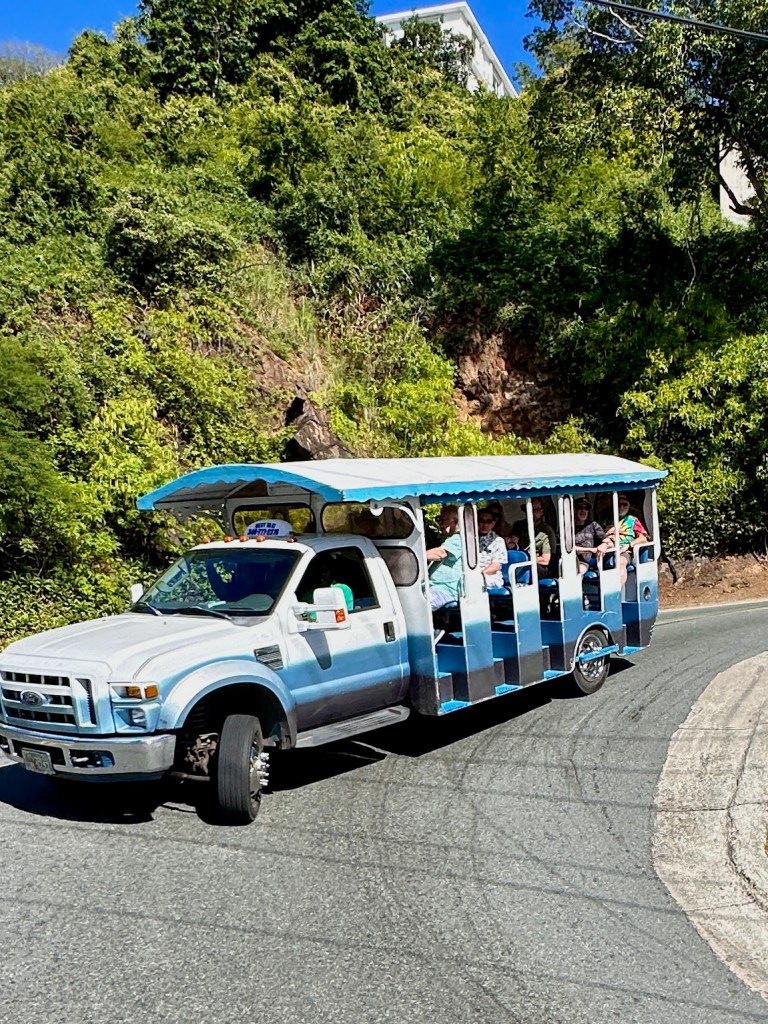
We reached the Mountain Top along with a dozen other tourist safari trucks and small roundabout in front of the Shopping Center/View Point was a little chaotic. However, the drivers enforced their own traffic rules and made the trucks move this way and that way in order for other trucks to maneuver about! No shouting, just signals and beep-beep communications!

Tortola (British Virgin Island) is in the upper right hand corner of above photo

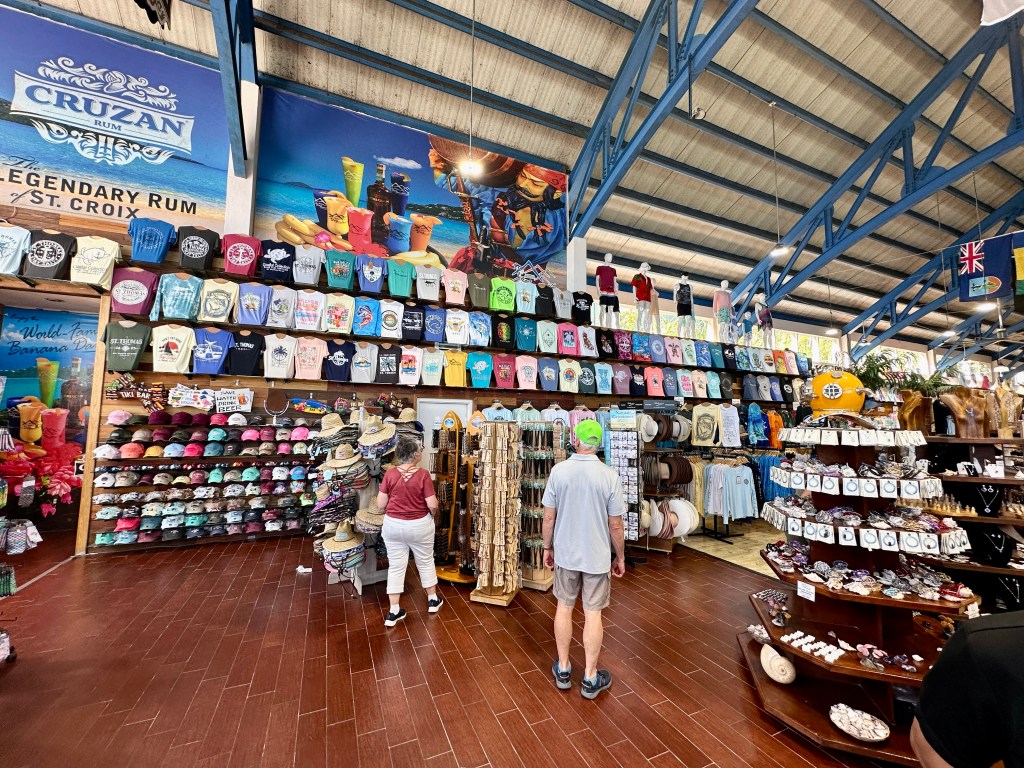
After feasting our eyes with the panoramic vista, I lined up for the much-touted banana daiquiri they claim to be the world’s best! After a couple of sips I wanted to tell the bartender what I thought about their cocktail but decided to keep my mouth shut!

Over 7 million suckers fooled!
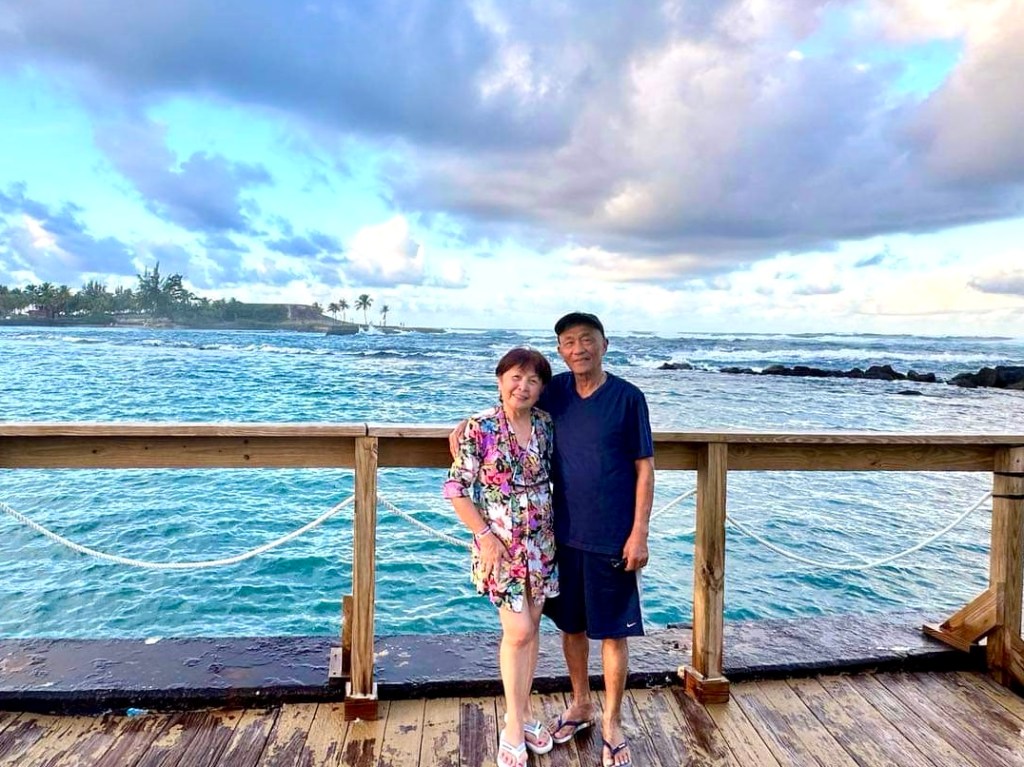
A Filipino couple from New York – Pro and Nanette

We’ve finally reached the end of our cruise although we purchased a two-day post cruise to stay in San Juan, PR. We tried to cancel but were told we will not be reimbursed for the paid 2 days.

While we were greatly disappointed with the itinerary changes – the main reason most cruisers booked was the Amazon River portion – we’re glad we continued on with this cruise. Not the best cruise we’ve experienced but in some ways it was an enriching one. I just had to open my mind and my heart.

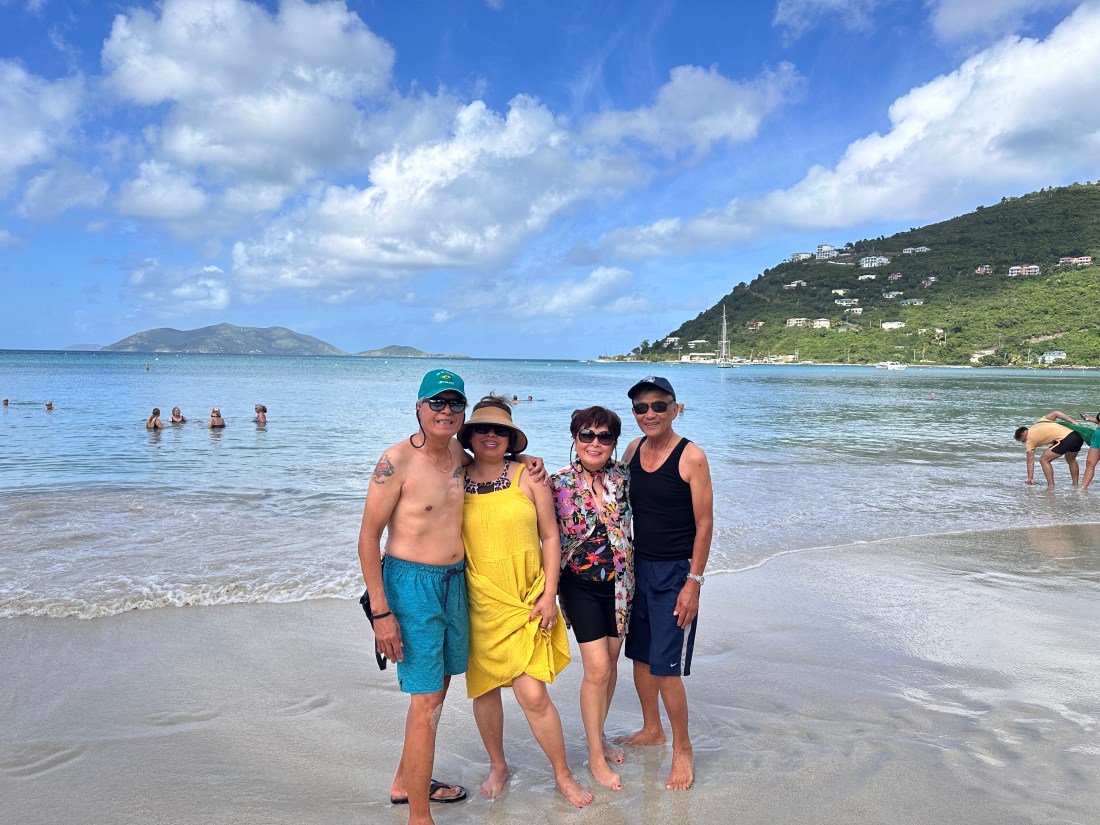
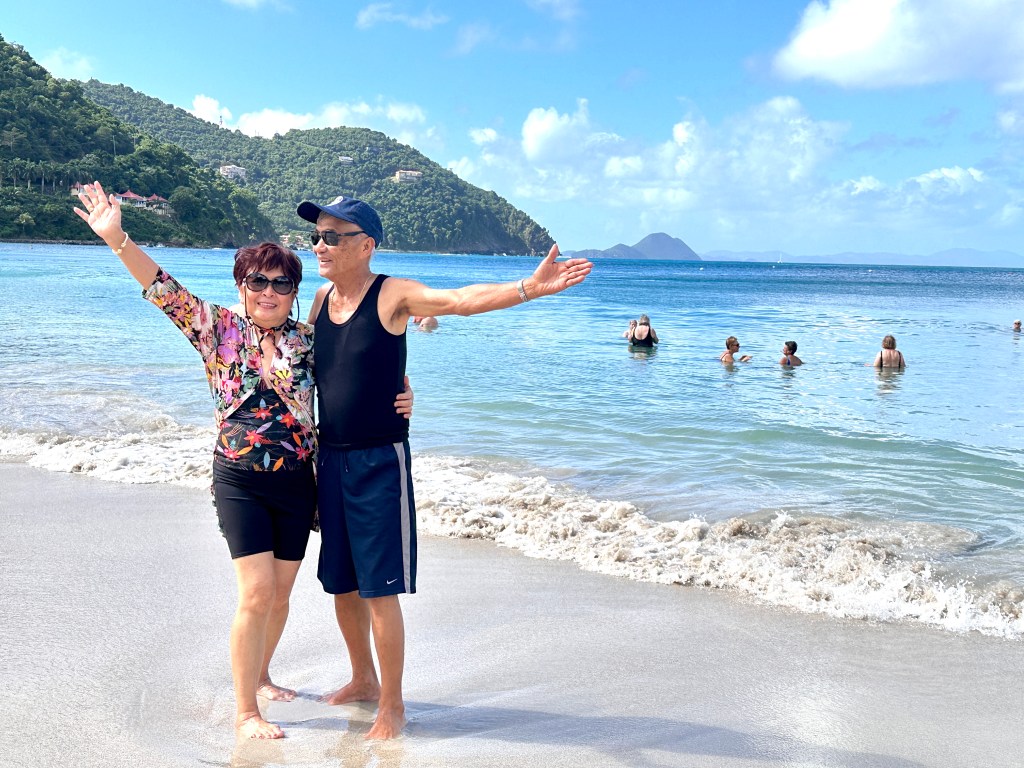
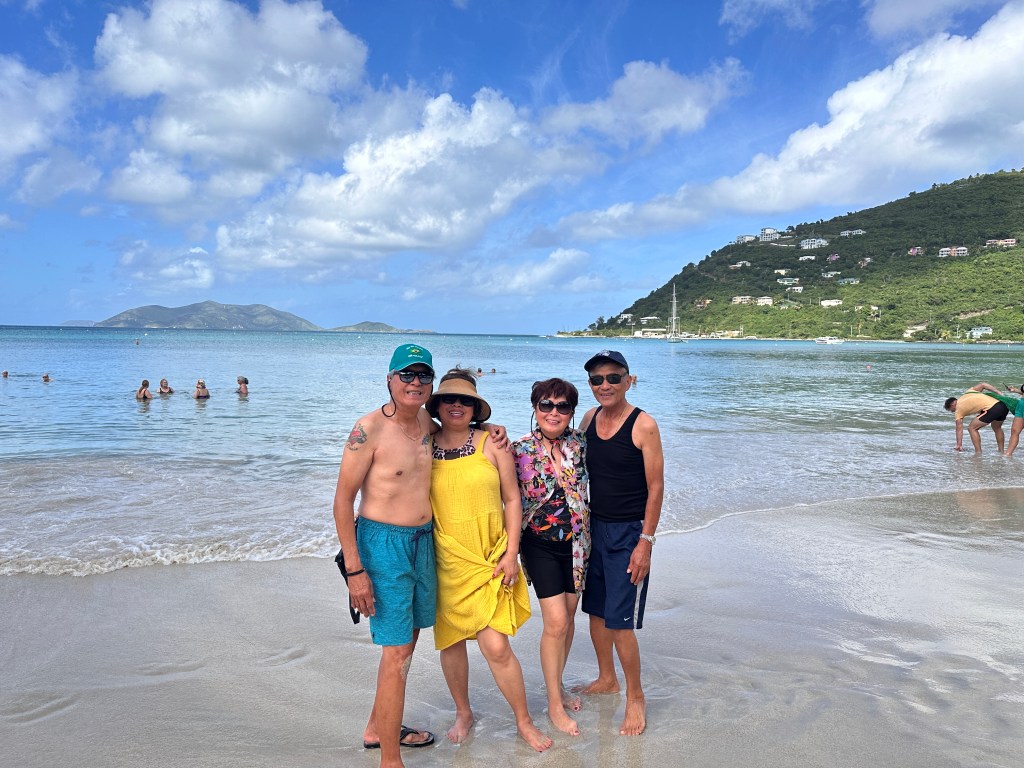
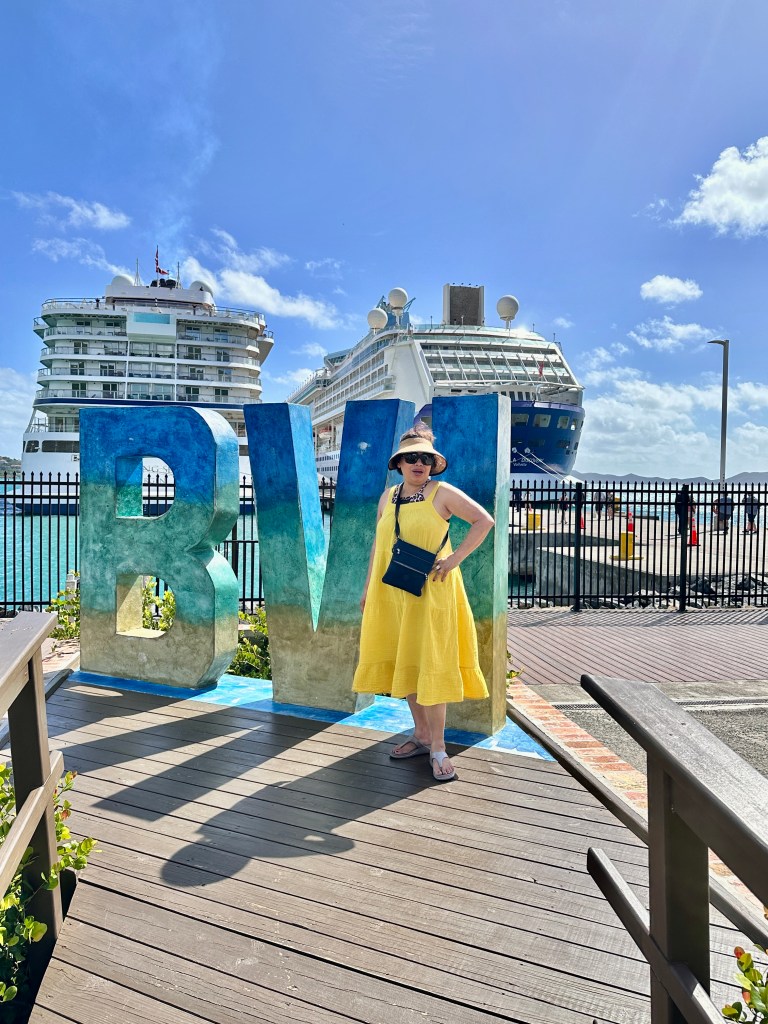
TORTOLA, BRITISH VIRGIN ISLANDS (BVI)

The British Virgin Islands consist of the main islands of TortolaVirgin GordaAnegada and Jost Van Dyke, along with more than 50 other smaller islands and cays. About 16 of the islands are inhabited. The capital, Road Town, is on Tortola, the largest island, which is about 20 km (12 mi) long and 5 km (3 mi) wide. (Wikipedia)

Spread across miles of gleaming azure waters, the British Virgin Islands cap the summits and peaks of a chain of dormant underwater volcanoes. The famed pirates Blackbeard and Captain Kidd took up residence here.

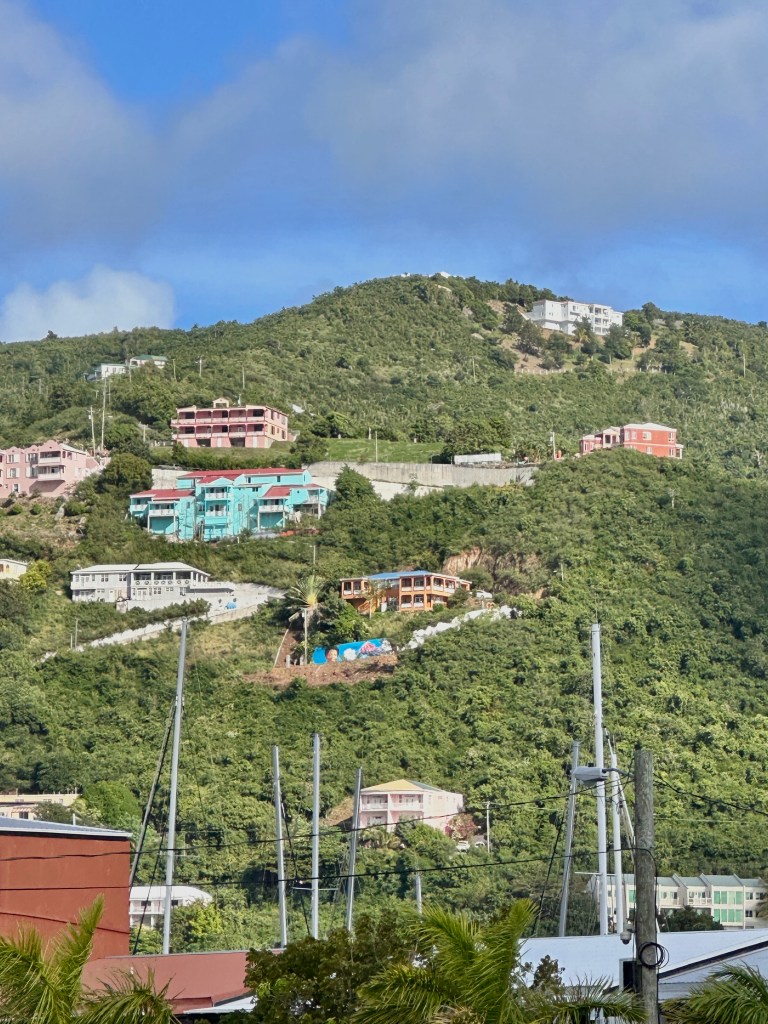
As our ship was being guided by the tugboats my eyes caught the glimmering colorful houses perched on the verdant hillside overlooking the horseshoe-shaped harbor where white yachts mingled with simple fishing boats. It was a stunning view to behold and I knew then that our tour would be better than yesterday’s.

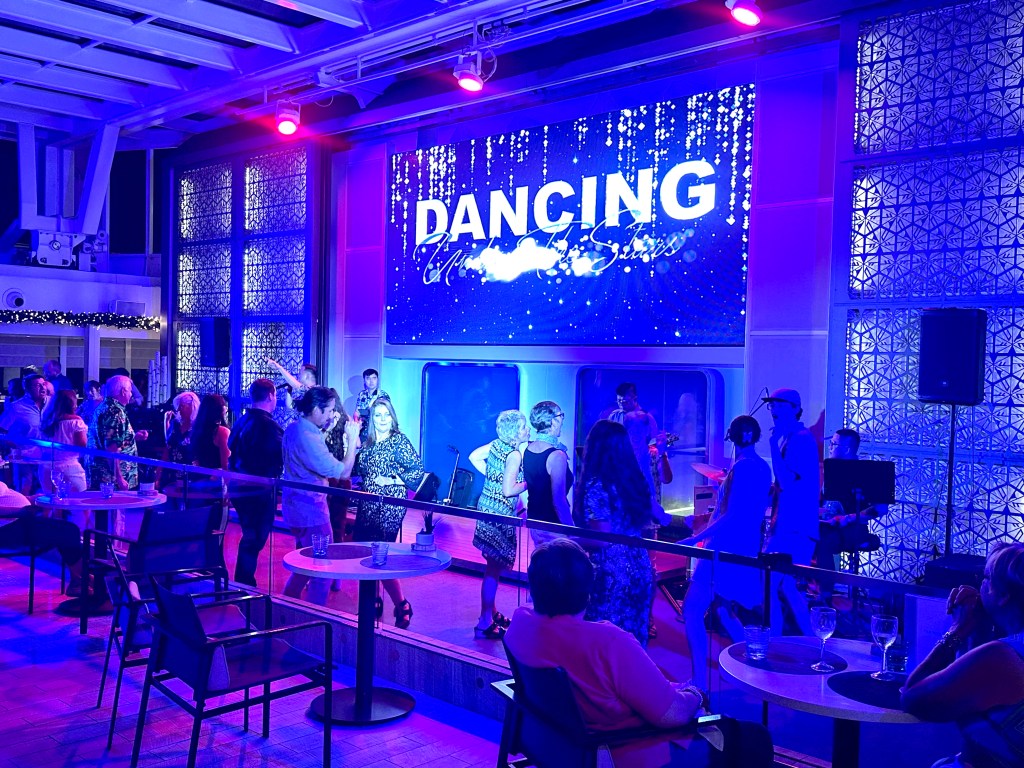
Last night, after dinner Oya, Trini and I went to the pool deck to listen to the Viking Band comprised of Filipino musicians. The female vocalist, Jenny is also a pretty young Filipina. Some of the staff of the cruise director were there urging folks to get up and “shake their booty” which we did! This morning, I woke up sore!

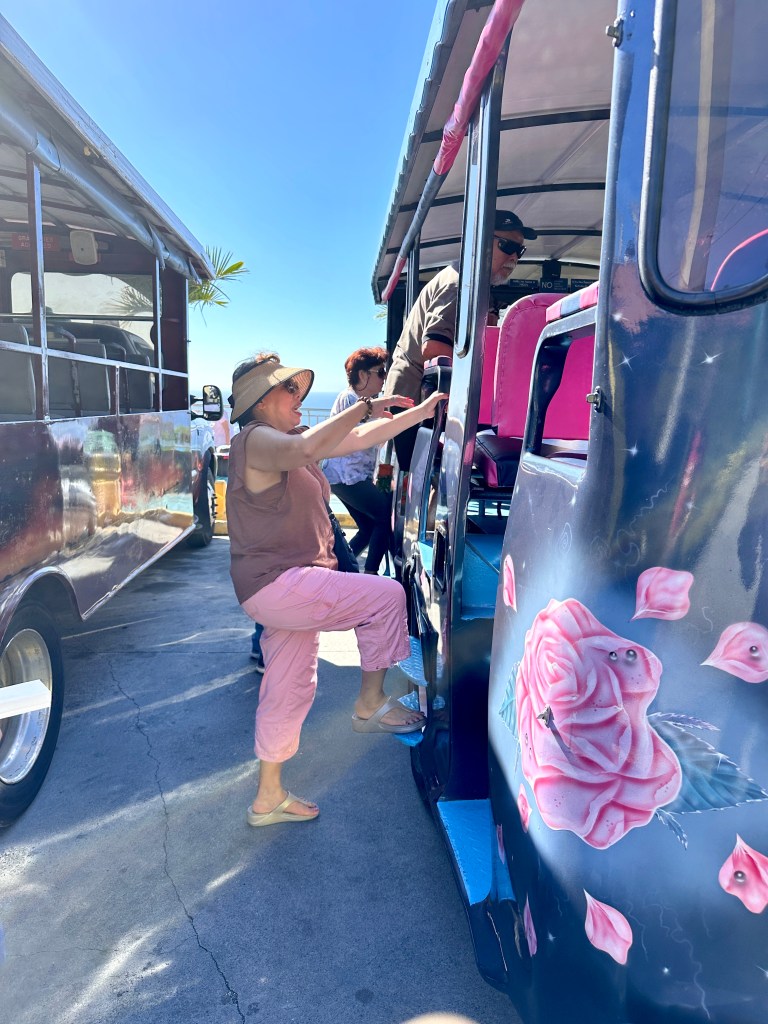
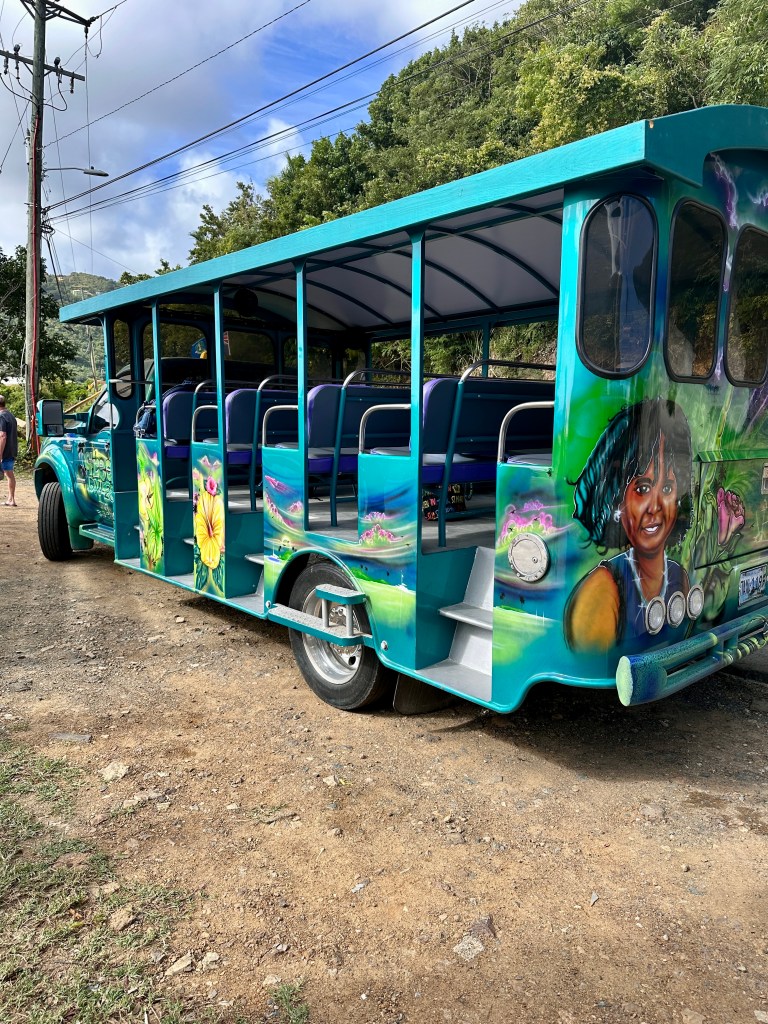
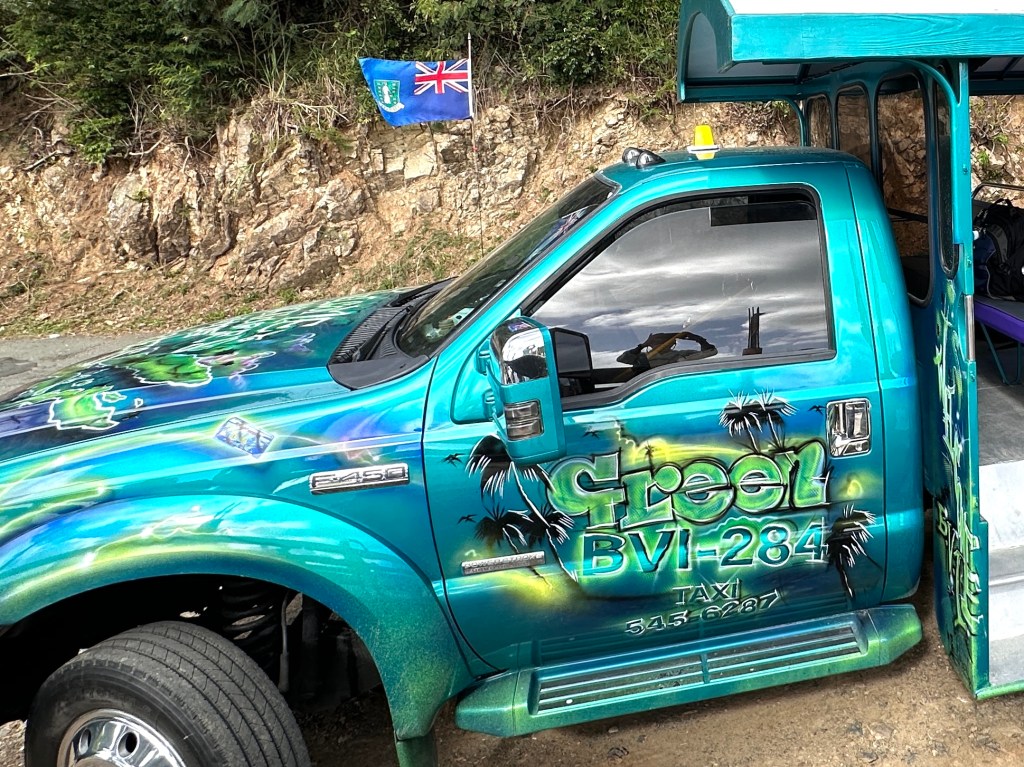
After a hearty breakfast, our group proceeded to the pier and was directed by the ship’s tours coordinators to our vehicles – an open-sided safari “trucks”!

Our driver, Mr. Green (that’s what he wants us to call him) drove us along Tortola’s steep (and I really mean STEEP) roads that lead to secluded beaches, hidden coves and breathtaking vistas!

Mr. Green obviously is a skilled driver – maneuvering the huge monstrous safari truck along the narrow serpentine roads avoiding oncoming vehicles at a every turn. Finally, our guide/driver pointed at a strip of white beach – our destination.

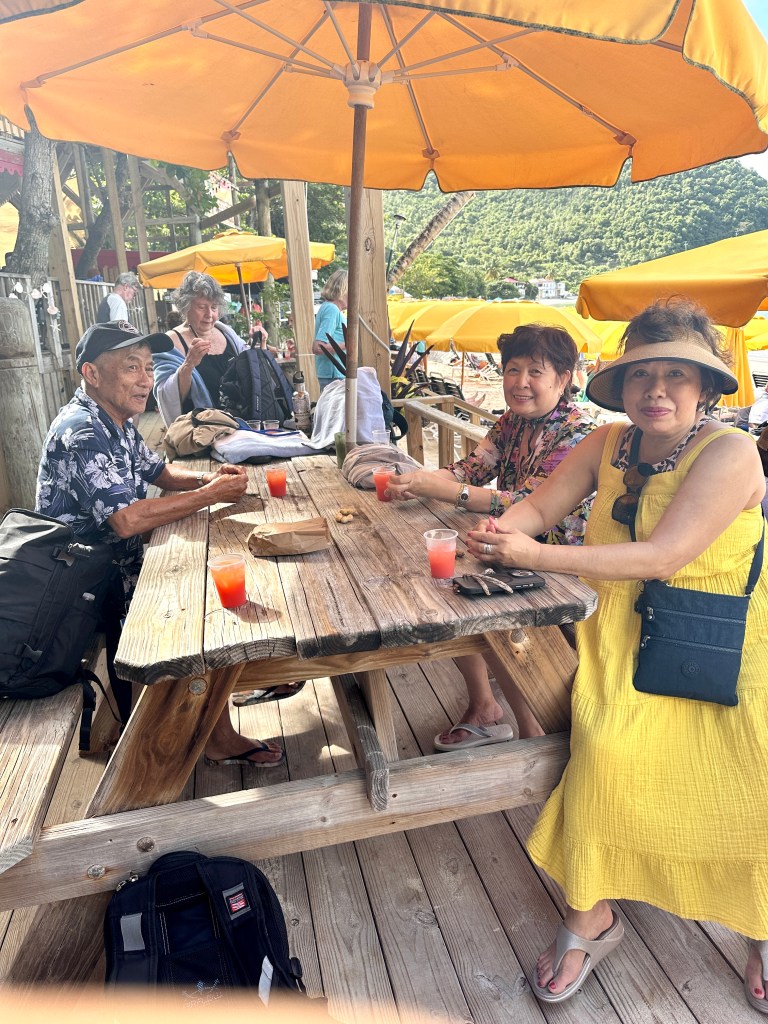
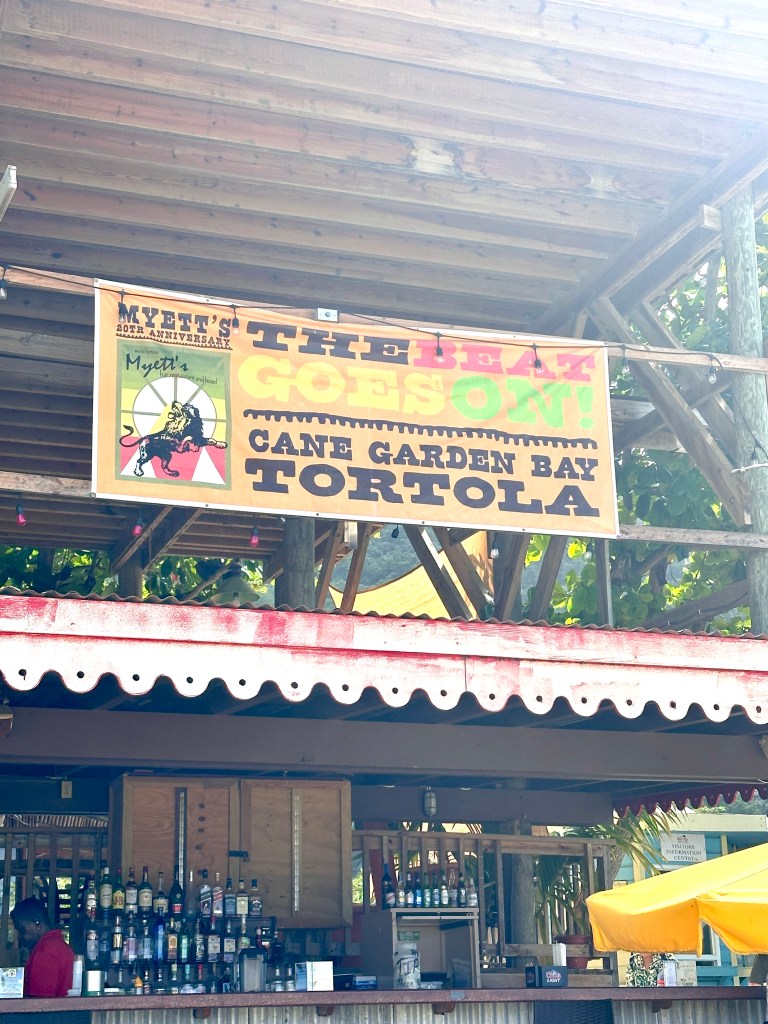
As we got off the truck, our guide handed us a voucher to claim our obligatory drinks inside the restaurant. We were instructed to find any empty tables (free) or rent a chair along the beach. We found an empty table right away!

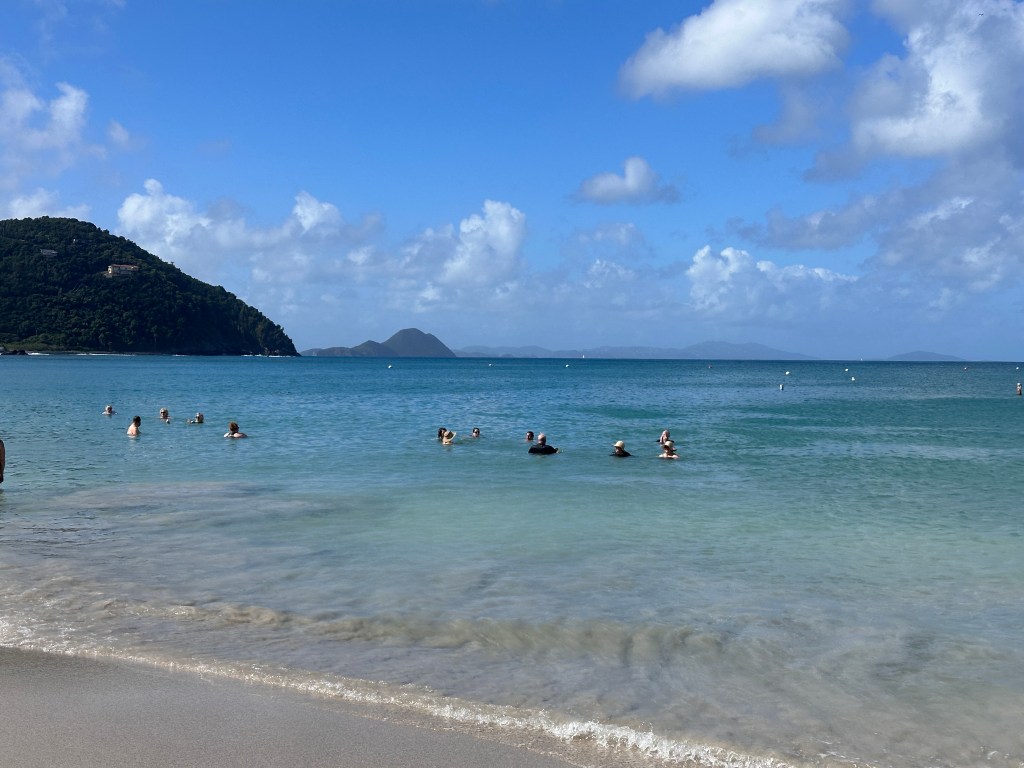
The water was not as warm as I wanted it to be but I waded waist-deep anyway and urged Trini, Oya and Tommy who only went ankle-deep.

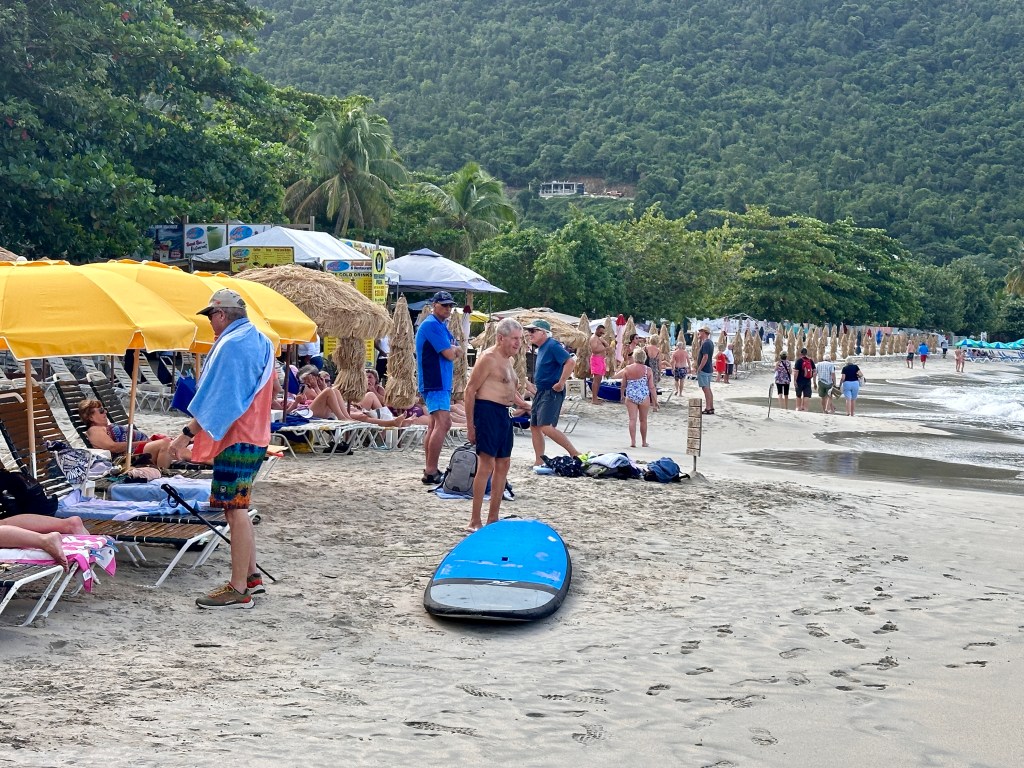
Right on the beach premises are where the souvenir stalls are always located so we browsed and bought the mandatory magnets.

Weather-wise today was the best ever – sunny and pleasant temperature! I hope our last port prior to disembarkation will be as nice or better – St. Thomas, U.S. Virgin Islands!

ST. KITTS & NEVIS

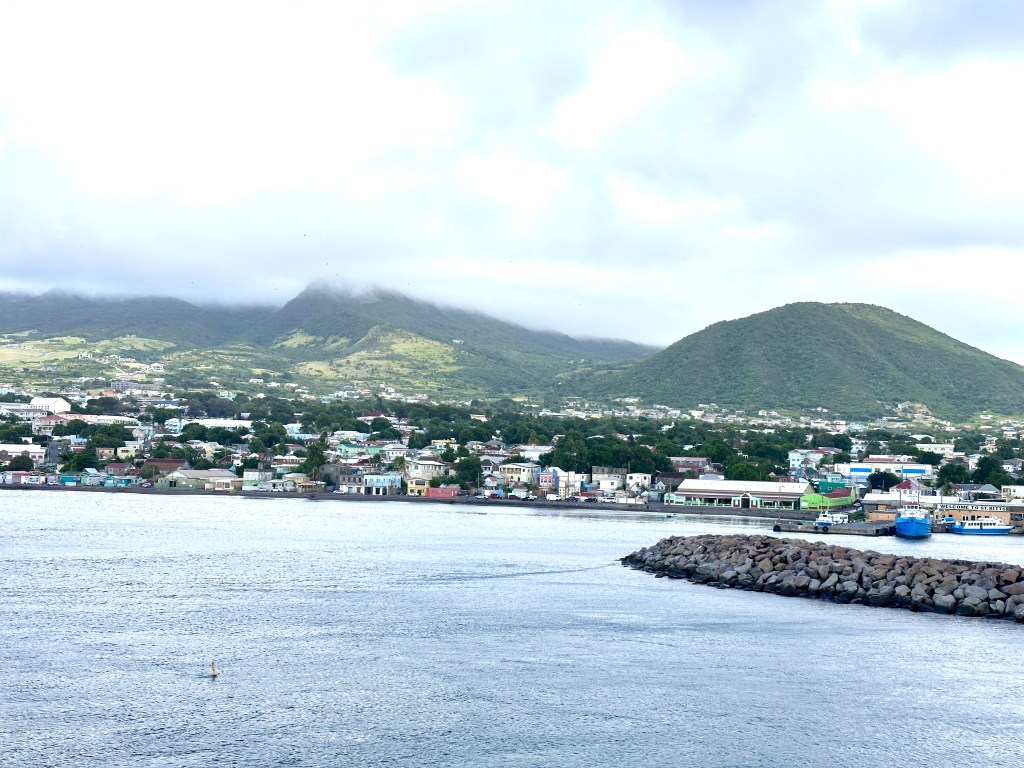
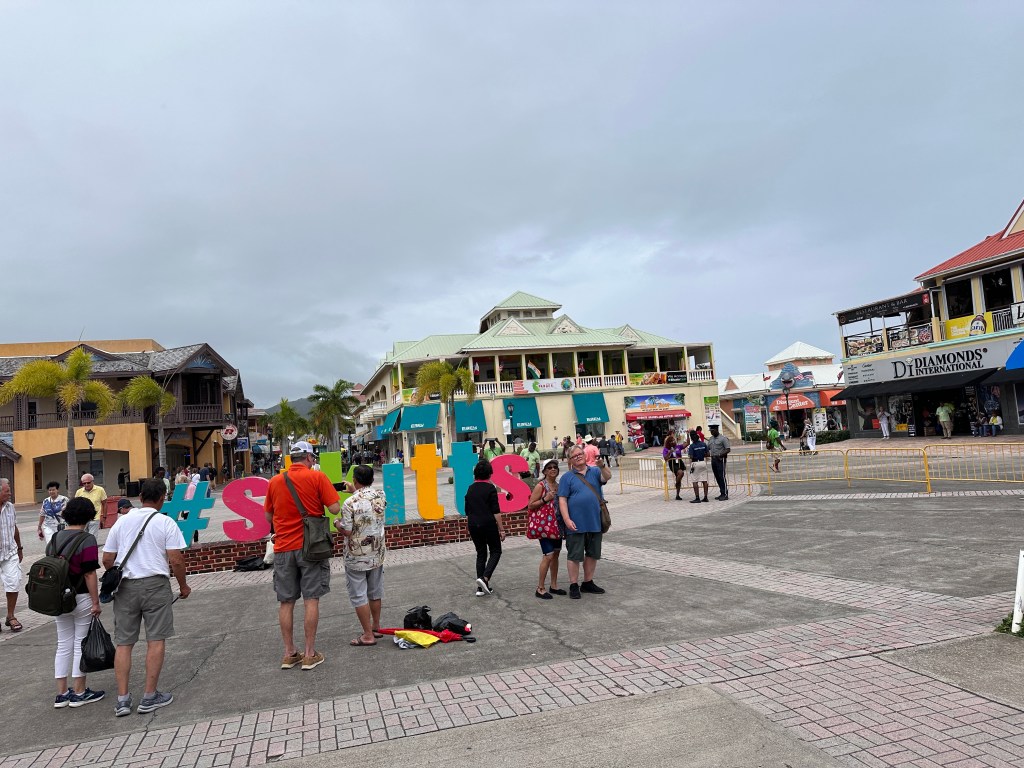
The Viking Sea pulled in at Basseterre, the capital of St. Kitts. This island is lush with unspoiled vistas and old sugarcane fields. Together, St. Kitts and its neighboring island of Nevis comprise the smallest independent country in the Americas. Home to vervet monkeys, banana trees and coconut palms, St. Kitts coastal road leads to white-sand beaches and calm bays. Basseterre is one of the oldest towns in the Eastern Caribbean, dotted with Victorian and Georgian architecture.

It was drizzling when we started our tour at 9:30 AM and everyone felt cold after getting wet from the shower, the freezing temperature inside the old van did not help!

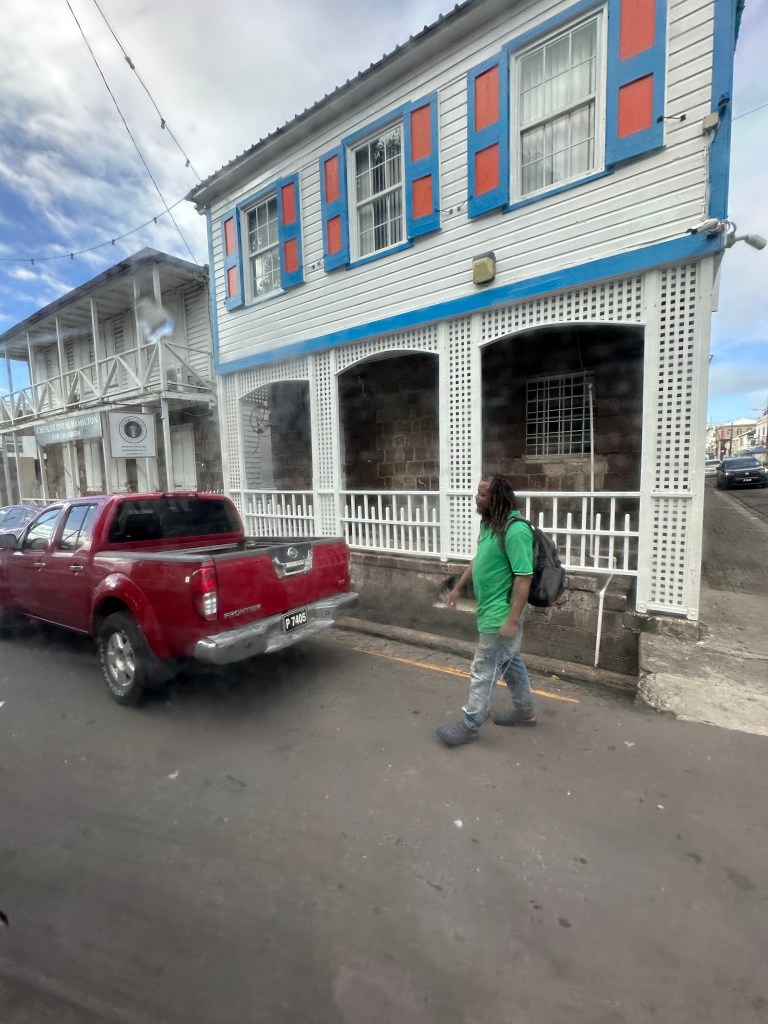
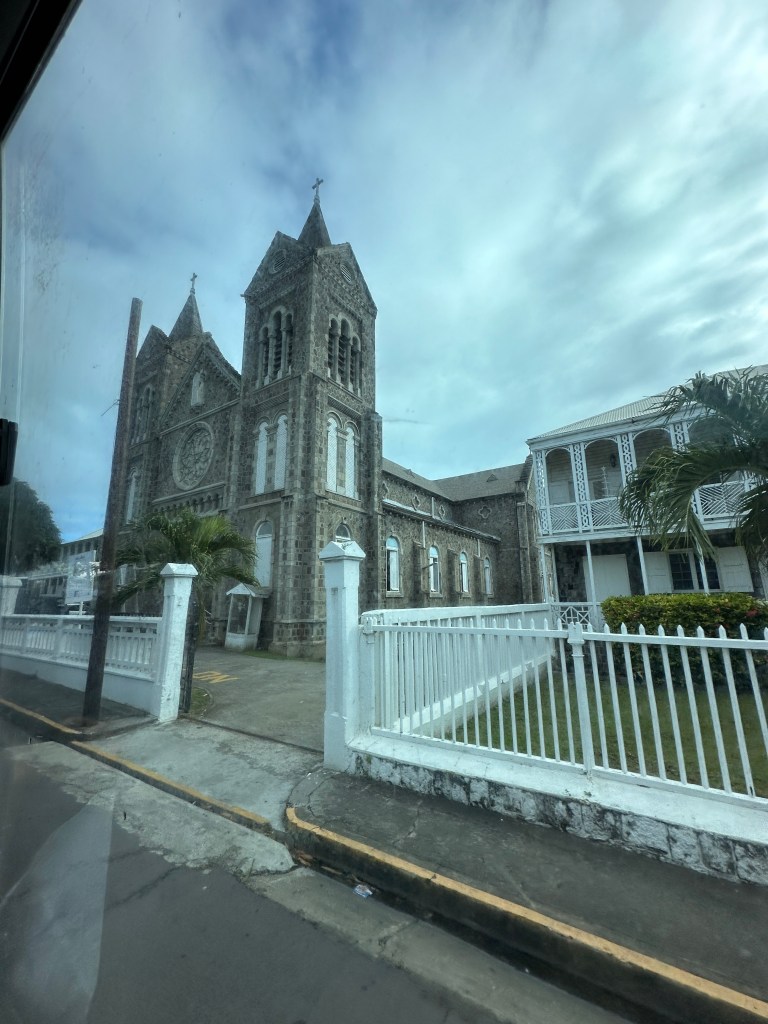
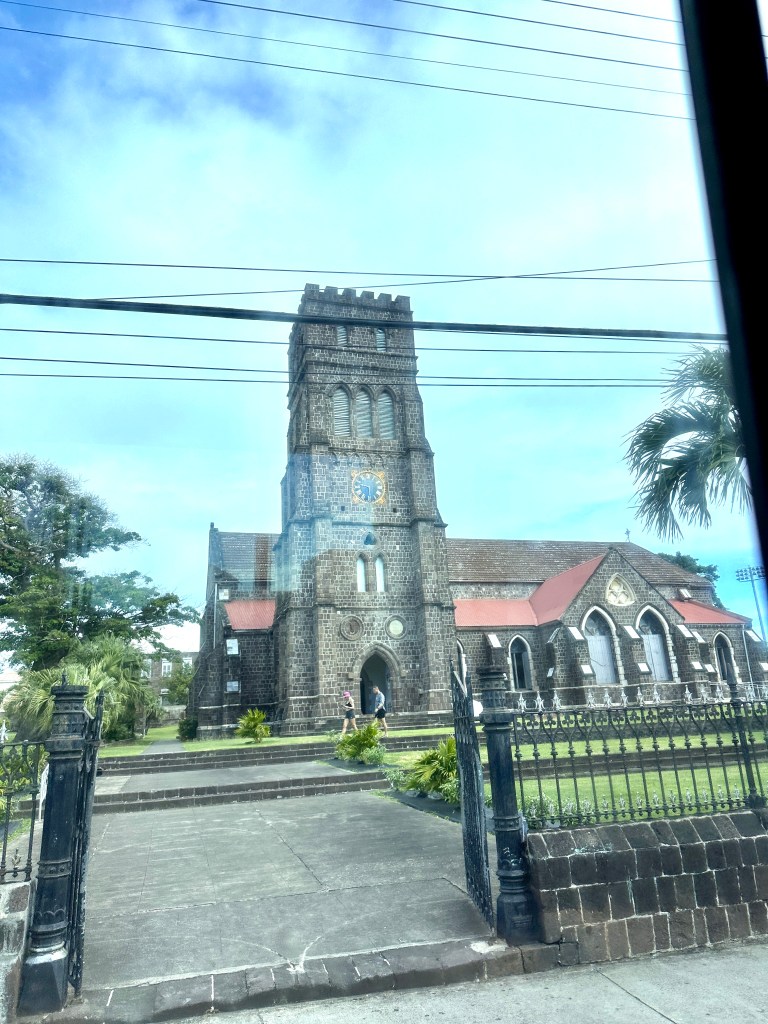
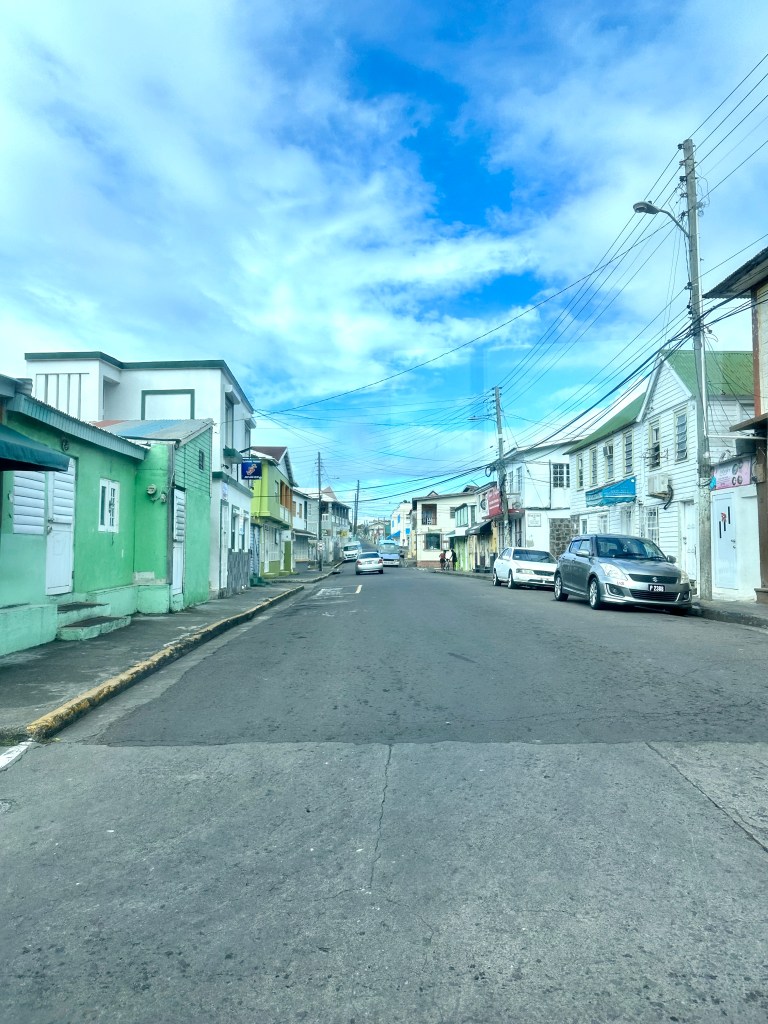
The drive around town was boring, or so it seemed to me anyway, since the houses and buildings are similar throughout the Caribbean. It was a Sunday so the streets were almost deserted including the Catholic and Anglican churches we passed. Tyler, our driver/tour guide was difficult to understand due to his thick island accent but there really was nothing interesting for him to tell us anyway. He pointed to the KFC and other points of minor interests just so he can keep on talking. Tyler explained that sugarcane was a major crop in the past; however, it became unprofitable so subsequently the government sold the lands to foreign investors who developed them into hotels, resort, shopping centers, etc. We saw new buildings along the coast as we headed to our destination.

Compared to the other Caribbean islands, St. Kitts and Nevis has the most fertile lands enabling them to grow many agricultural crops that other islands, that are volcanic, import. By the way, gasoline here is a whopping $13 per gallon.

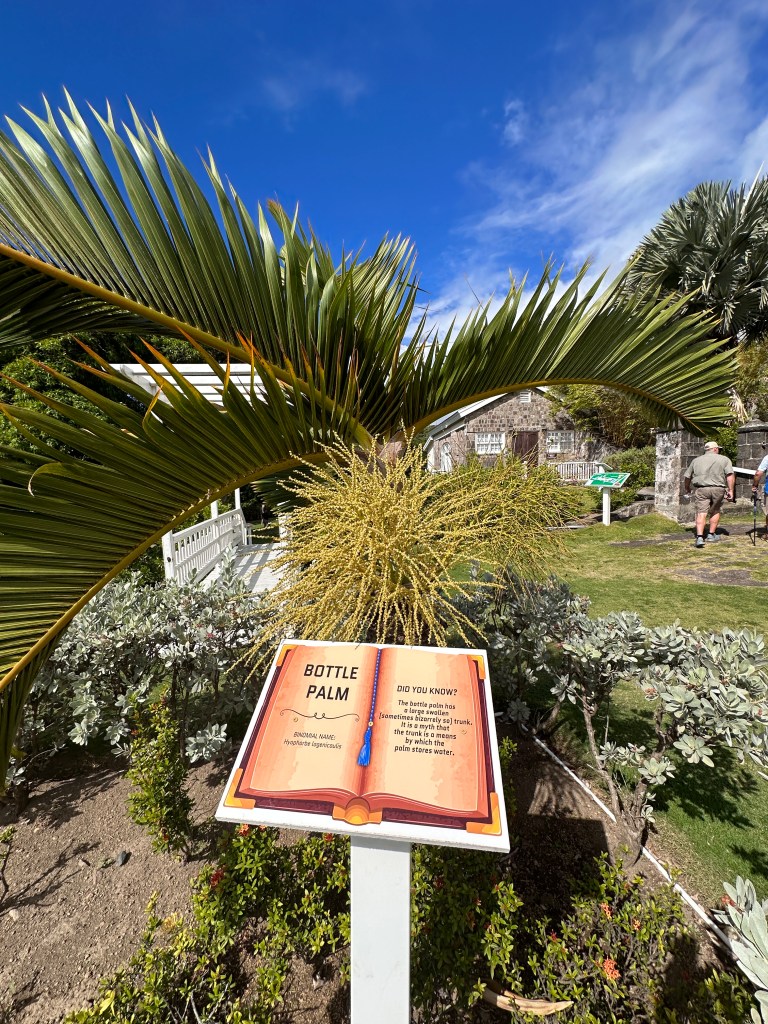
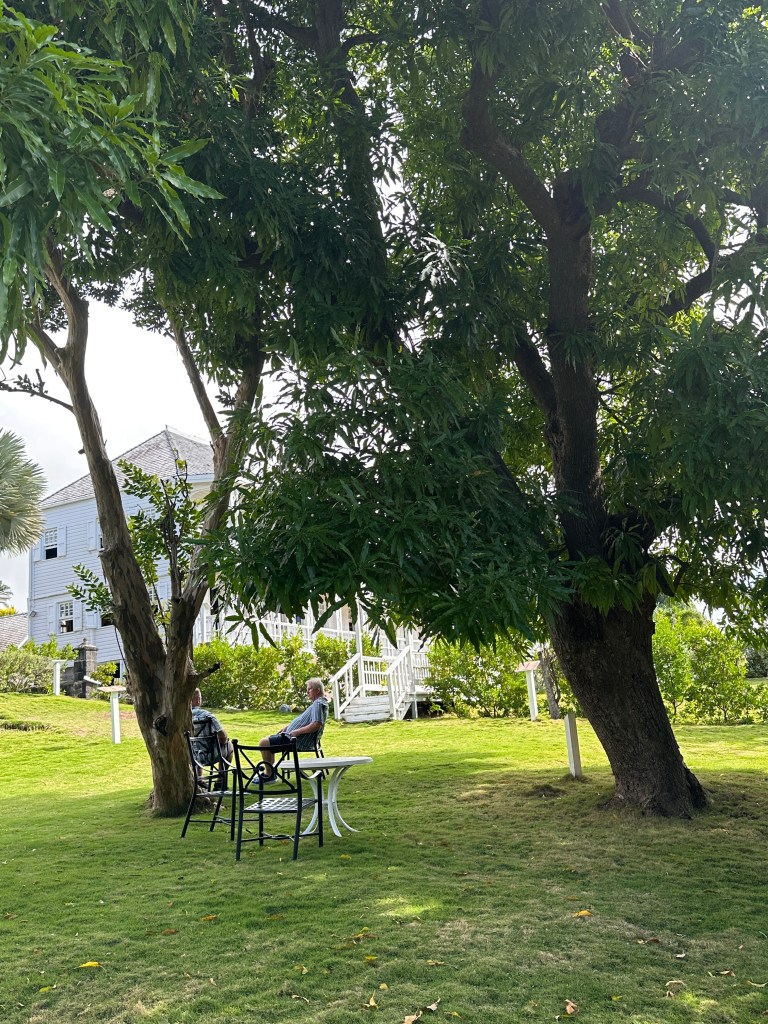
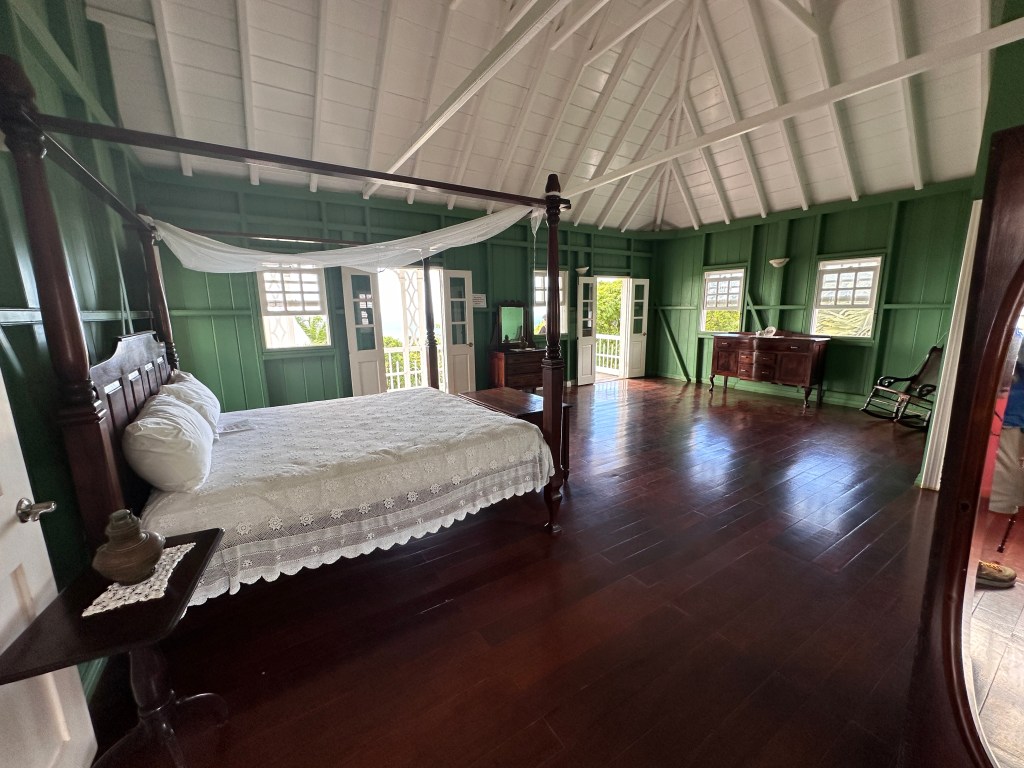
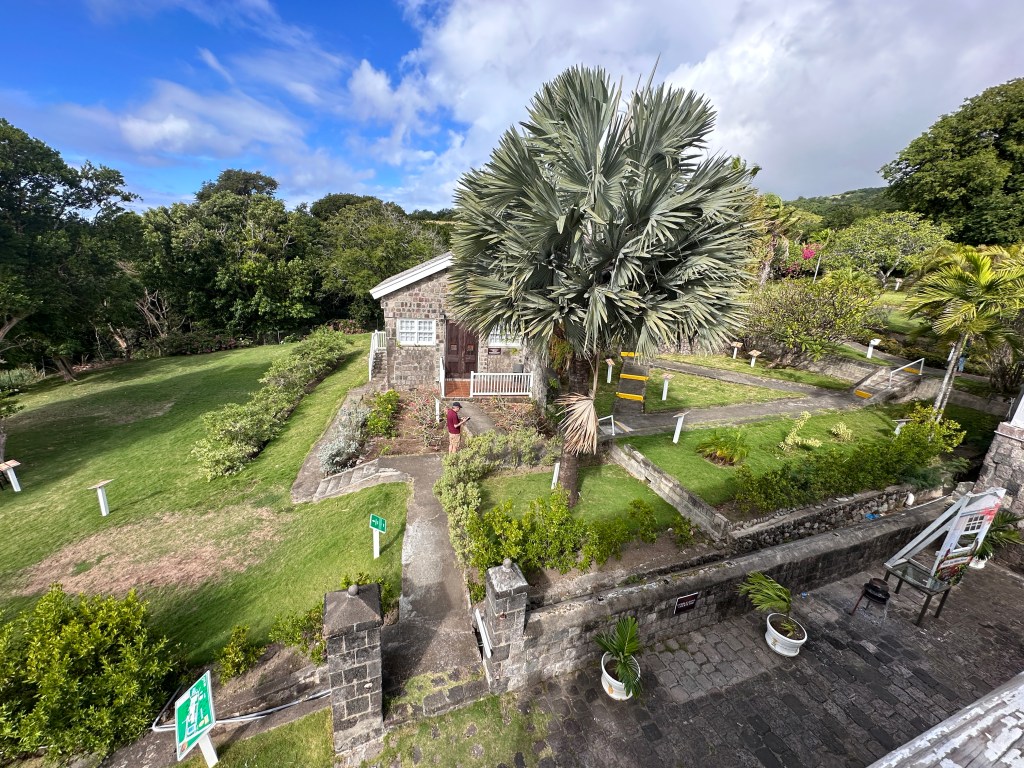
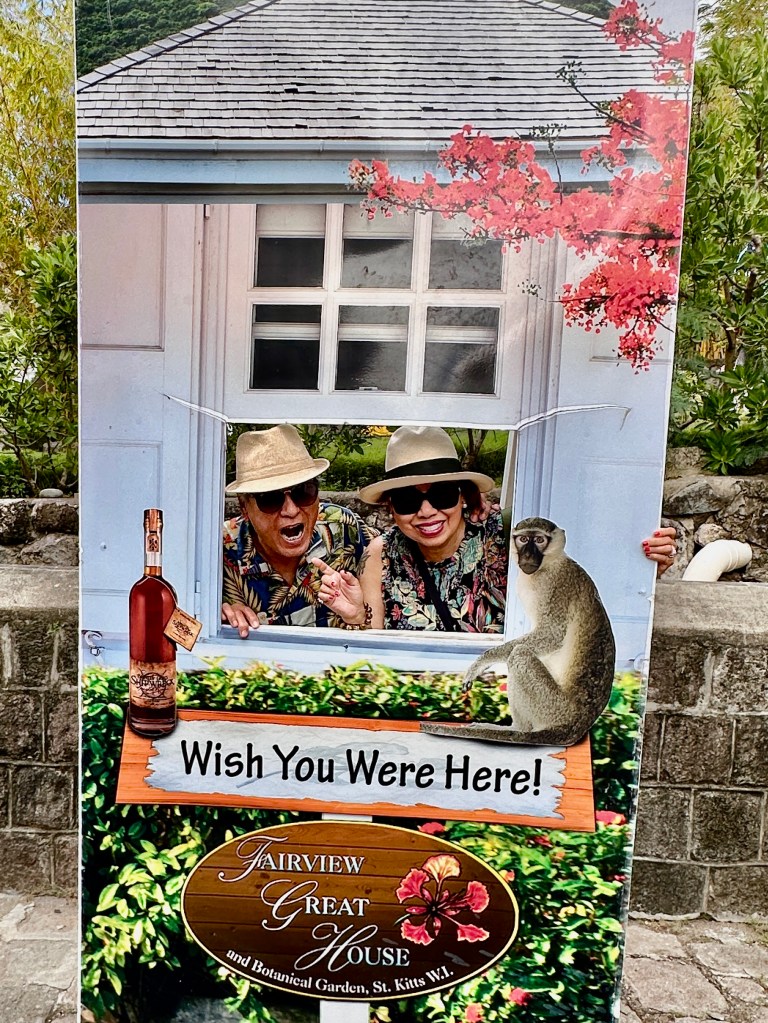
The only existing French plantation house on St. Kitts, the Fairview Great House was built circa 1701 and originally housed French military officers. Today, guests can tour the beautifully restored property, taking in the period furnishings, kitchen, apiary, chapel, and bathhouse before exploring the two-and-a-half acres of botanical gardens, filled with tropical flowers, fruit trees, and monkeys.

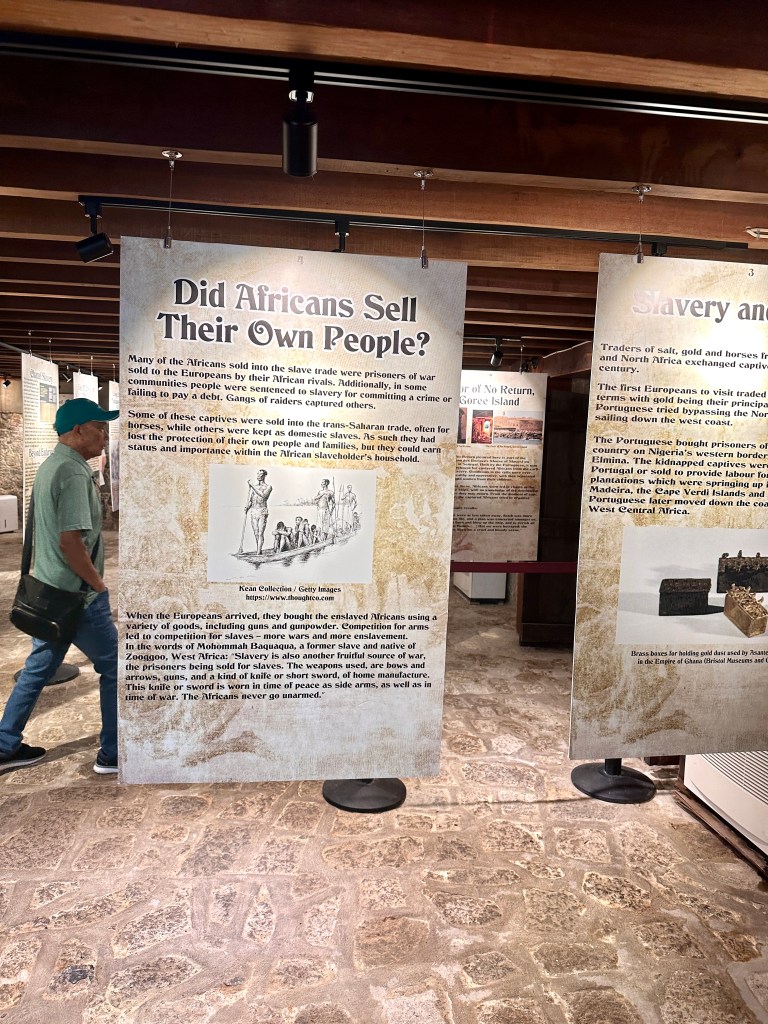
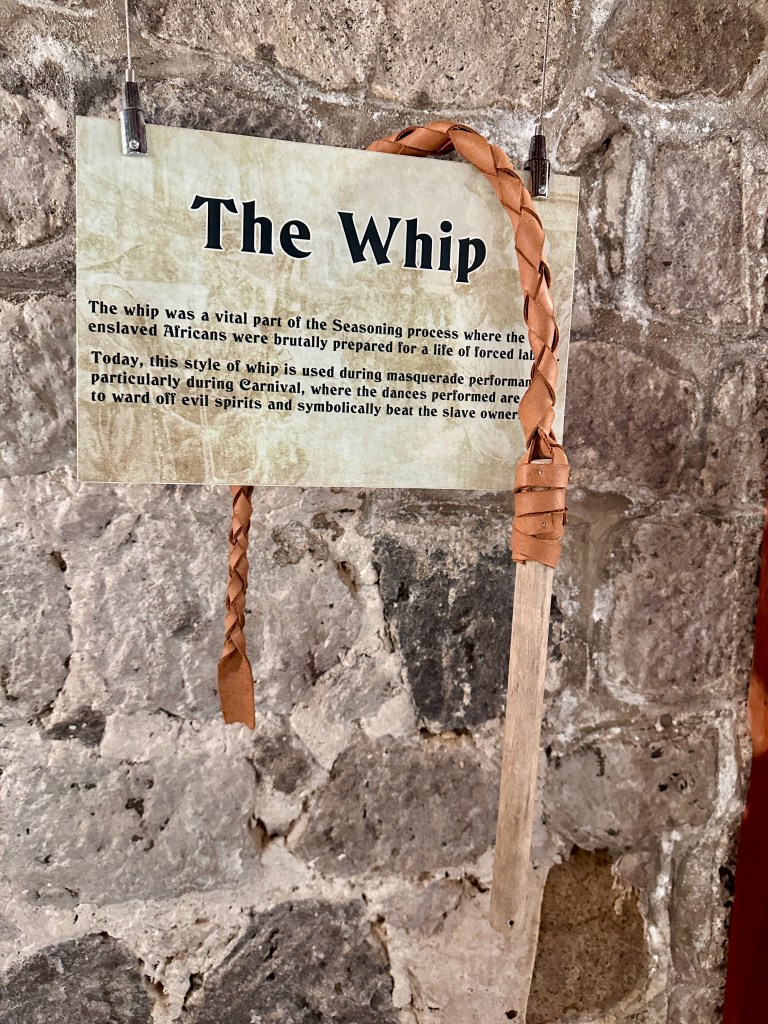
Slave trade was common during these era and St. Kitts and Nevis were not an exception. The estate’s cellar had huge posters that chronologically narrated the history of slavery in the islands.

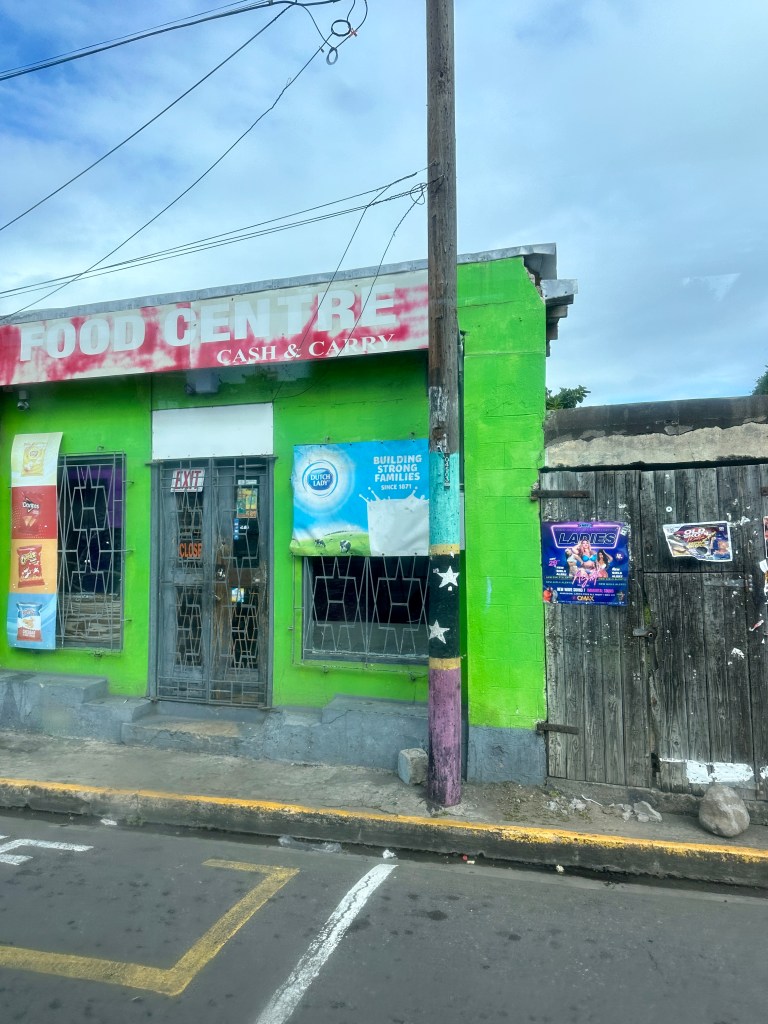
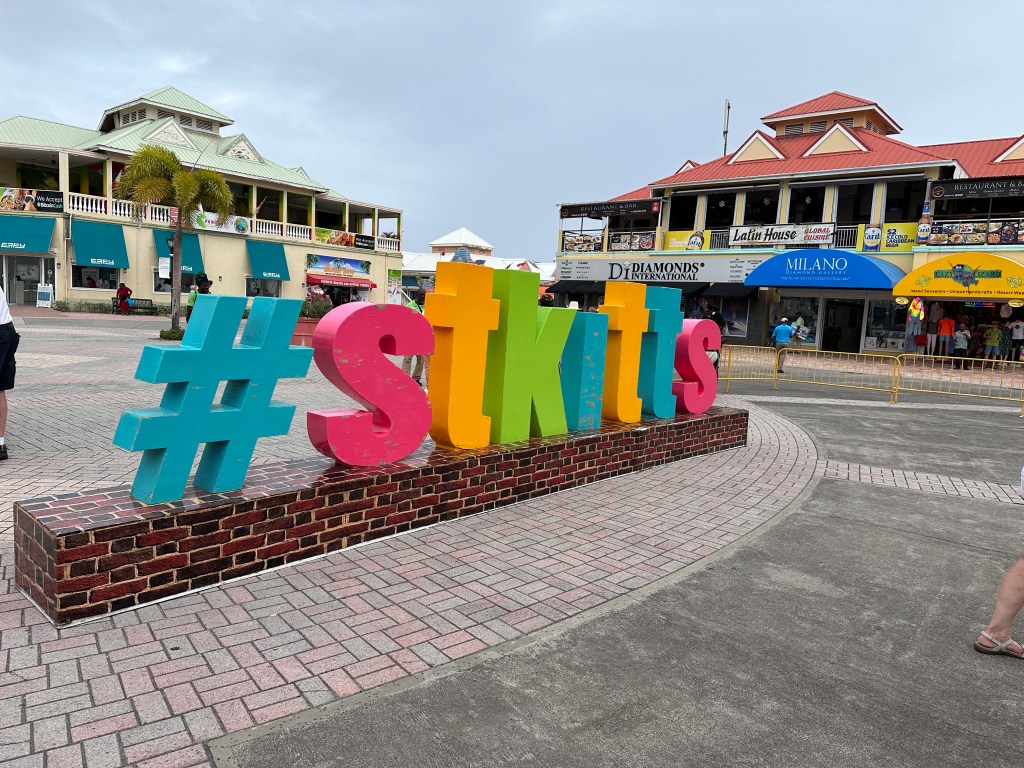
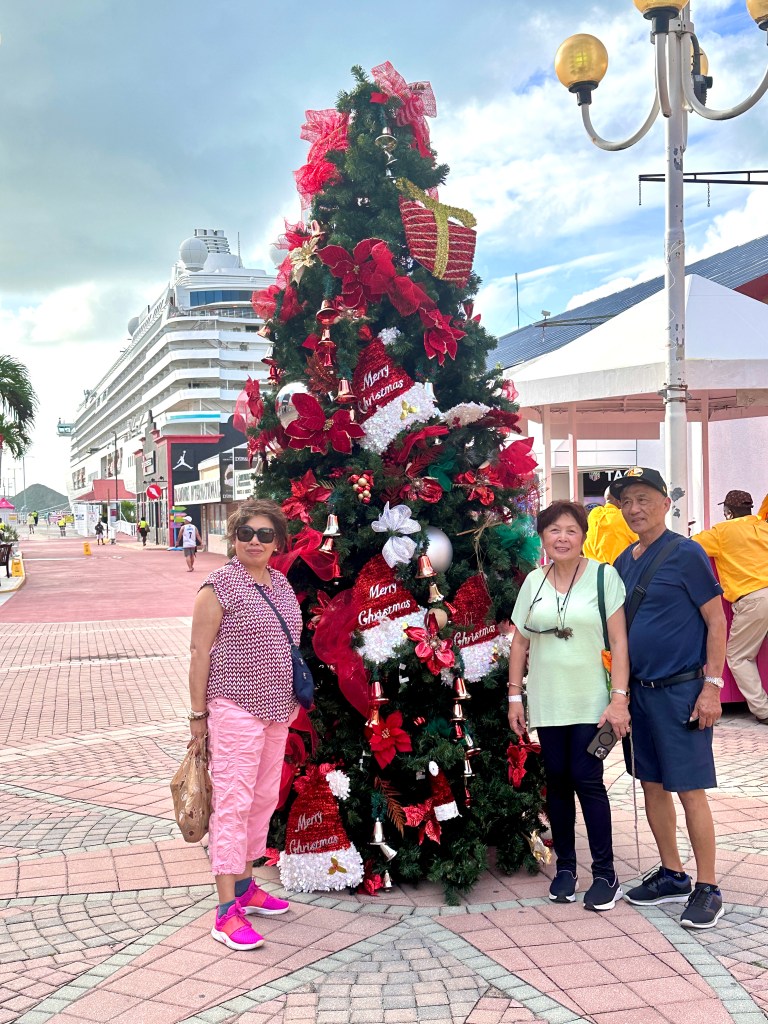
After an hour of touring the huge estate we finally went back to the ship. Of course, the only way to get back there is through a myriad of souvenir shops. We couldn’t resist the low prices in this one shop and Trini was allowed to haggle. There were three cruise ships in town including us – Viking, Norwegian Cruise and another one that I’ve never seen before. So the harbor was really crowded. Business was brisk – lots of knock off watches and designer bags on display. Of course, we bought the mandatory magnet; a ball cap and faux straw hat for me (made in China); tote bags for pasalubong. Oya bought a Christmas tree globe decoration which she buys a different one from every island.

TRINI HAGGLING WITH THE OWNER

After shopping, we made our way back to the ship passing crowds of cruiser in bars and benches enjoying Carib, the regional beer. Each one carrying a shopping bag to take back wherever they’re from!

Another day in paradise….

ROSEAU, DOMINICA

No, not the Dominican Republic as some folks think! Dominica is located in the Caribbean just like Dominican Republic. It was first claimed by France in the 17th century although no physical colonization occurred. Then the British established a small colony in the island in 1805 and used it as part of the trans-Atlantic slave trade. The Kalinago or Carib inhabited the island before it was discovered by Columbus.

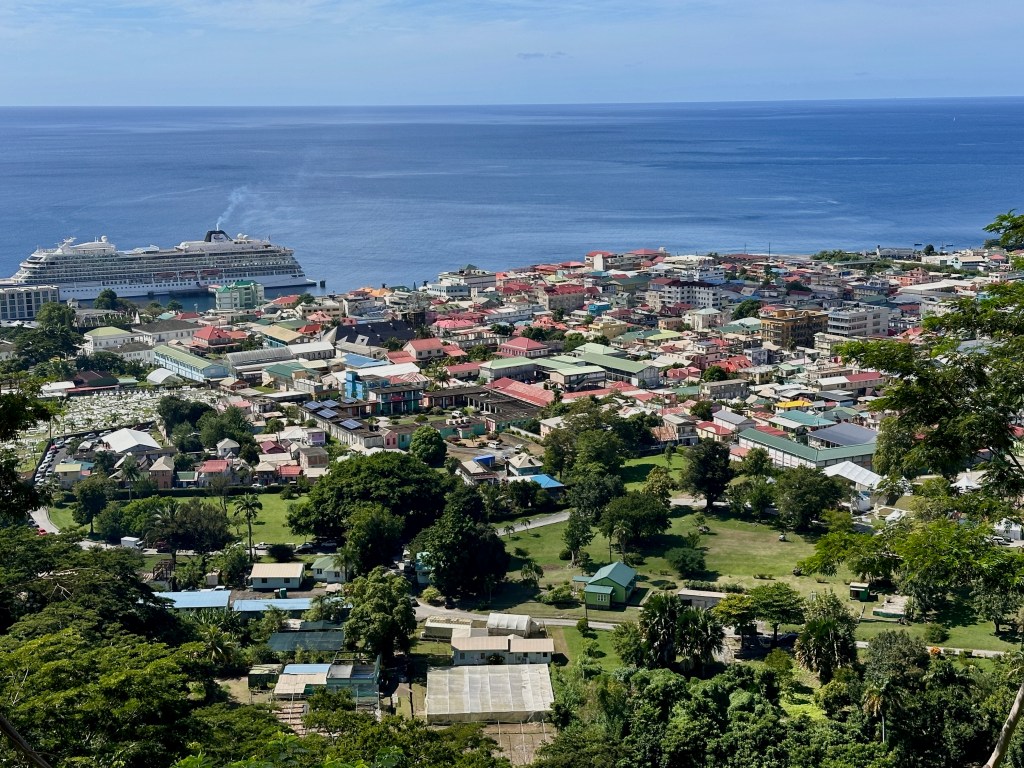
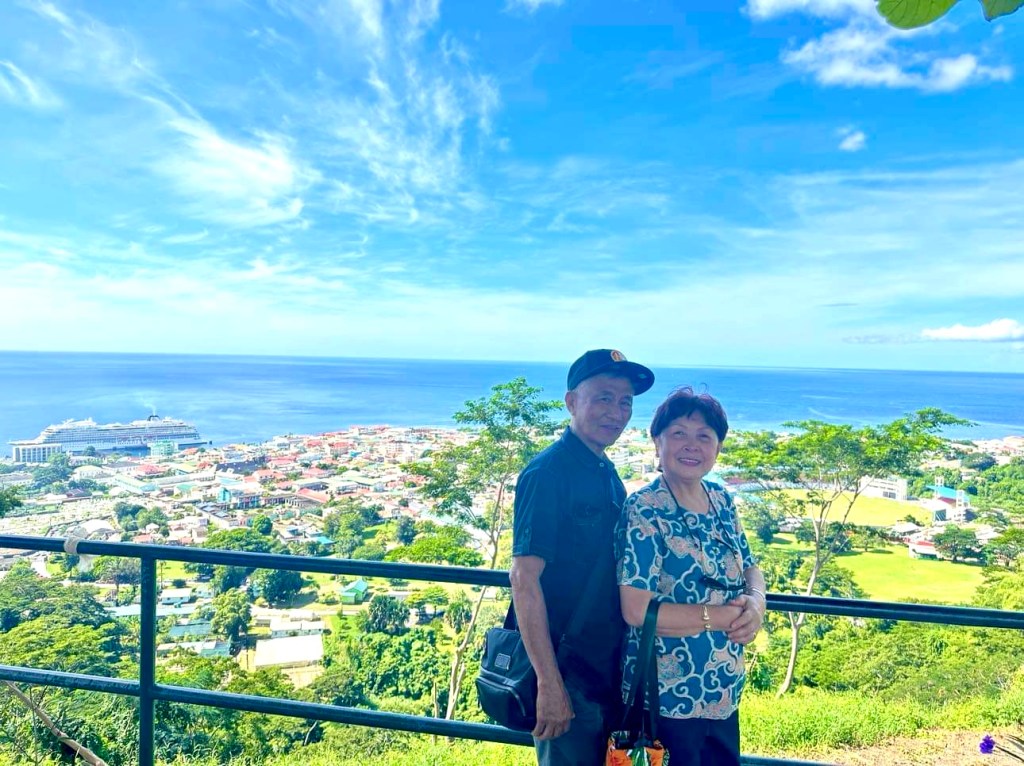
A view from Morne Bruce Garrison overlooking the bay and our ship

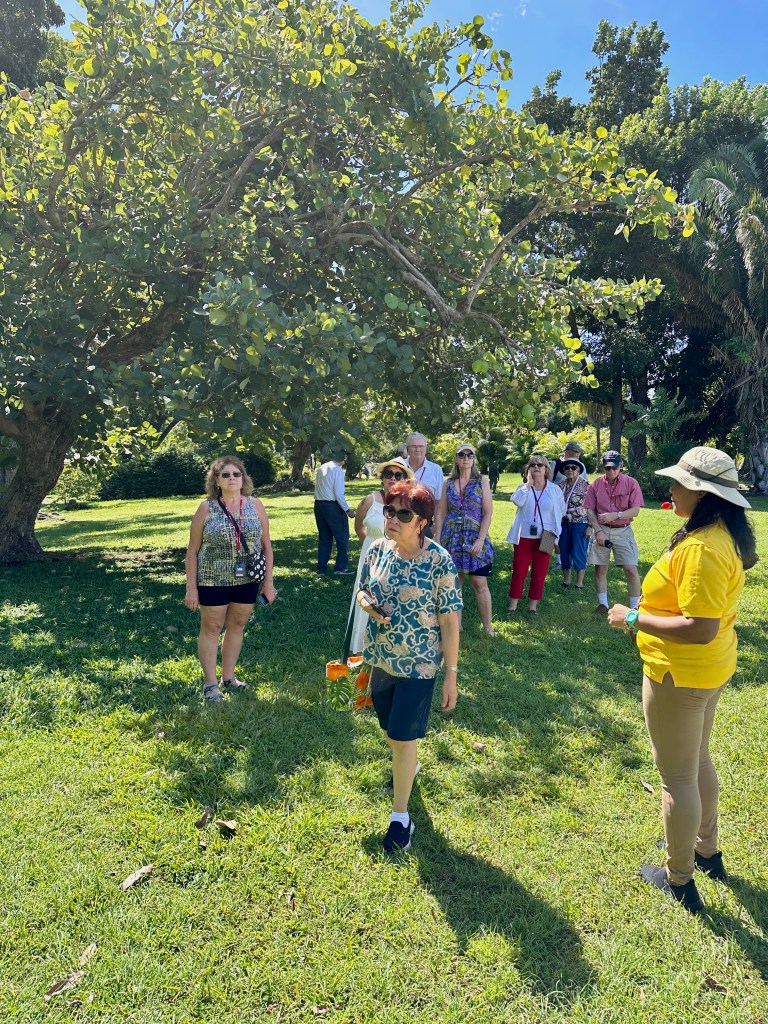
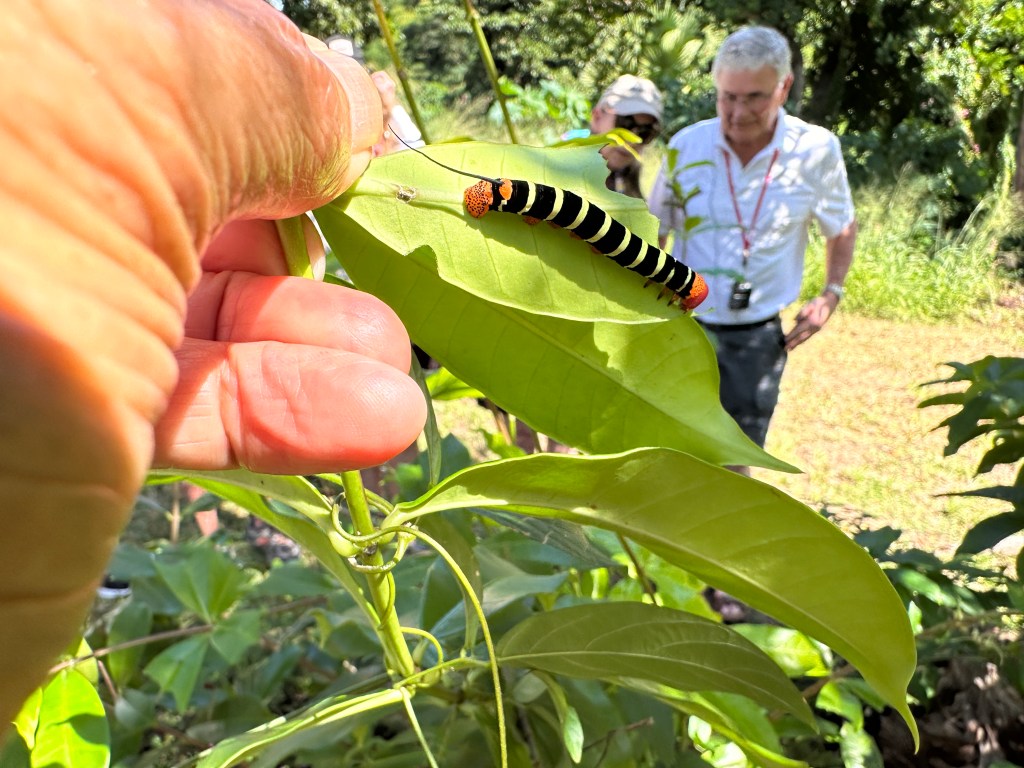
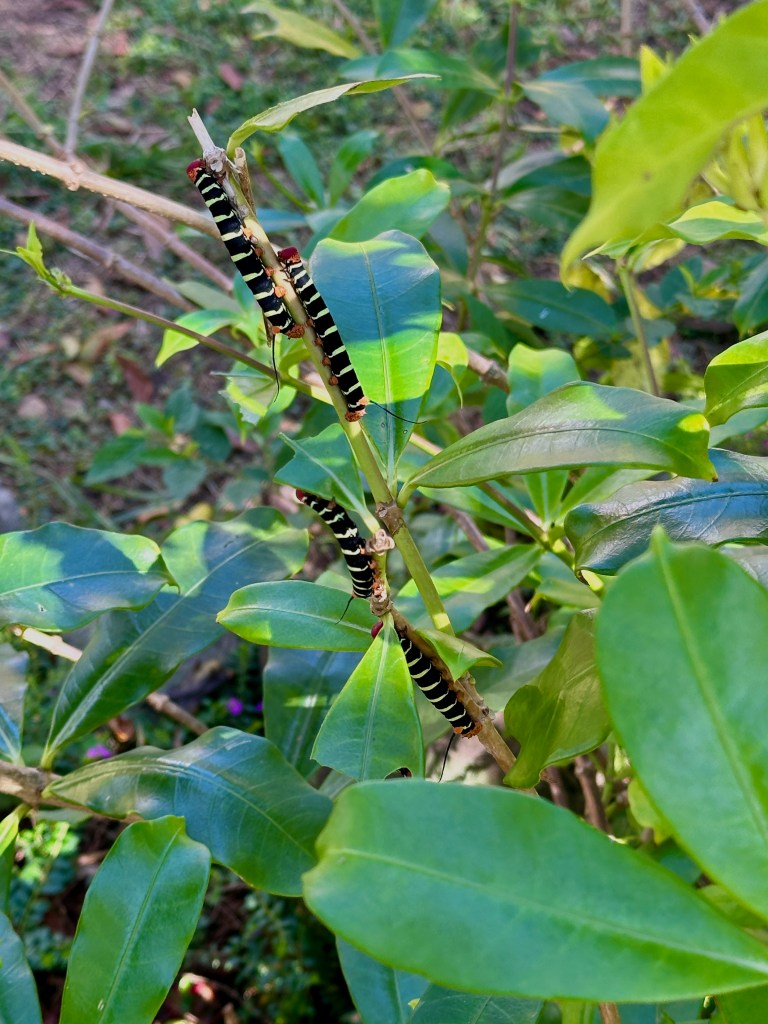
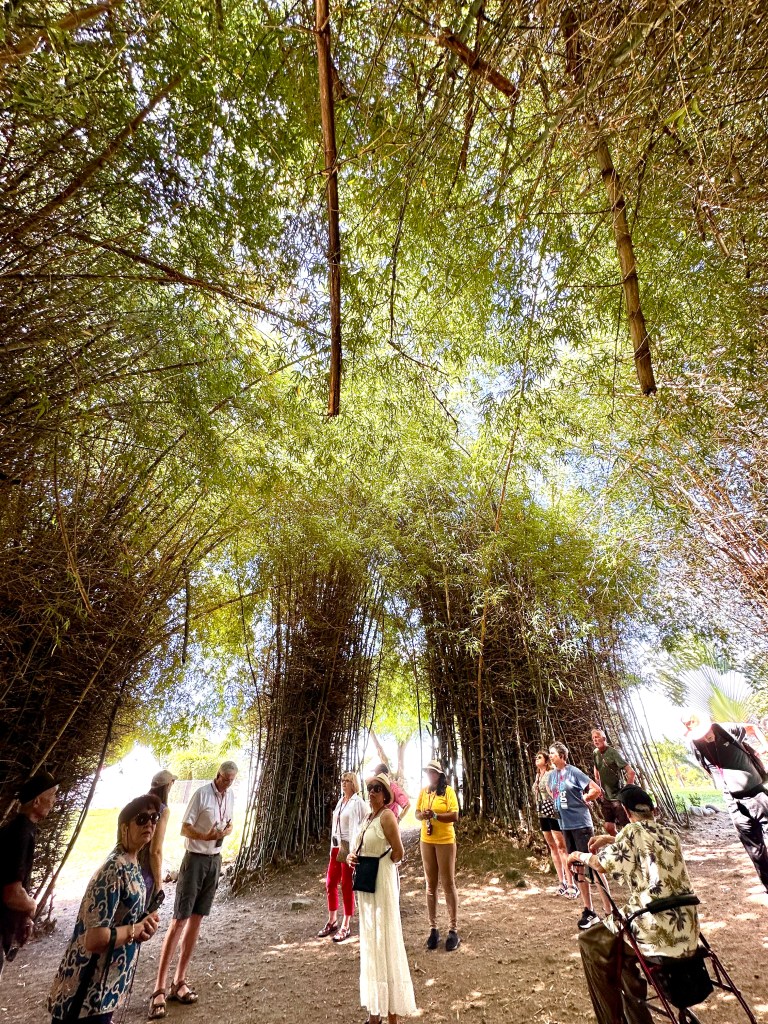
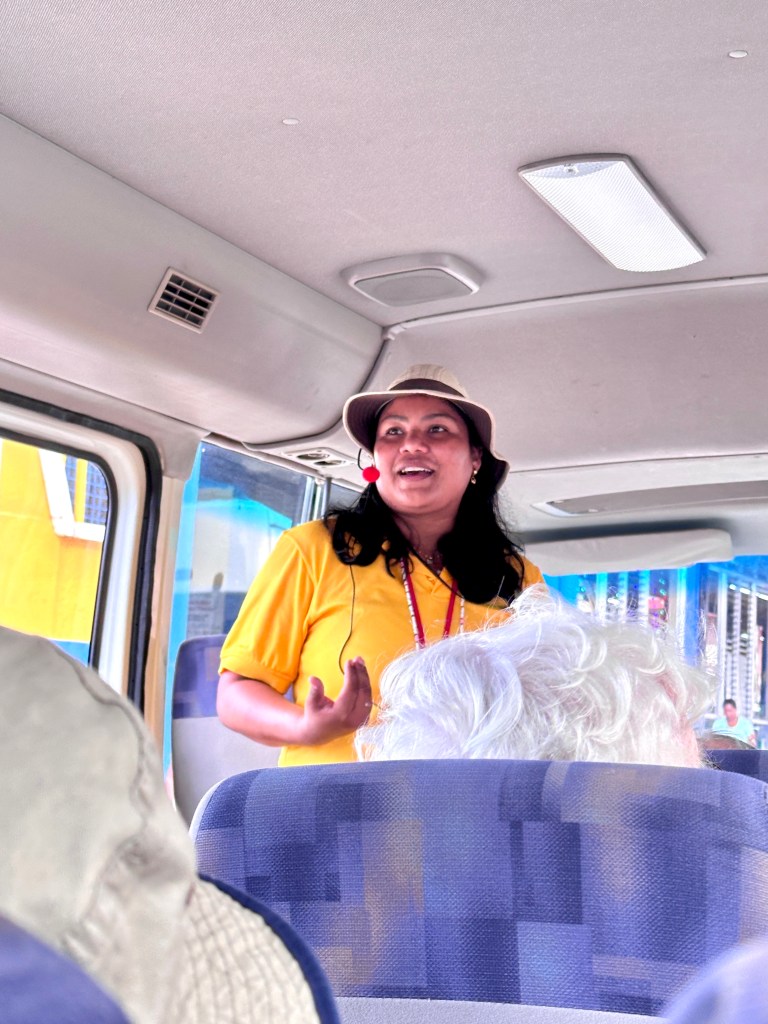
The island is 90 percent volcanic and 10 percent lime stone which makes it difficult for agriculture to thrive. However, Dominica is called the “Nature Isle of the Caribbean” and is celebrated for its mountainous rainforests and rare flora and fauna. We visited their Botanical Garden and saw several of these interesting plants. Cami explained the plants’ unique characteristics and really educated us on many of the local flora.

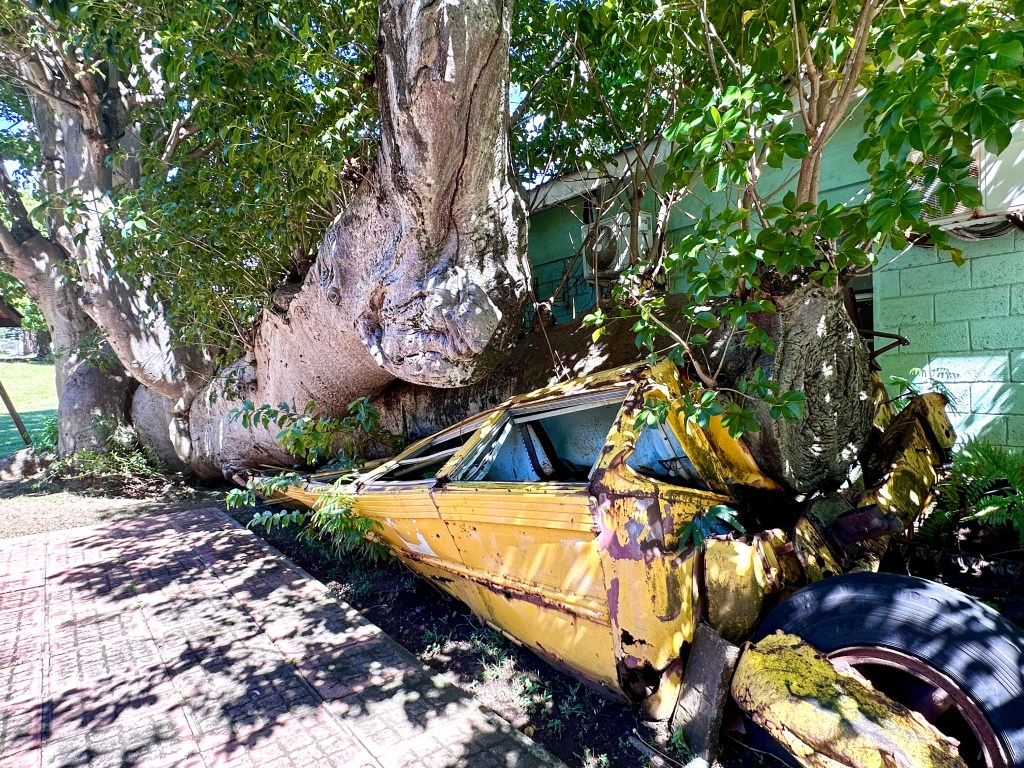
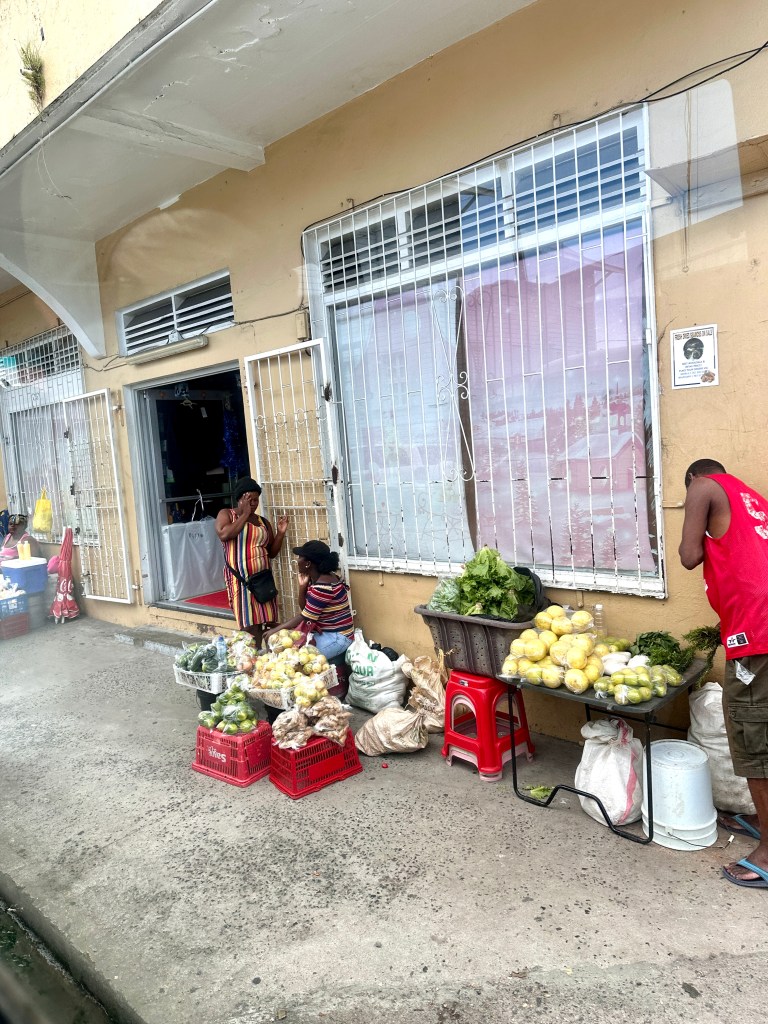
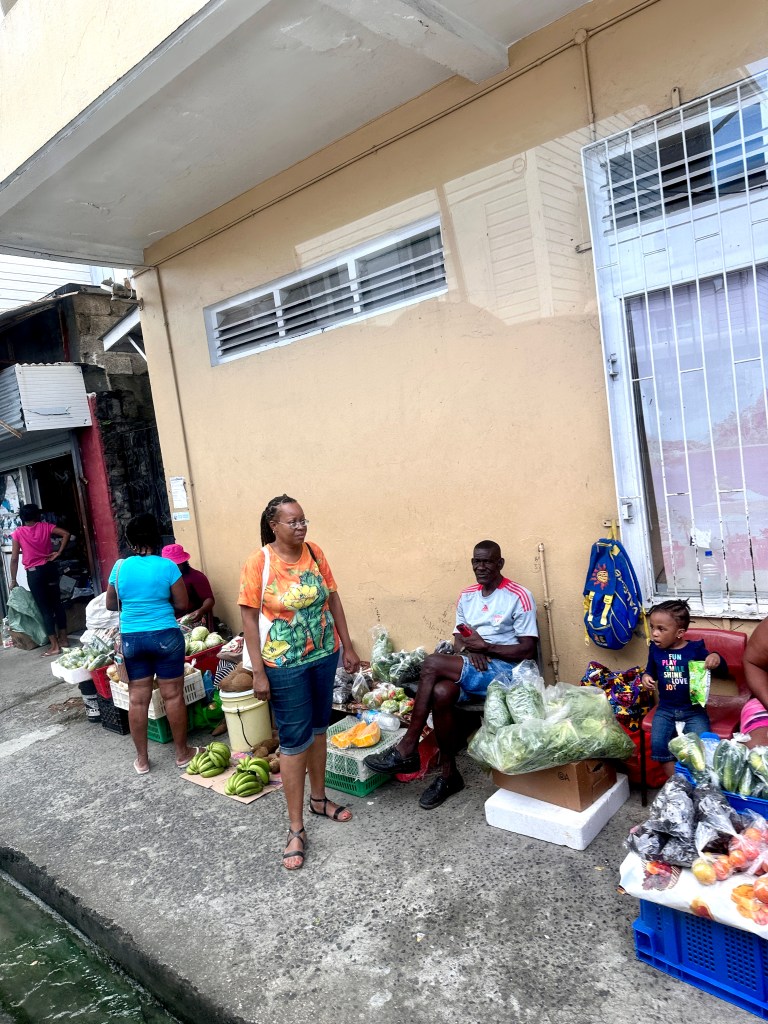
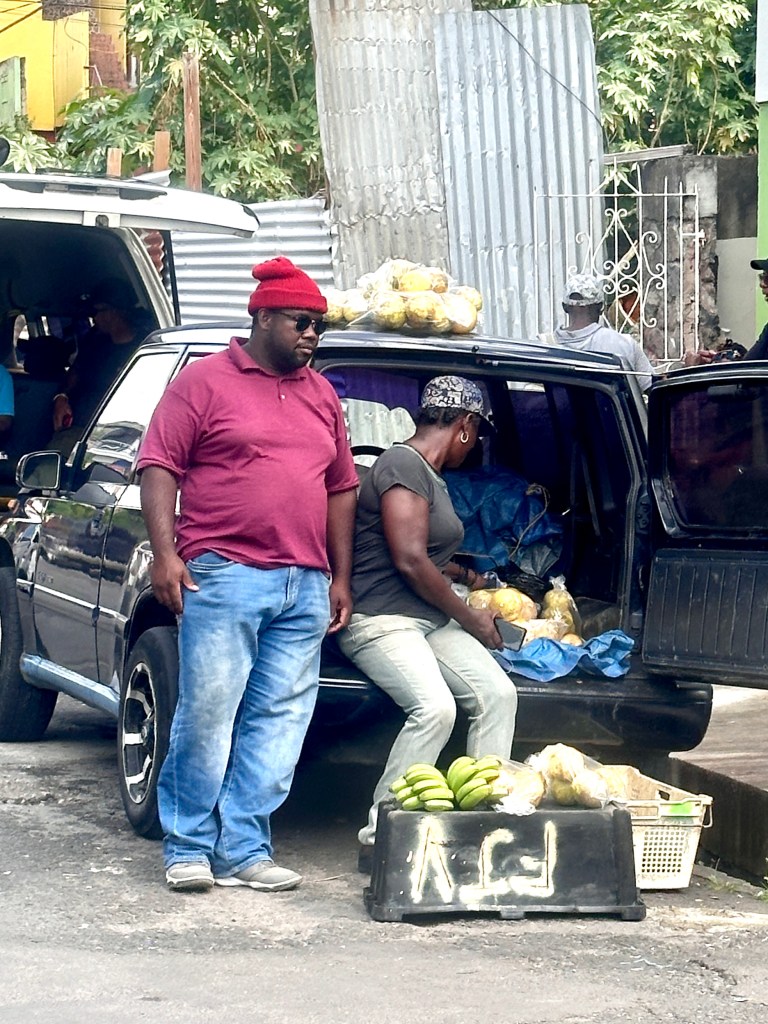
Our tour van took us through the tiny capital city of Roseau where we saw vegetable and fruit vendors selling in the streets and from the back of their vehicles. I saw the usual pastel-colored houses and a few run-down buildings that seemed neglected. Cami, our tour guide who is also a Kalinago (the indigenous inhabitants of the island) told us that the island was 95 percent devastated by Hurricane Maria in September 2017. The powerful destructive hurricane lingered on land for more than 4 hours causing havoc to the island. Until now, a large part of the infrastructure that was damaged had been left unrepaired!

A giant African Baobab tree that was downed during the hurricane crushing a vehicle

Cami, the tour guide related a very interesting fact about the island. She said that there are many centenarians (100 years old and older) who lived in Dominica – one even lived to be 128 years old (Google it if you doubt it)! In fact Cami’s own grandmother lived to be 106 years old! So many old people who lived in the island that it was considered a “blue zone“. Blue Zones are places around the world (and they’re not that many) that are dedicated to creating healthy communities. The first in the US just recently recognized is in Albert Lea, Minnesota.

Our tour took us to a place where some of the handicrafts were made by blind people! They used rattan for the baskets. Trini bought a colorful kaftan which she proudly showed me, when I looked at the tag it says “Made in India“!

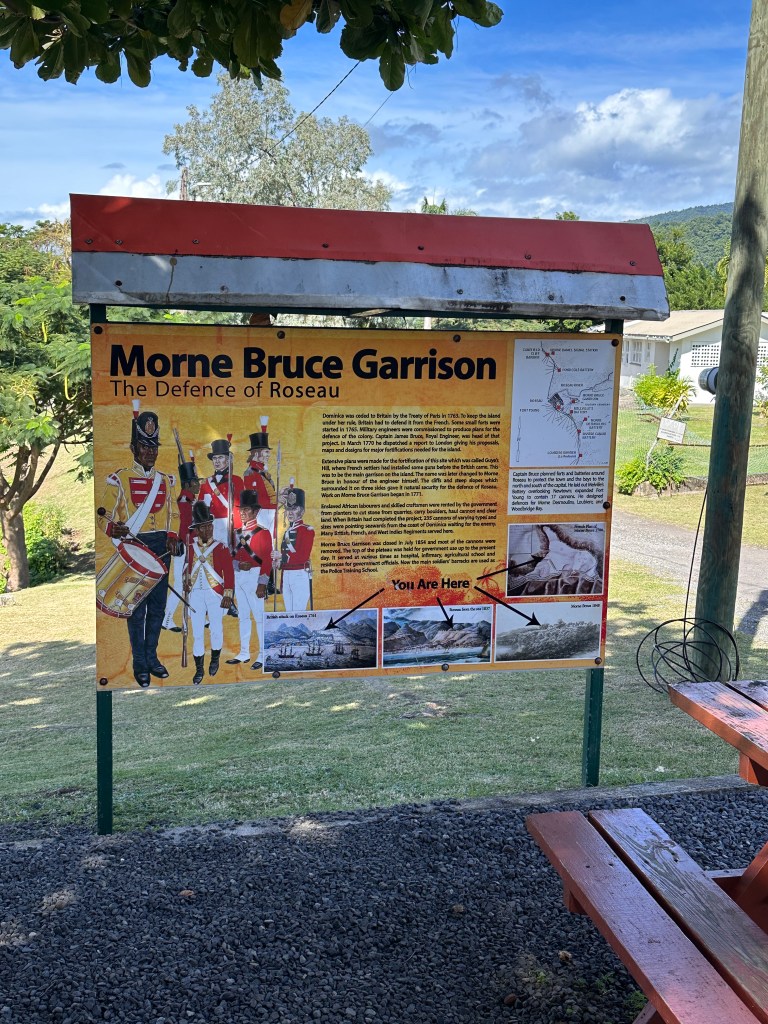
The last stop took us to a higher elevation that allowed us to admire the bluish colored water where the Atlantic Ocean and the Caribbean Sea converge, and the multi-hued buildings below. The view point is called Morne Bruce Garrison a former British fortification that was built to protect the island from the French.

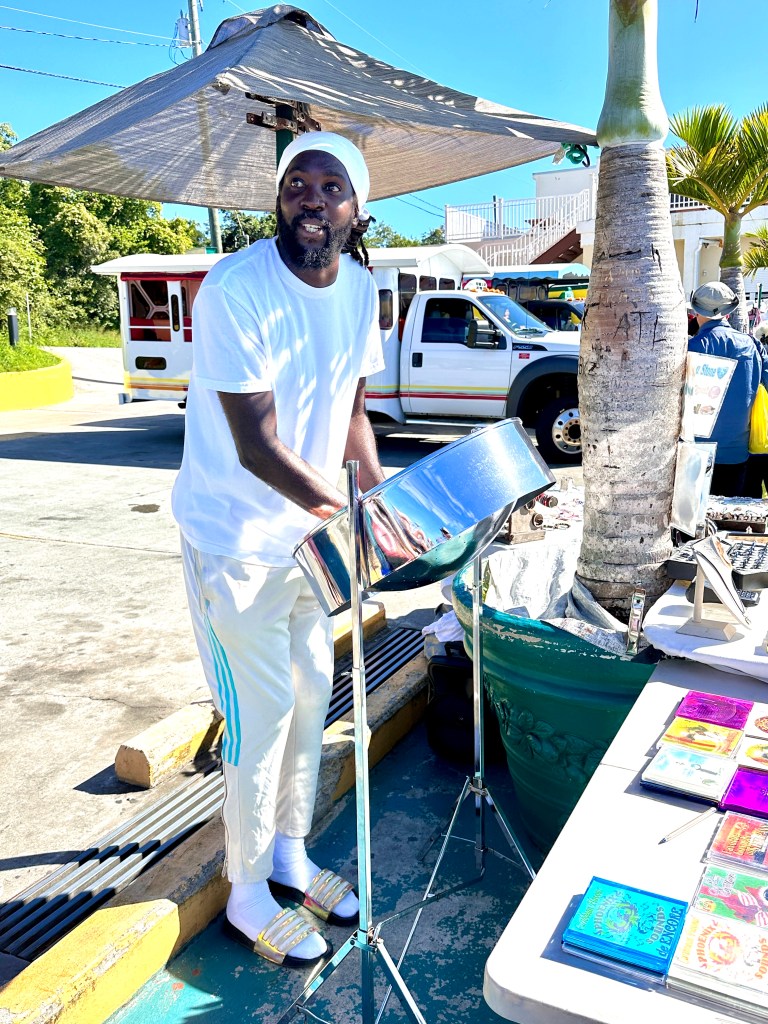
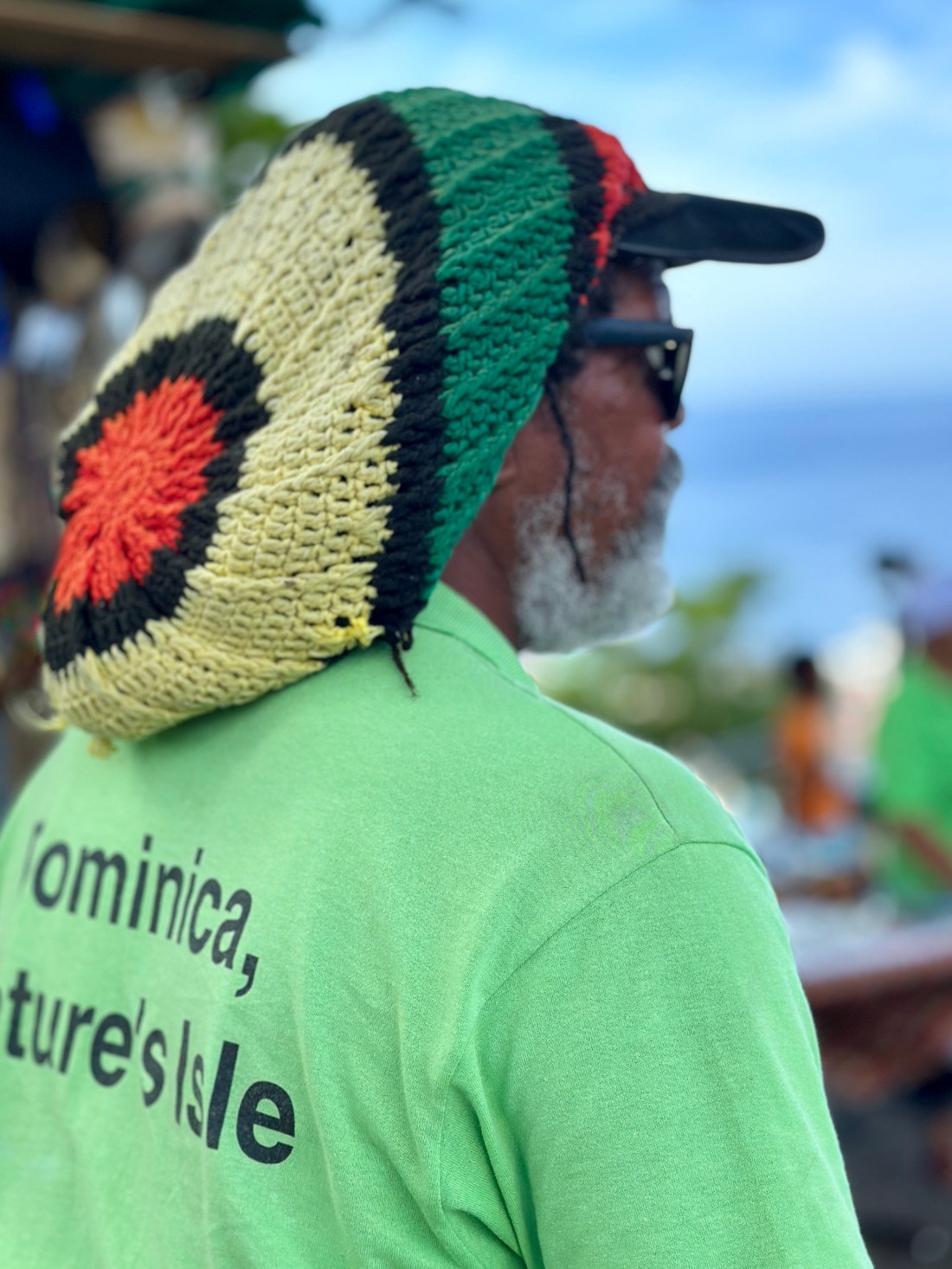
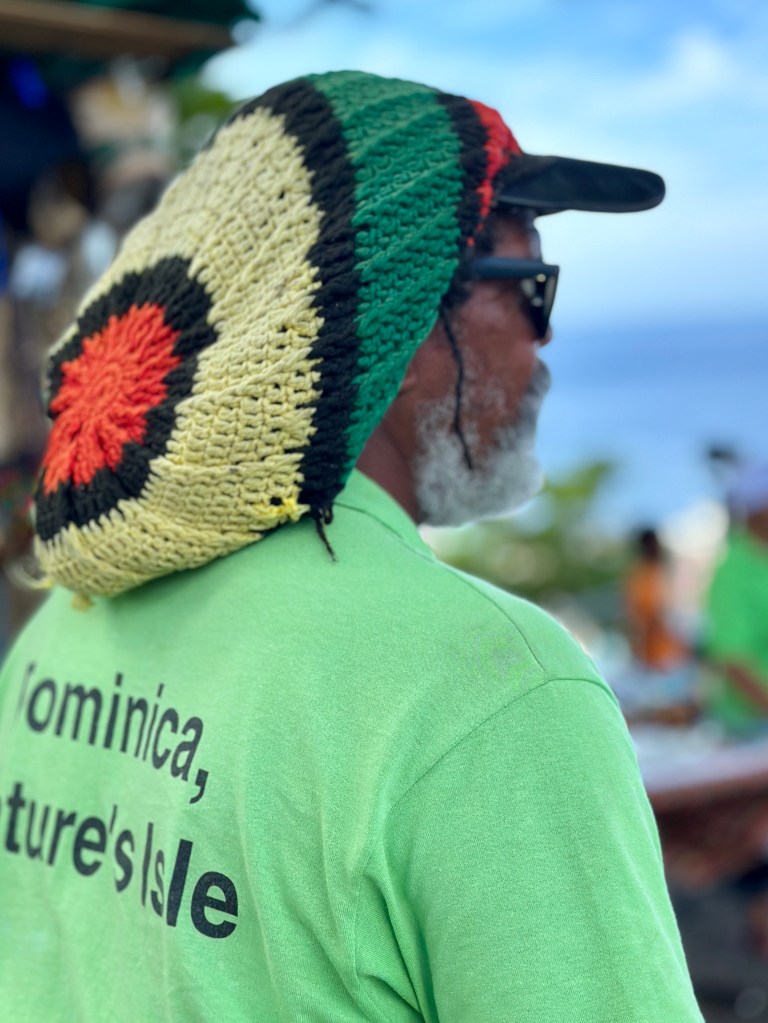
While at the Morne Garrison I spotted a man selling cold drinks and he was sporting a colorful knitted head gear (I surmised to hold his long dreadlocks). I bought a bottle of Caribe beer and asked him if I can take his picture, he gave me his permission so I snapped a couple of head shots (see below).

ANTIGUA (ST. JOHN’S) & BARBUDA

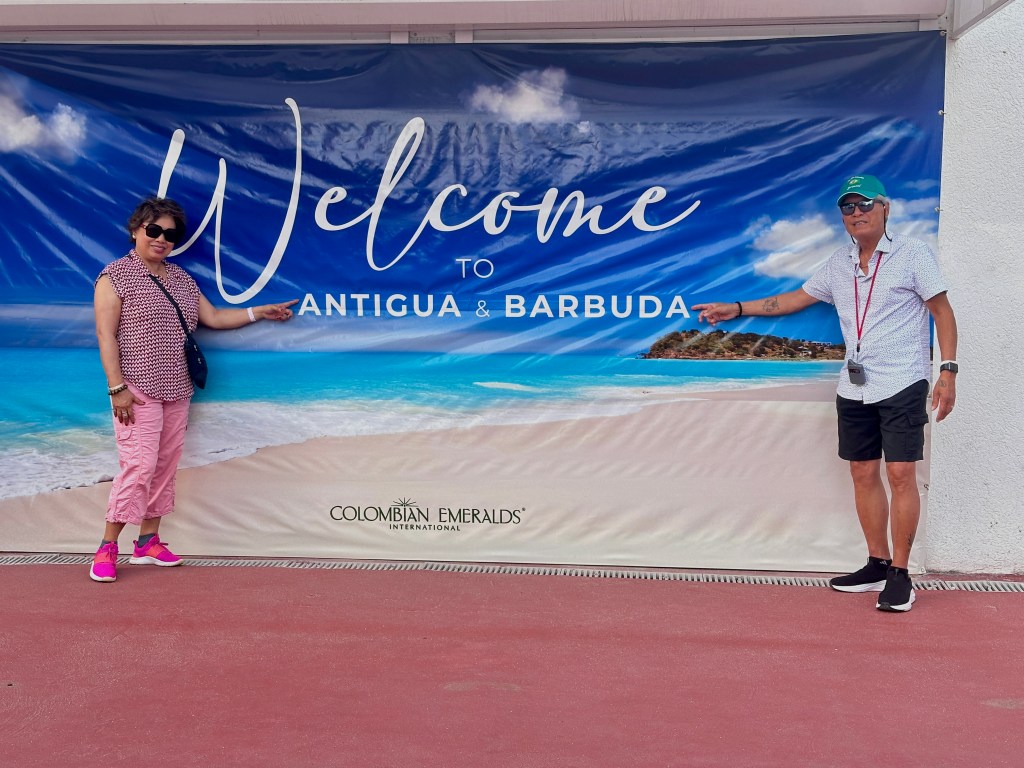
Antigua and Barbuda is a sovereign island country in the Caribbean. It lies where the Atlantic Ocean and the Caribbean Sea meet.

The country consists of two major islands, Antigua and Barbuda, which are approximately 40 km (25 mi) apart, and several smaller islands, including Great BirdGreenGuianaLongMaidenPrickly PearYork, and Redonda. The permanent population is approximately 97,120 (2019 estimates), with 97% residing in Antigua.[12] St. John’s, Antigua, is the country’s capital, major city, and largest port. Codrington is Barbuda’s largest town. (Wikipedia)

Tourists come here for its powder-sand beach and to party!

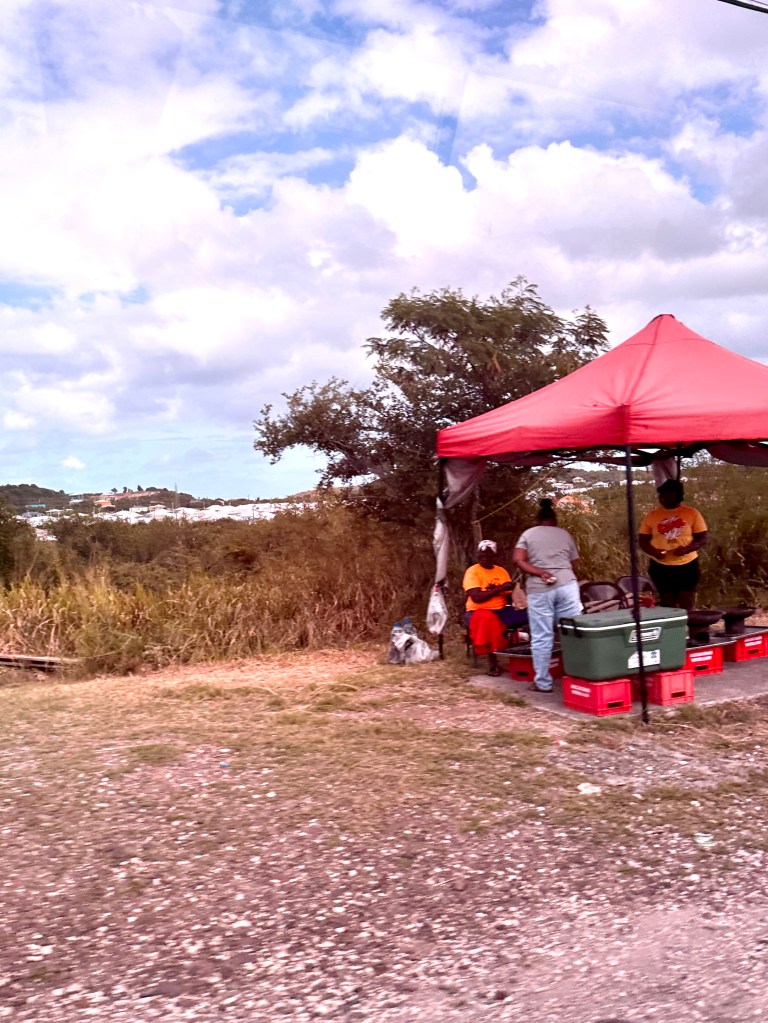
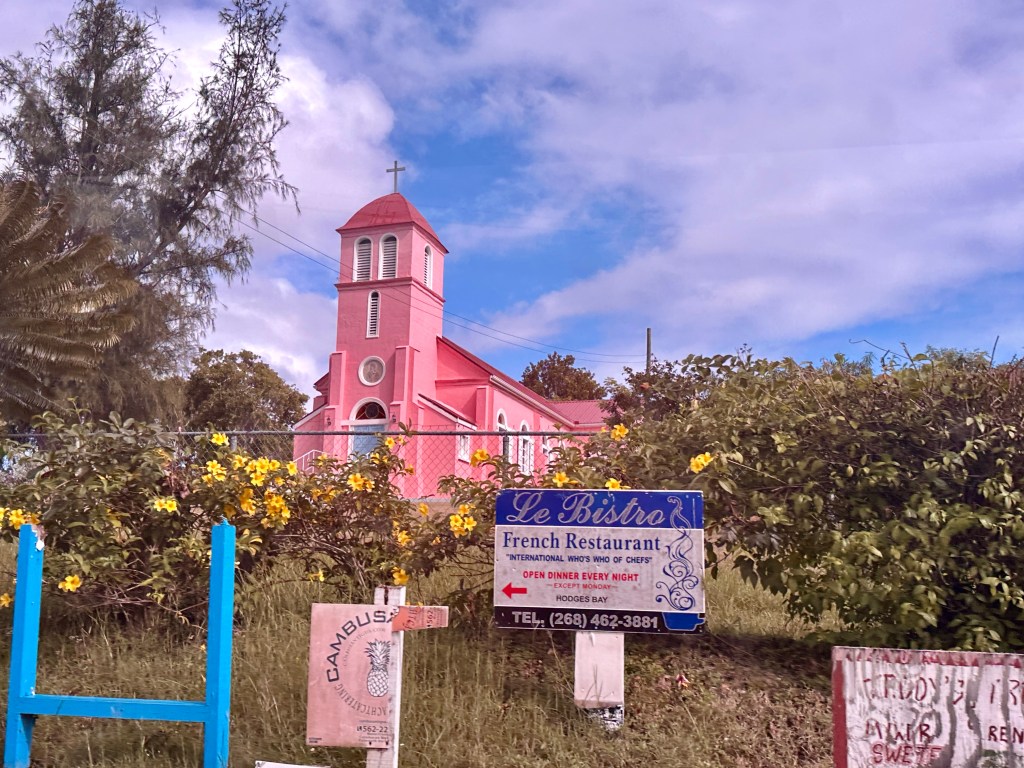
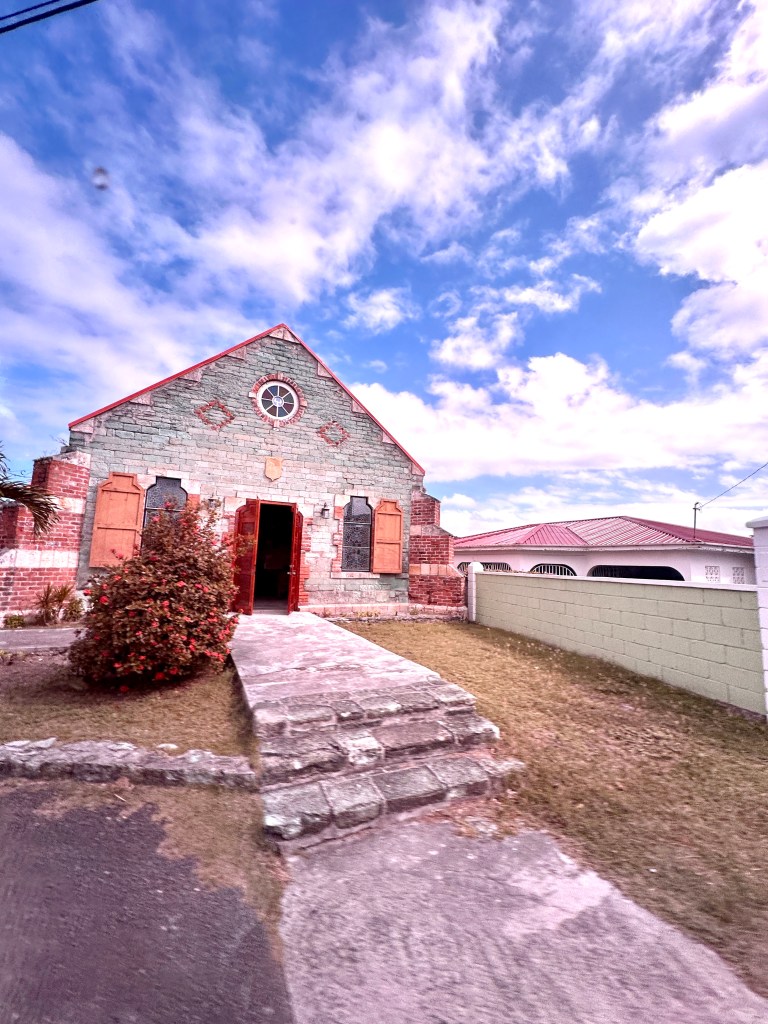
Our ship docked in St. John’s, Antigua at 12:00 noon. Our tour started at 1:15 PM which took us across the island. Same views with the other previously visited islands: verdant vegetations, pastel-colored homes, poor villages along the way, small chapels, etc.

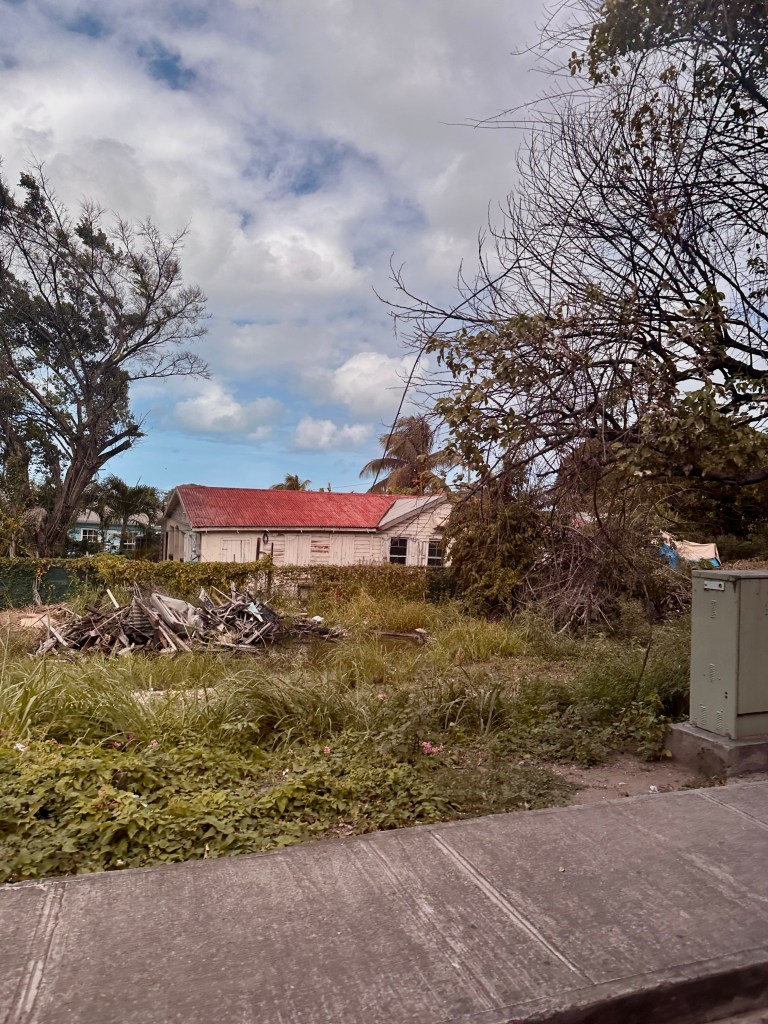
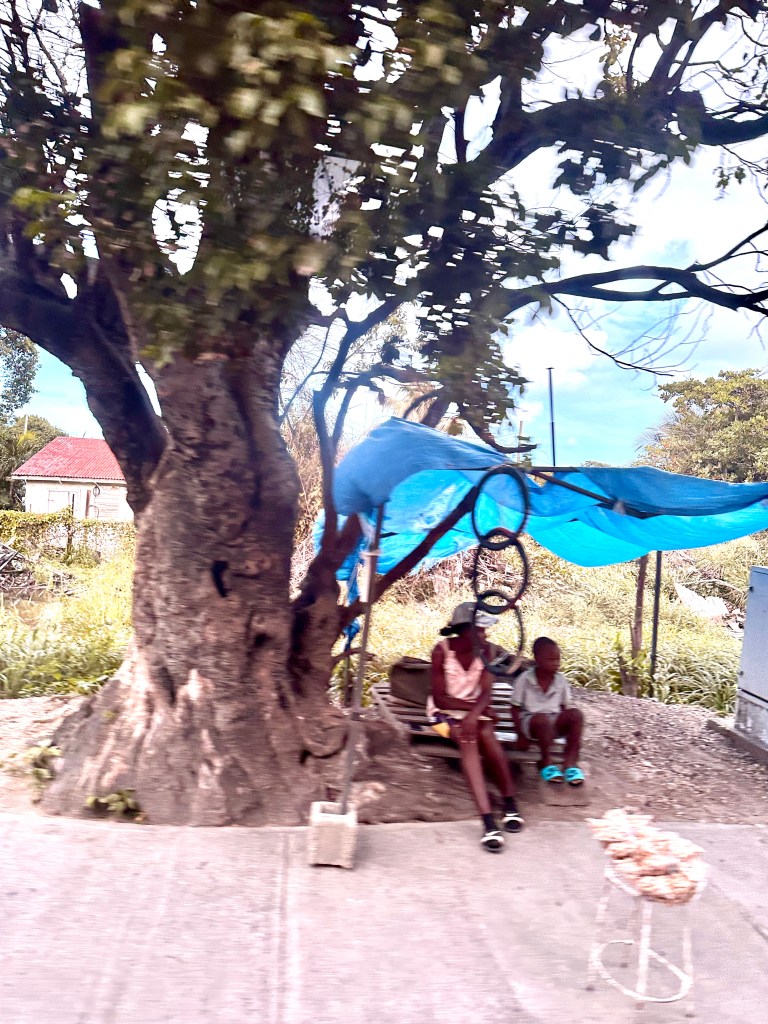
The road is what you expected from a third world nation – not a very comfortable ride! Although poverty is noticeable outside the city, our tour guide informed us that education is free to include books and uniforms (same as Barbados) from first grade to secondary school.

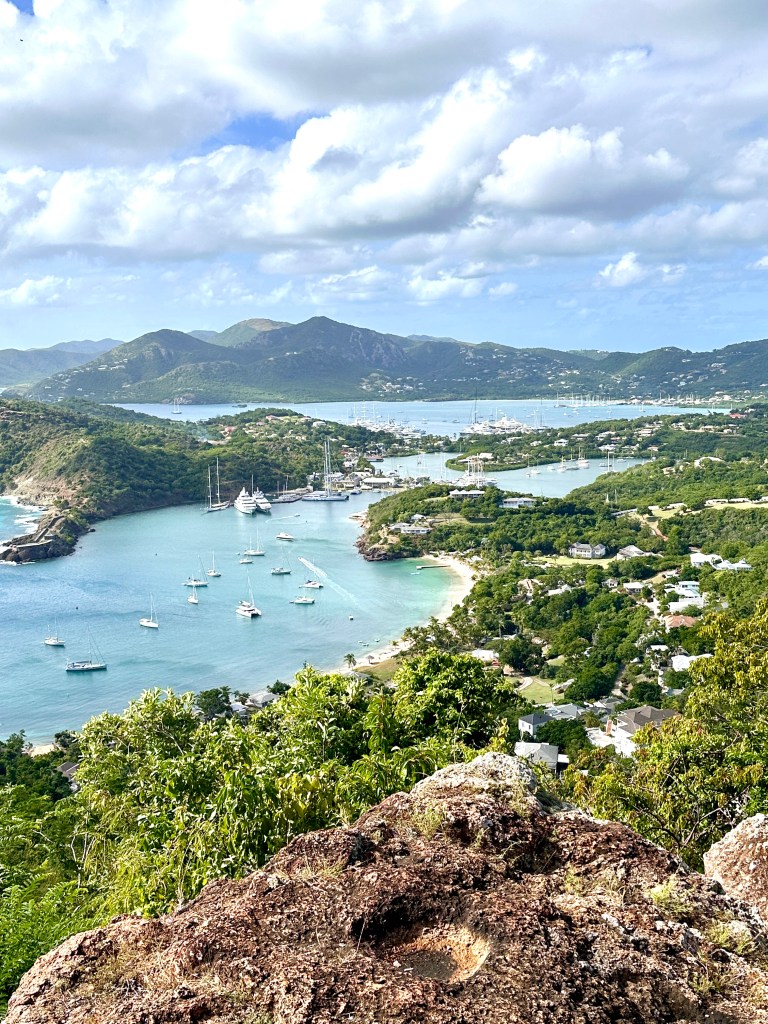
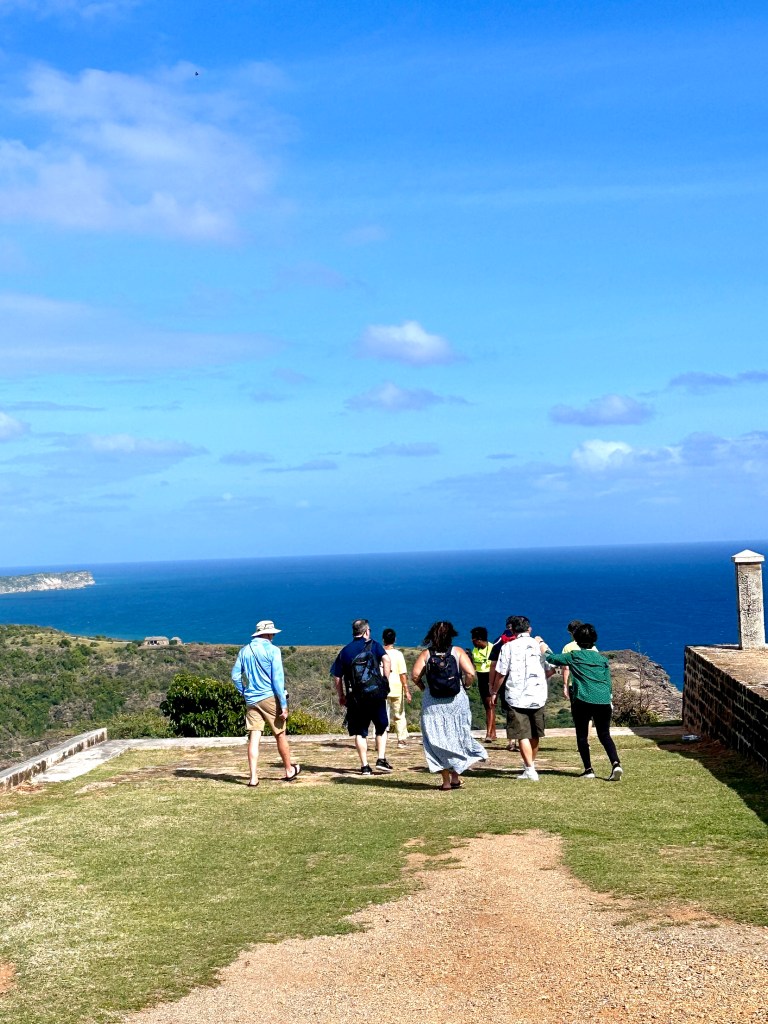
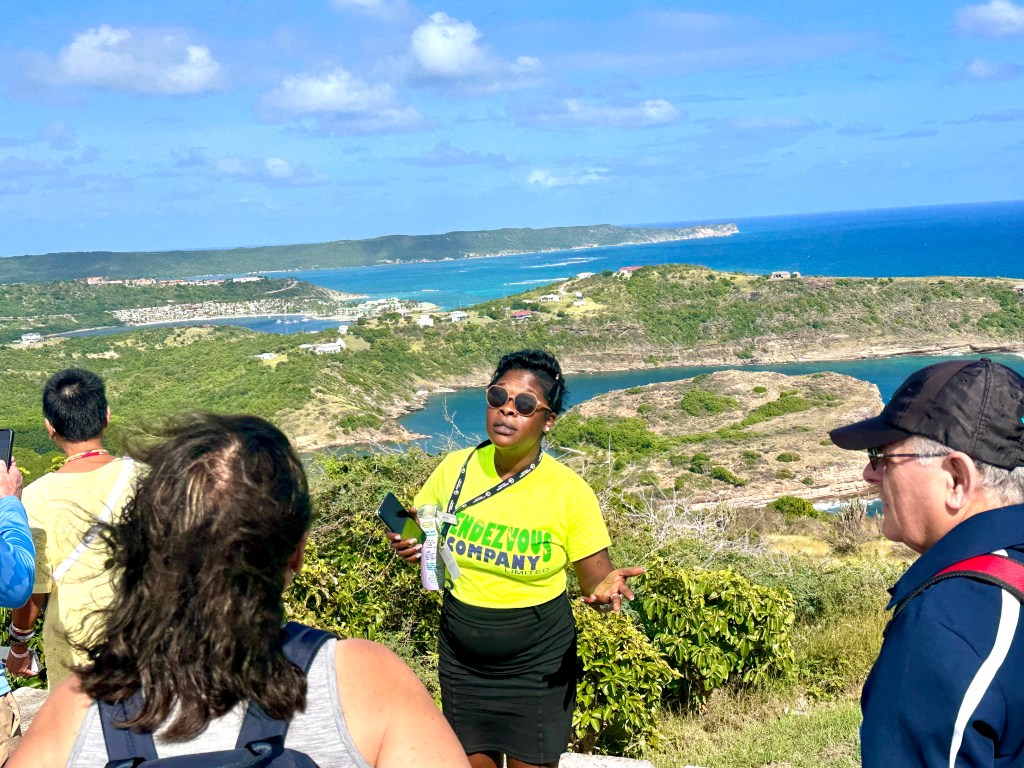
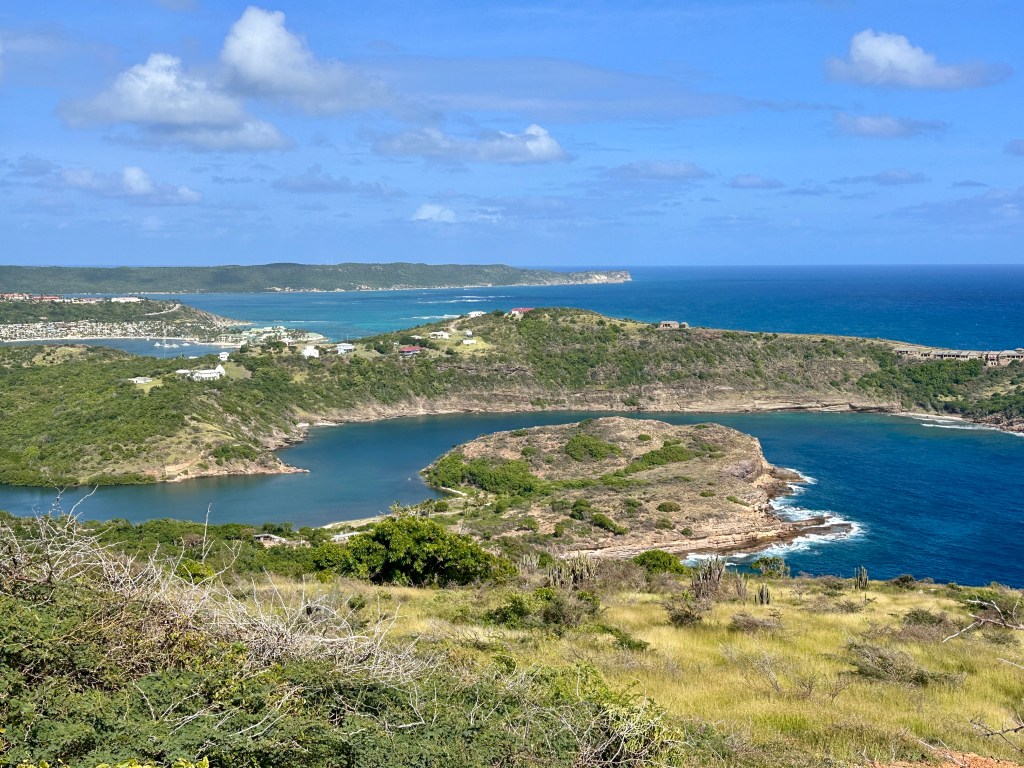
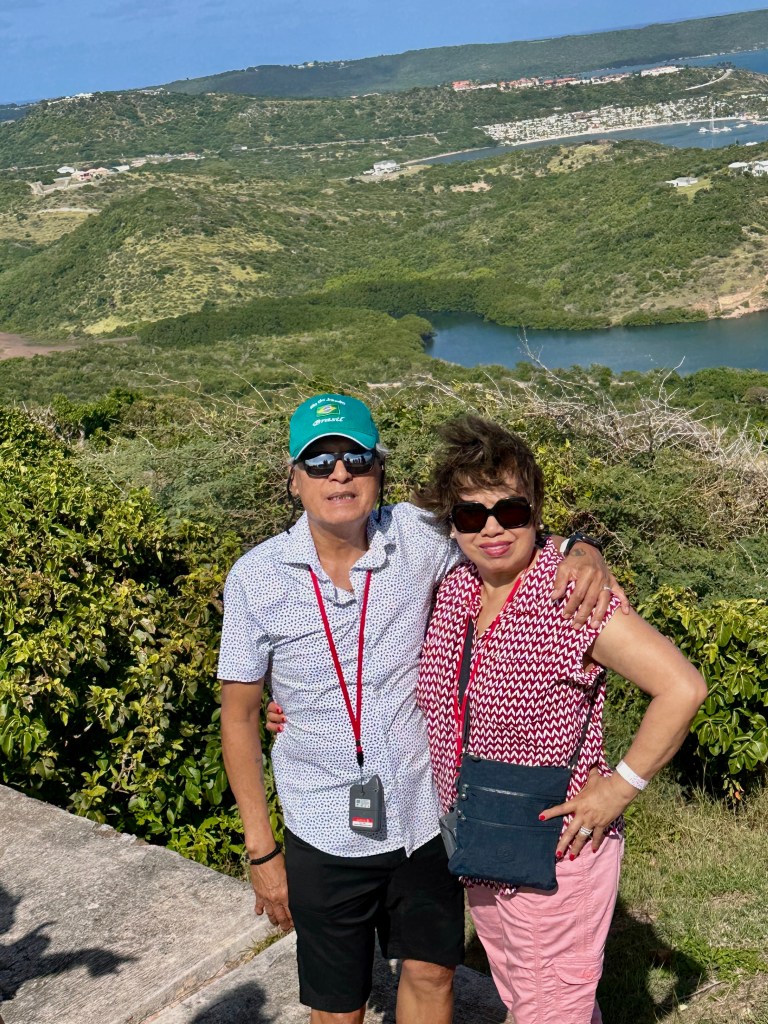
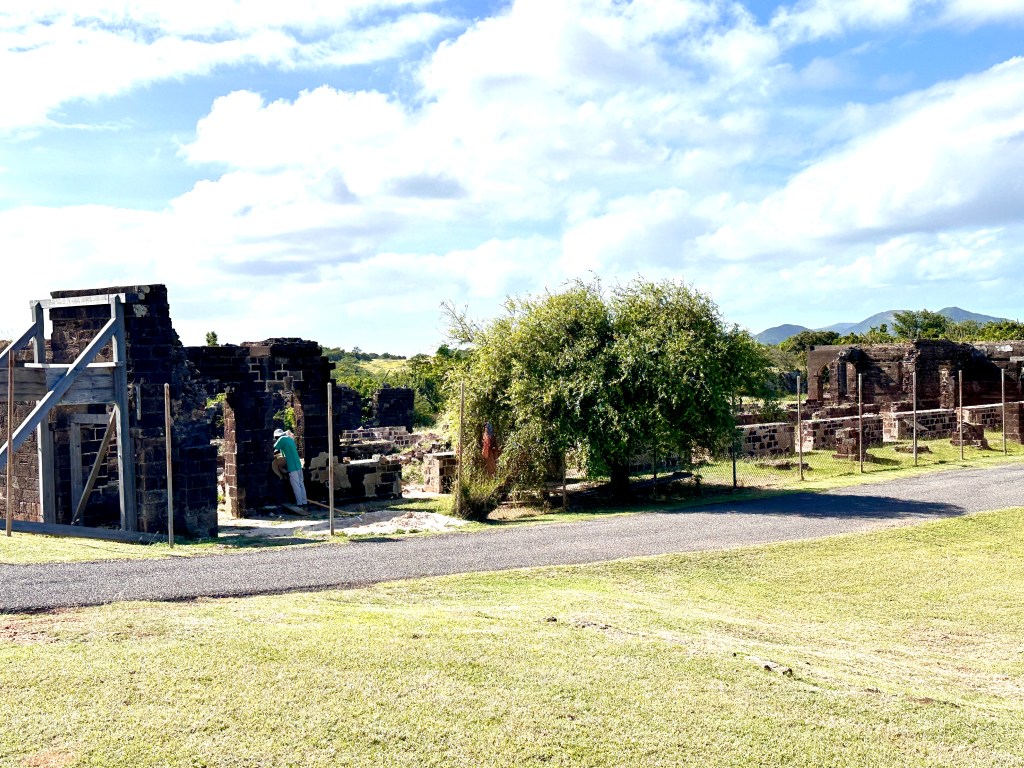
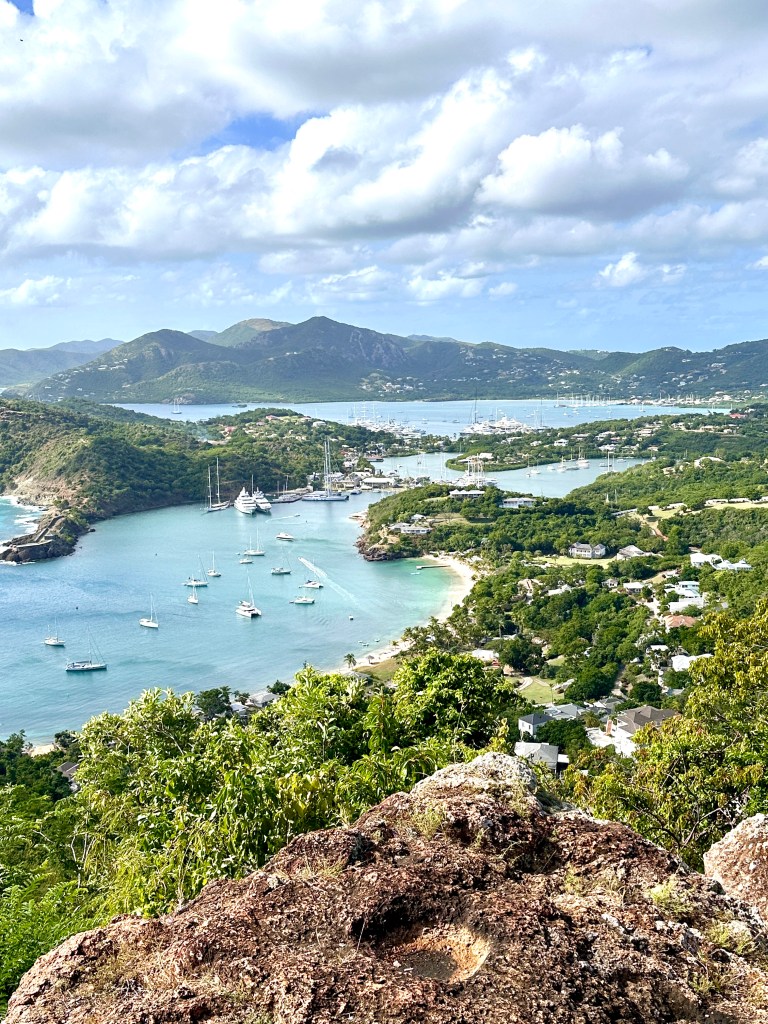
The 15-seater van took us to about 450 feet elevation where the ruins of an old English fort is located. There we admired the sweeping panoramic view of the azure waters of both the Atlantic Ocean and Caribbean Sea as this is where they meet!

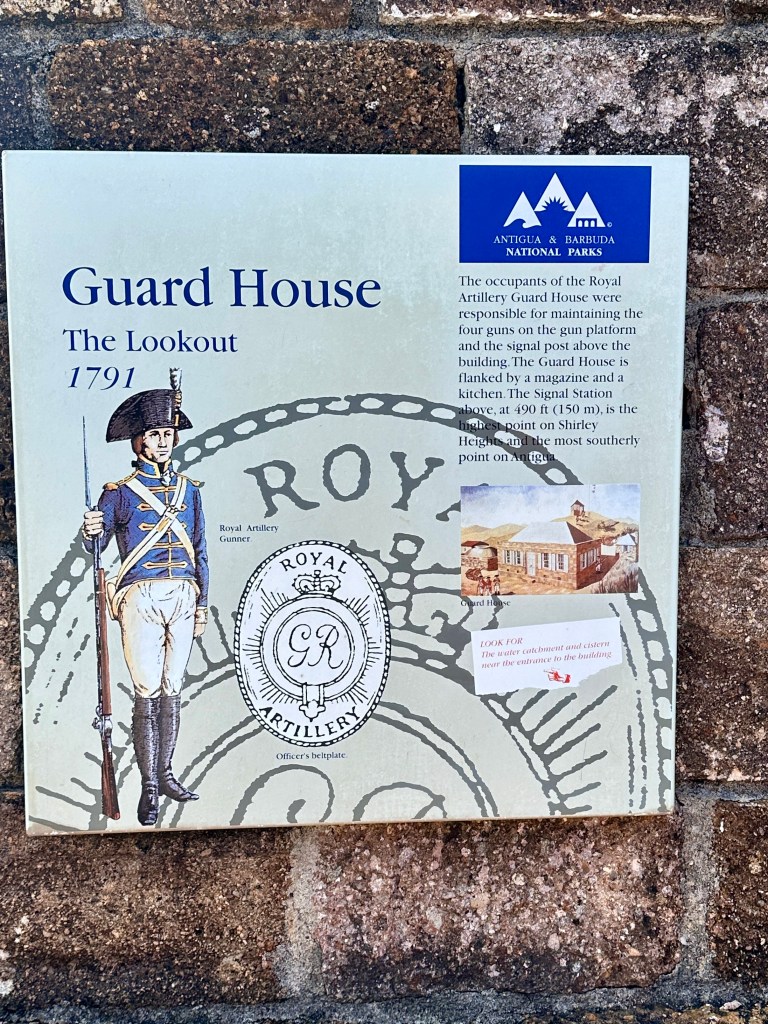
Next we stopped by Shirley Heights Lookout with similar fantastic views of English and Falmouth Harbors! It was a very clear day so the visibility extended miles and miles beyond.

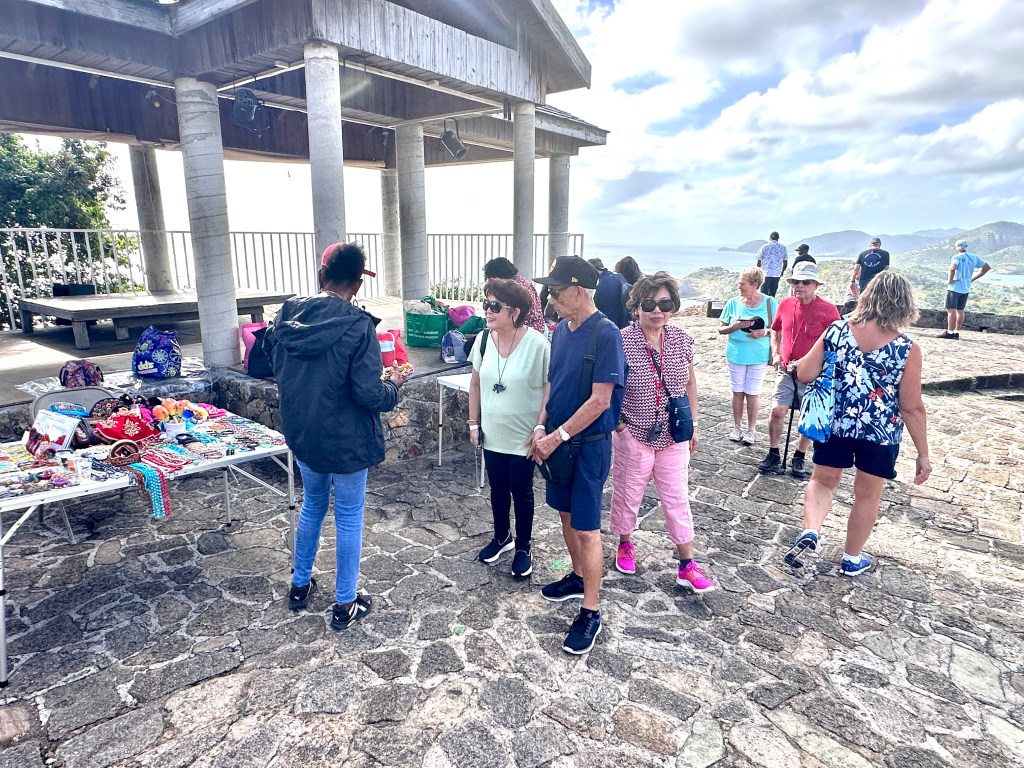
With every stop are souvenir shops of course! We’ve been traveling for a long time and Trini and I learned that most souvenirs we buy end up in the garage or worse, the trash bin. So the only souvenir we buy are ball caps for me, magnets for a “special place in the garage”, local delicacies for friends, and maybe alcoholic drinks (in this case rum).

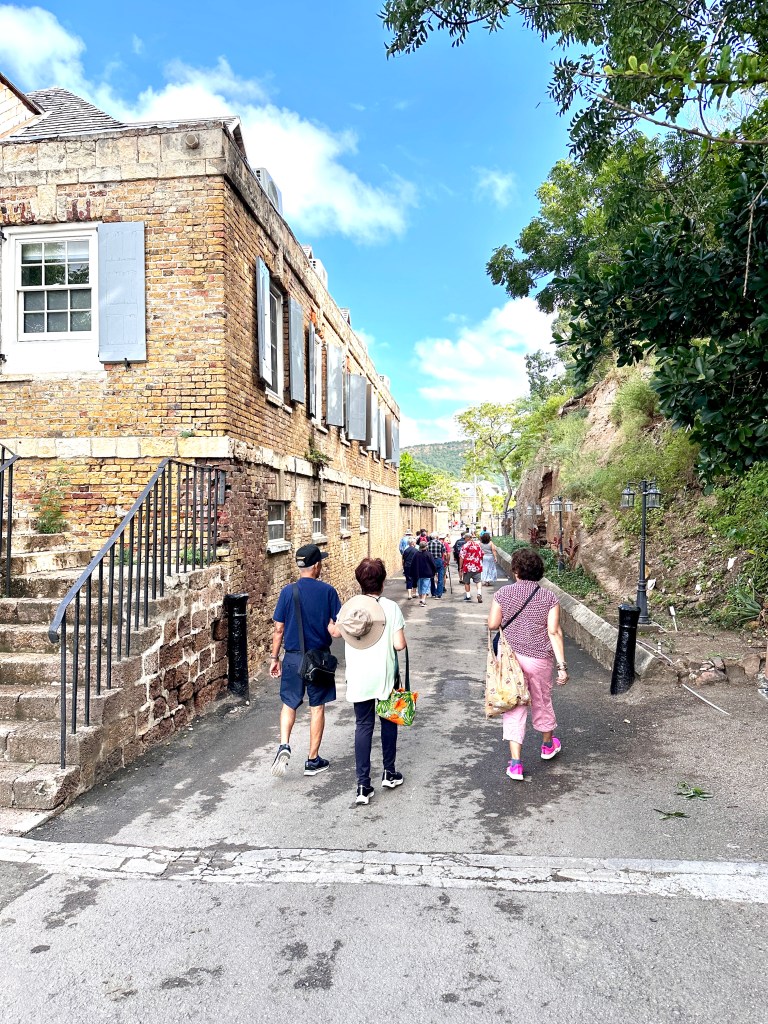
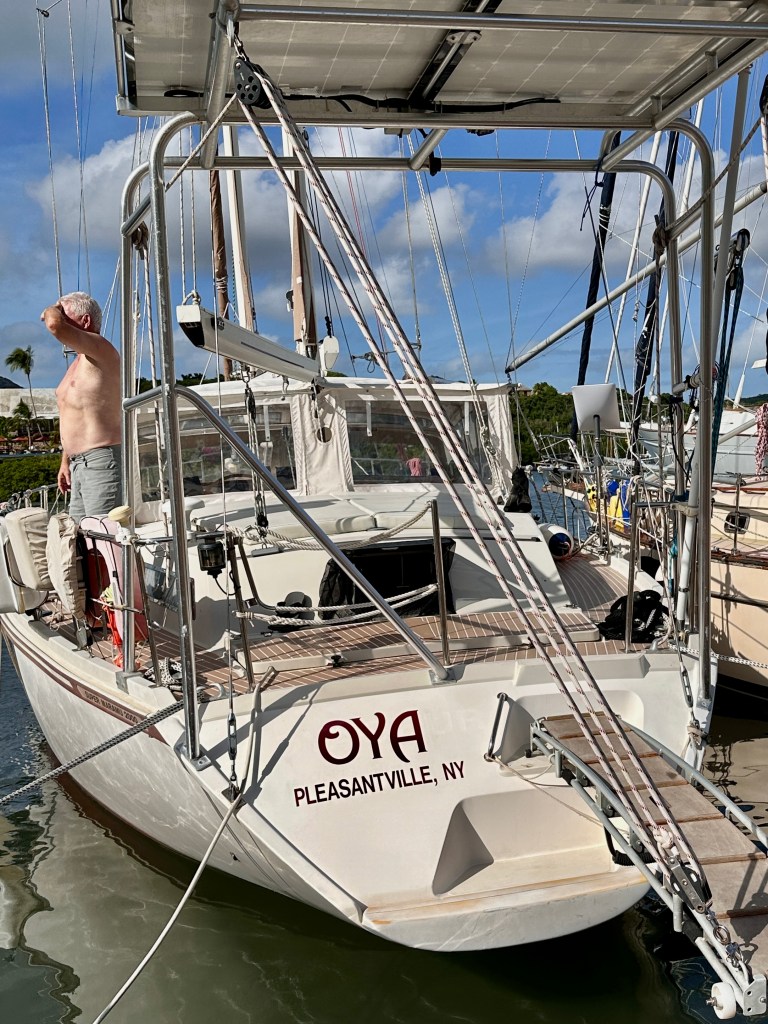
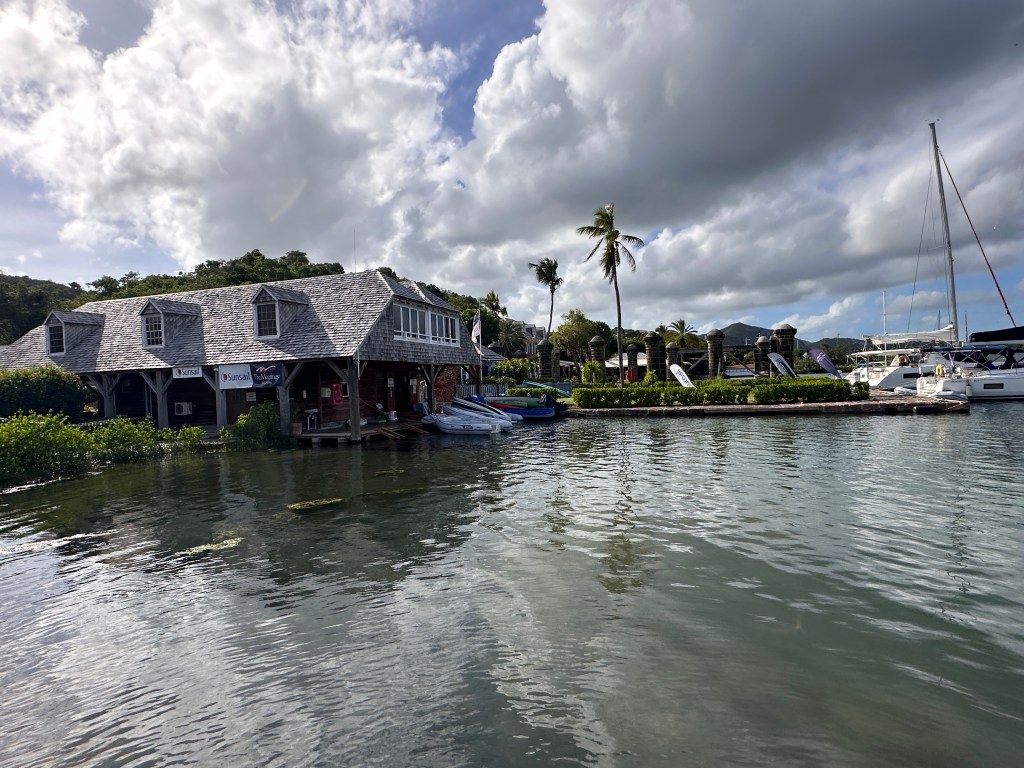
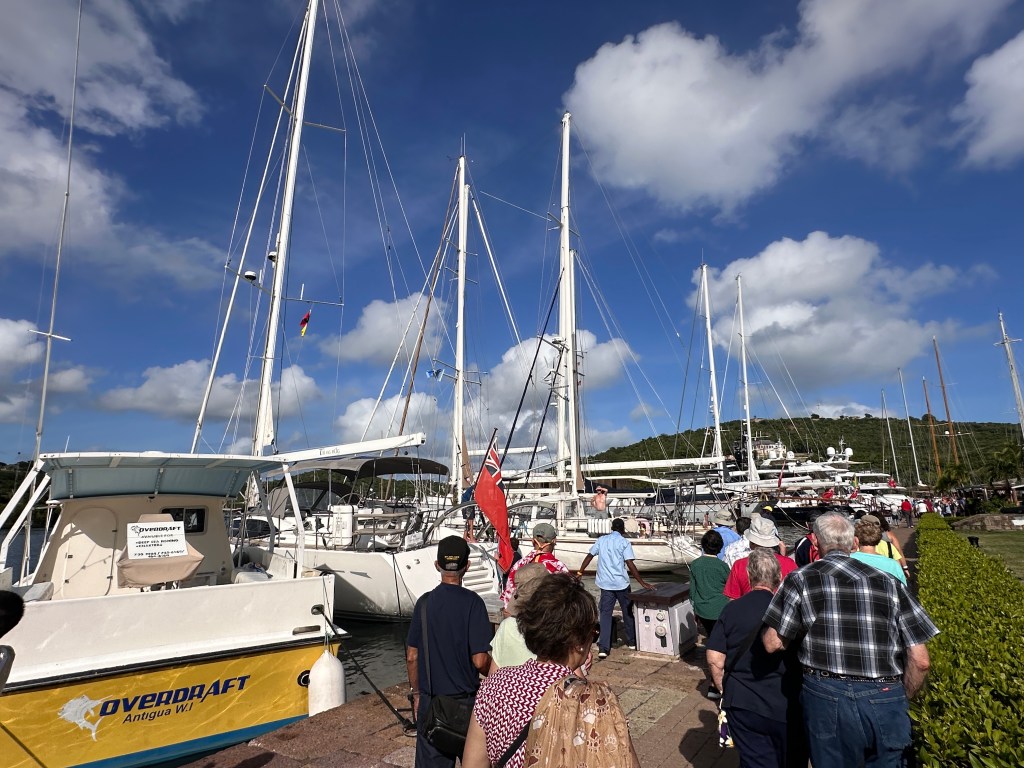
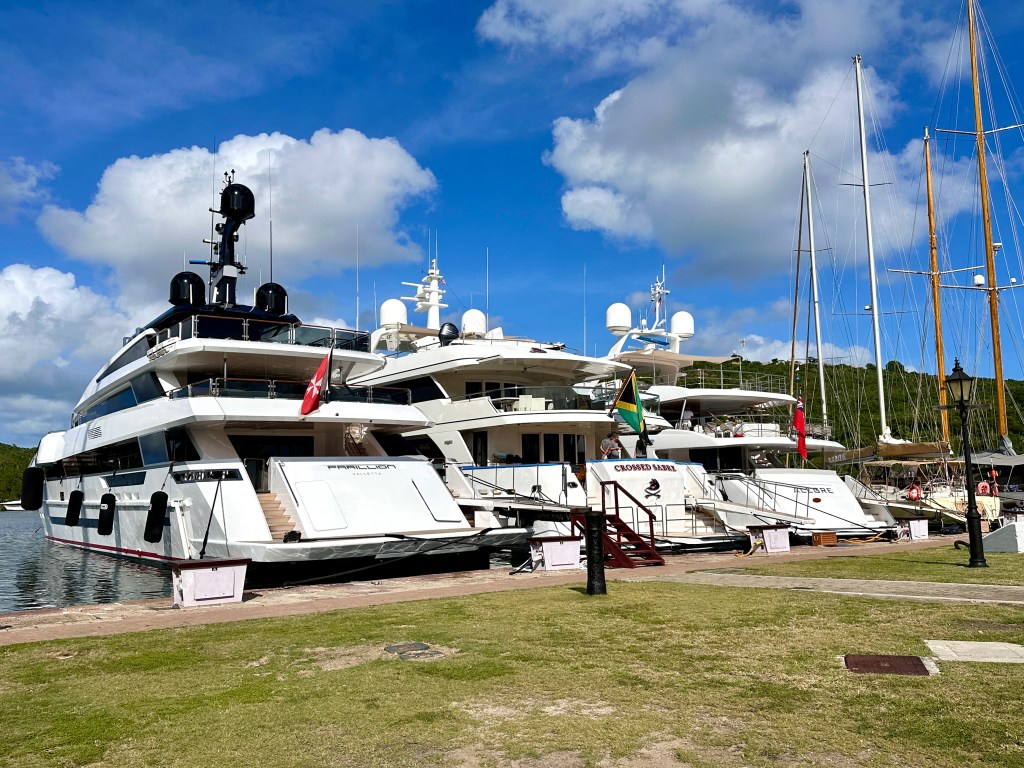
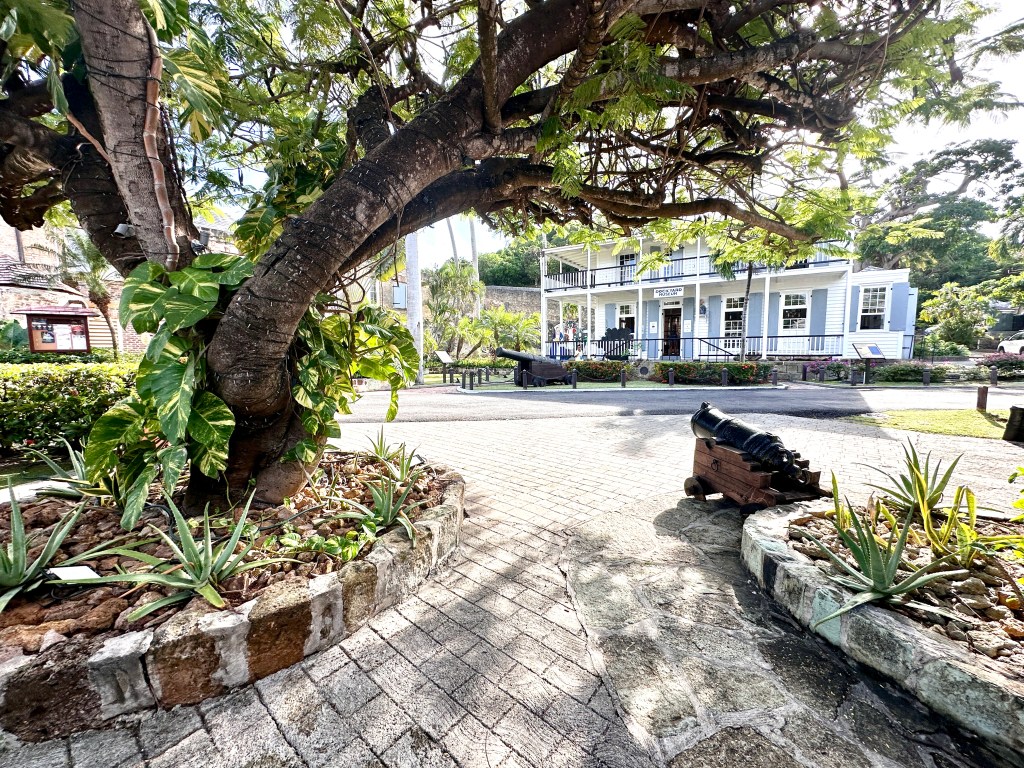
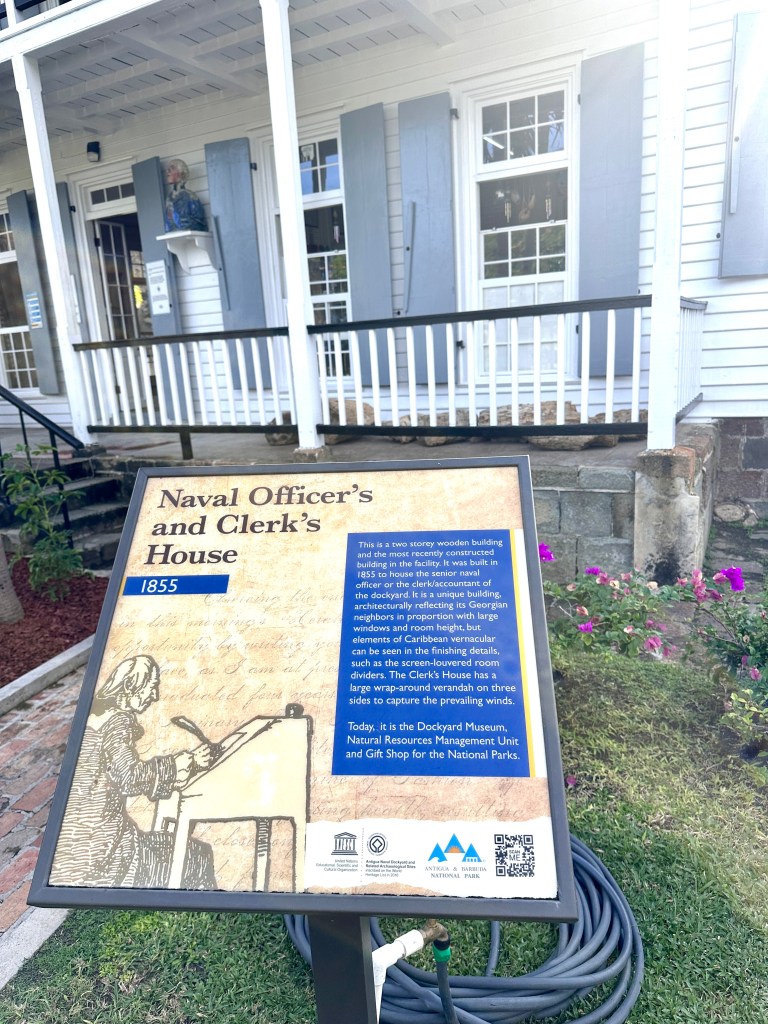
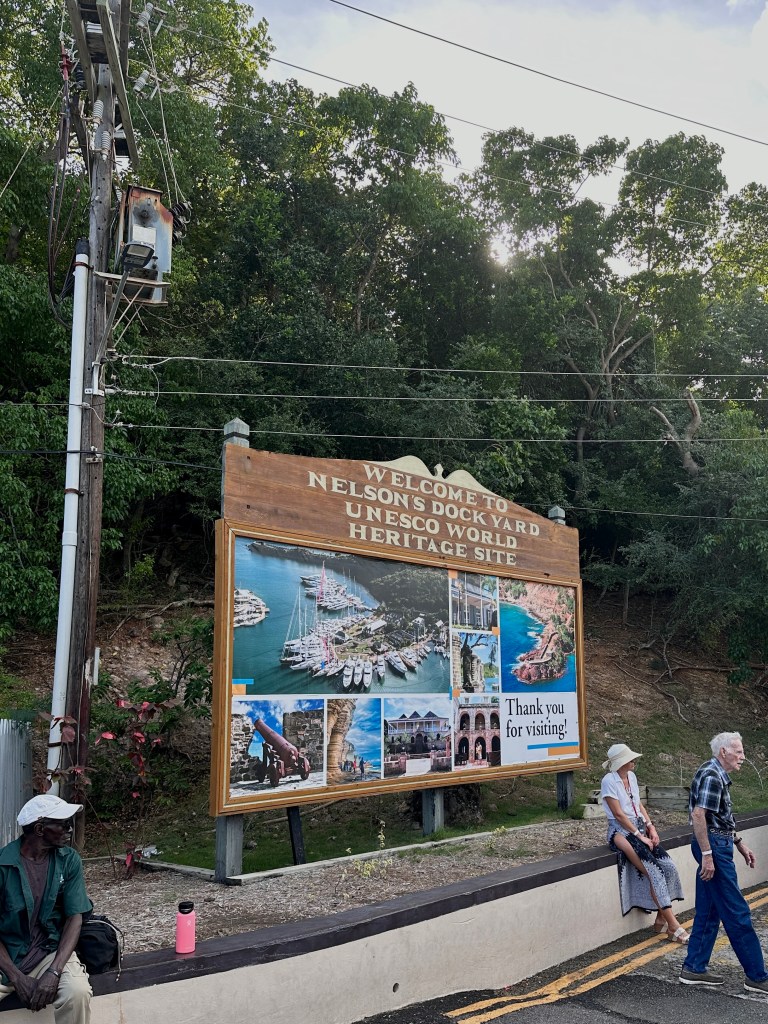
Our last stop was in Nelson’s Dockyard which is a cultural heritage site and marina in English Harbor. It’s after Admiral Horatio Nelson (best known for his victory at the Battle of Trafalgar) who lived in the Royal Navy Dockyard from 1784 to 1787. While here we tasted the local rum punch. Not the best time to drink when you’re hungry.

One thing I noticed is that every port we’ve visited here in the Caribbean there are always high-end stores selling expensive watches and bags and always, always several DIAMOND STORES! And of course, the DUTY FREE SHOPS! It’s nice to browse around these stores but I can’t afford to buy any of the items on display.

In St. John’s, the duty free shops are located next to where our ship was berthed. Classic rock songs from Credence Clearwater Revival, Journey, Foreigner and other popular songs are blaring from one of the establishments! The younger cruisers (from Princess) docked next to us seem to enjoy these music whereas my fellow passengers from the Viking looked irritated (just my personal observation). But I danced with the music anyway!

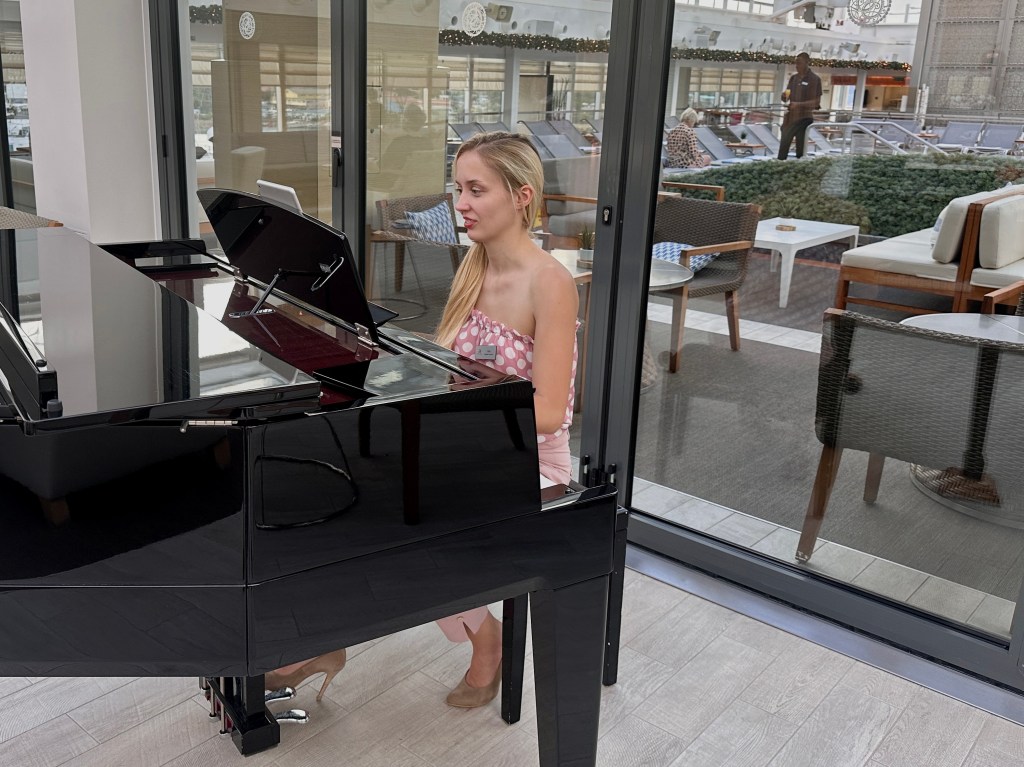
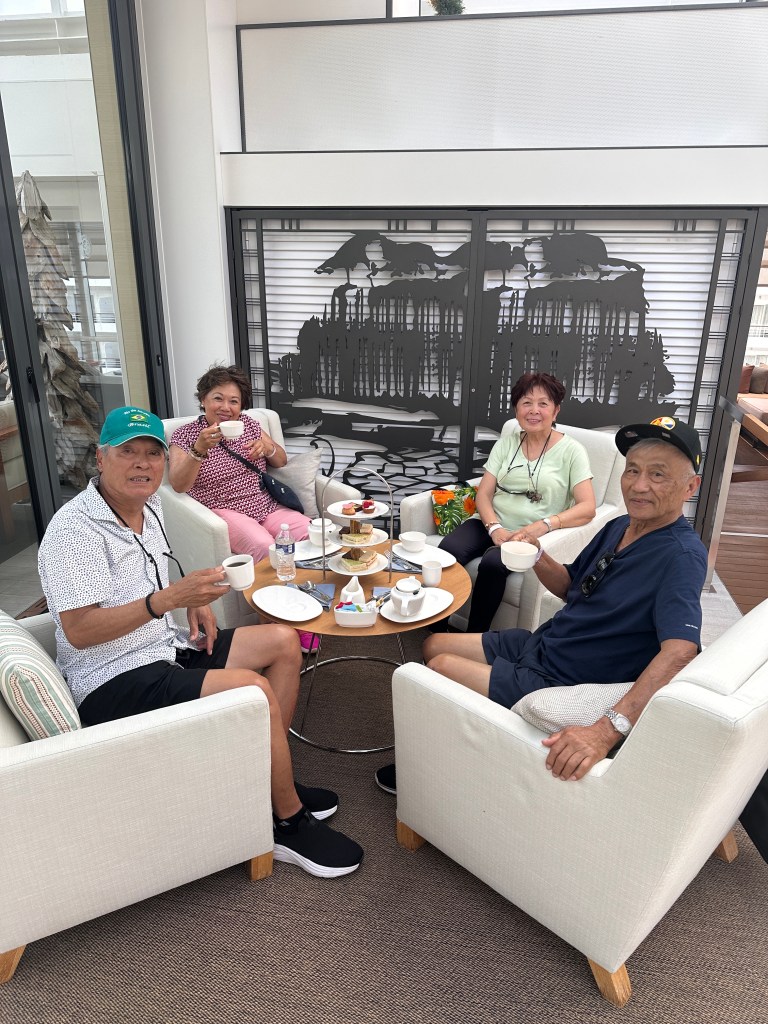
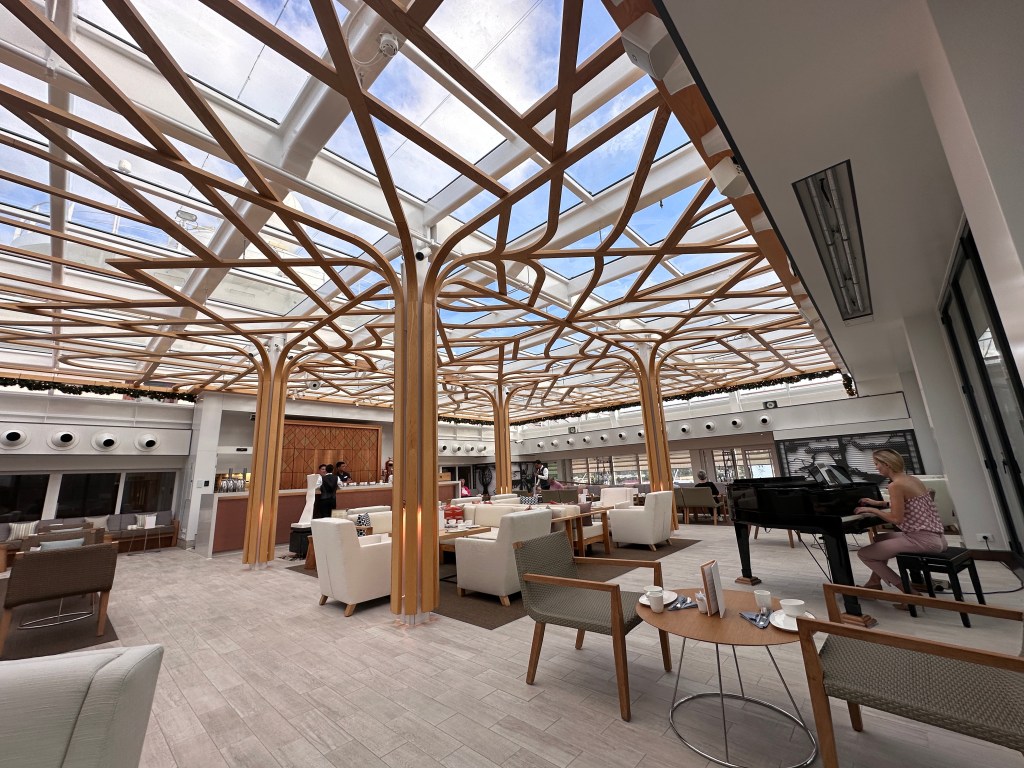
We arrived back from the tour around 4:15 PM and I was hungry since I skipped lunch. The only place to grab something to eat before dinner was at Wintergarden. We ate scones and tiny sandwiches downed with your choice of tea or coffee (I opted for my favorite black cafe) while we were entertained by the resident pianist, Lidia.

BARBADOS – Rihannaland

Barbados is the most Eastern of the Caribbean Islands which was formerly a British Colony (again, they drive on the wrong side of the road)! This island changed hands several times – first the Spanish explorers, then the Portuguese, and finally under the British in 1625. It is often called “Little England” for its lasting British influence. The capital is Bridgetown. Like most of the Caribbean islands, their economy is (or was) dependent on rum, sugar, and molasses exports. Population is about 303,000 (2023).

Our tour guide, Kejia, was not also the driver today. Bensen was. So it looks like the tour owner can afford to pay two people unlike the other three islands we’ve already visited. Compared to the mediocre tour guide yesterday , Kejia was a fresh breath of air! Not only did she know what she was talking about, she also answered lots of questions from us. She was articulate, although she talked a little too fast for me.

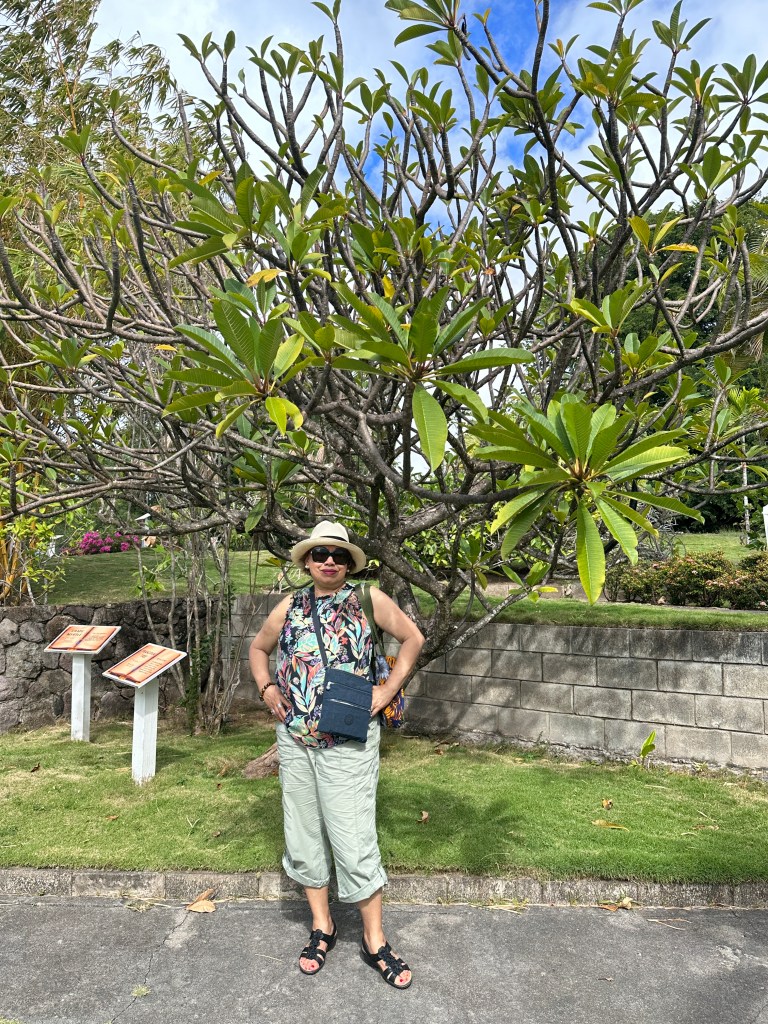
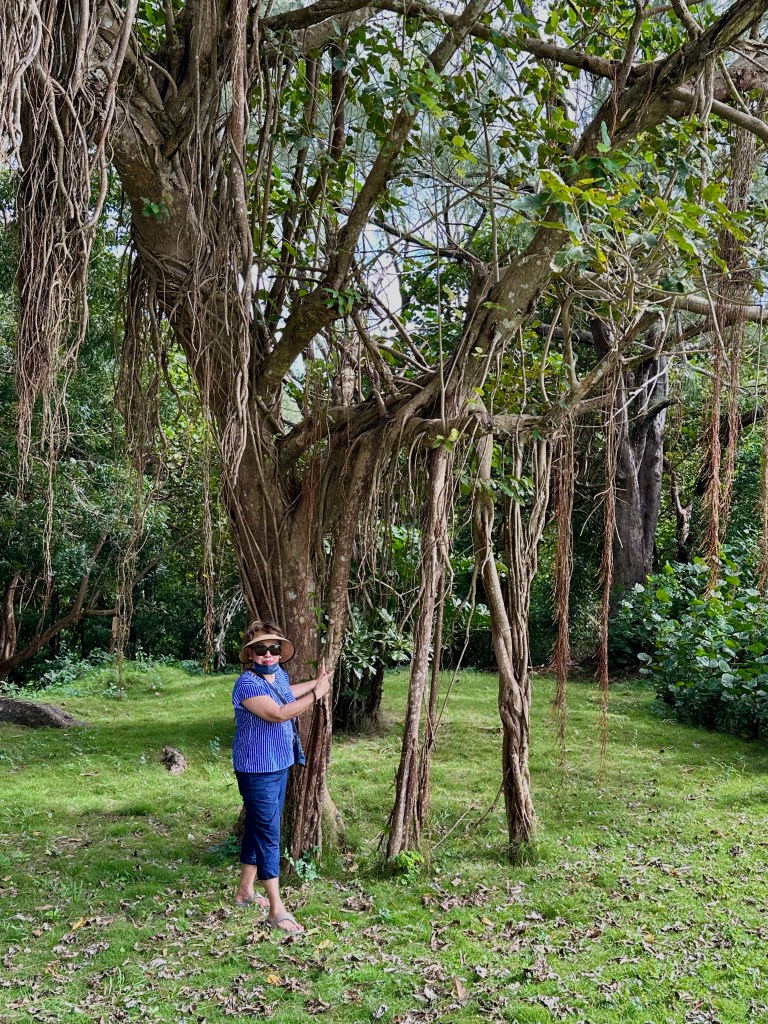
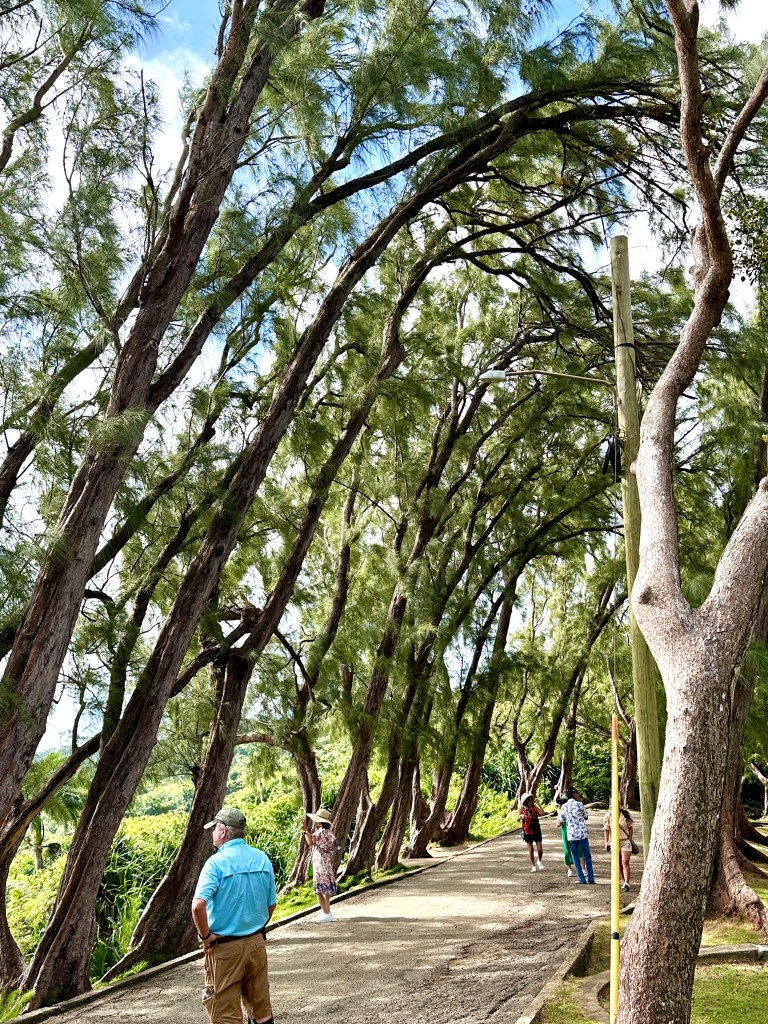
Barbados is just like the other Caribbean islands – lush vegetations, rocky, hilly, hot and humid with friendly folks! Many of the local flora are also found in my country of birth: colorful plumeria, the invasive cadena de amor, banana trees, different hues of bougainvilleas, towering mango trees, coconuts, and many more. But what caught my eye are the strange-looking trees (fig variety) with their roots growing from the branches (see photo below)!

The small tour van took us through Georgetown and we drove around the island admiring the contrasting modern hotels and pastel-colored homes. You could tell that Barbados is “richer” than most of its island neighbors! Its economy is built of tourism and offshore banking.

Above was the modest house the R&B superstar- RIHANNA – grew up in! Below, the street is also named after her.

Tasting Mount Gay rum punch

This island hopping is starting to bore me. I wish I still enjoyed snorkeling and scuba diving so I can at least do something other than touring the islands. Maybe I should suggest that the Caribbean Islands cruise should be limited to four islands but stay a couple of days (or three) in every one of them so the cruisers can explore them more and enjoy their culture.

Tomorrow we visit ST JOHN’S, ANTIGUA. Ho-hum….

ST. MAARTEN/ ST. MARTIN (The Netherlands and France)

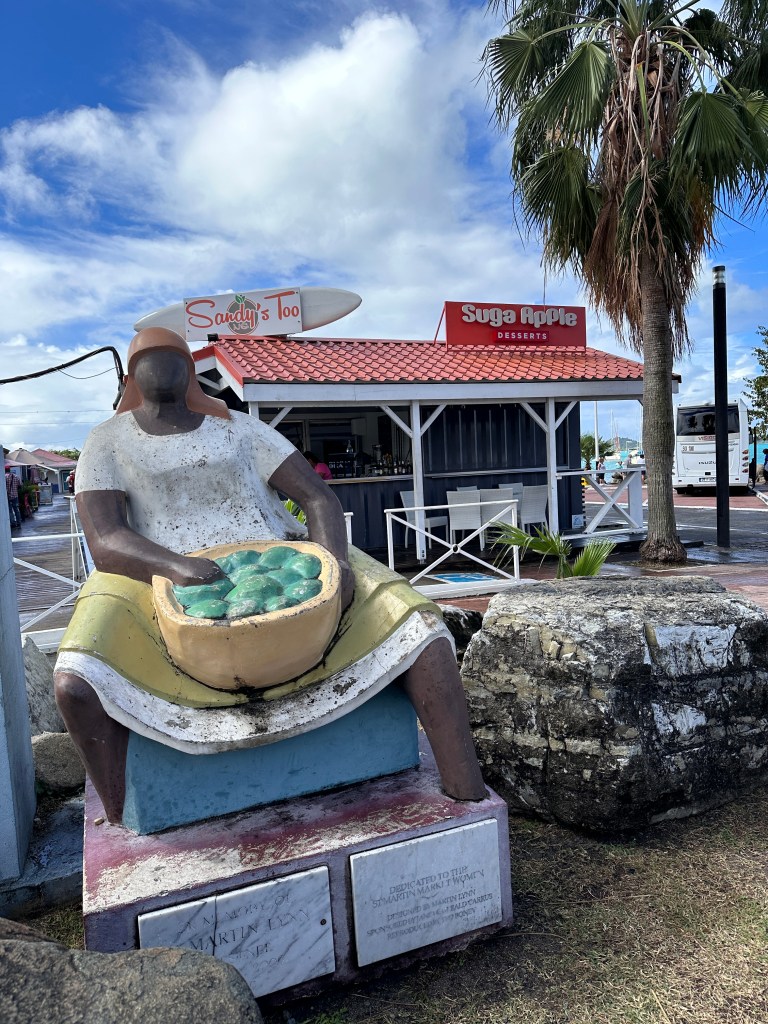
St. Maarten (Dutch) or St. Martin (French) is a fascinating mix of Holland and France, lush with Caribbean beauty all its own. The island has been shared by the two nations since 1648.

Tragedy struck the tiny island in September 2017 when the Category 5 Hurricane Irma raged over the island for a full eight hours. This was one of the worst-hit islands, and it’s estimated that more than 90 percent of the buildings were damaged; one-third were completely destroyed. Many of the destroyed buildings and infrastructure have not been restored or repaired.

Our ship, Viking Sea docked at 8:00 am, the rain just stopped and the sun was out so it was a nice day for our tour to explore the island! When we got off the gangway a strong gust of wind blew my hat and without thinking, I ran after it. In my younger days I probably would have retrieved the hat without much effort but I must admit that aging has taken its toll on my joints. I gave up after I saw it go over the pier and turned back to join my group; however, a voice called out and when I turned around a guy was holding my hat! It was stuck onto something before it was blown away to the Caribbean Sea never to be seen again! I profusely thanked the man and folded my hat and only wore it when the wind was not strong enough to repeat the funny event that day!

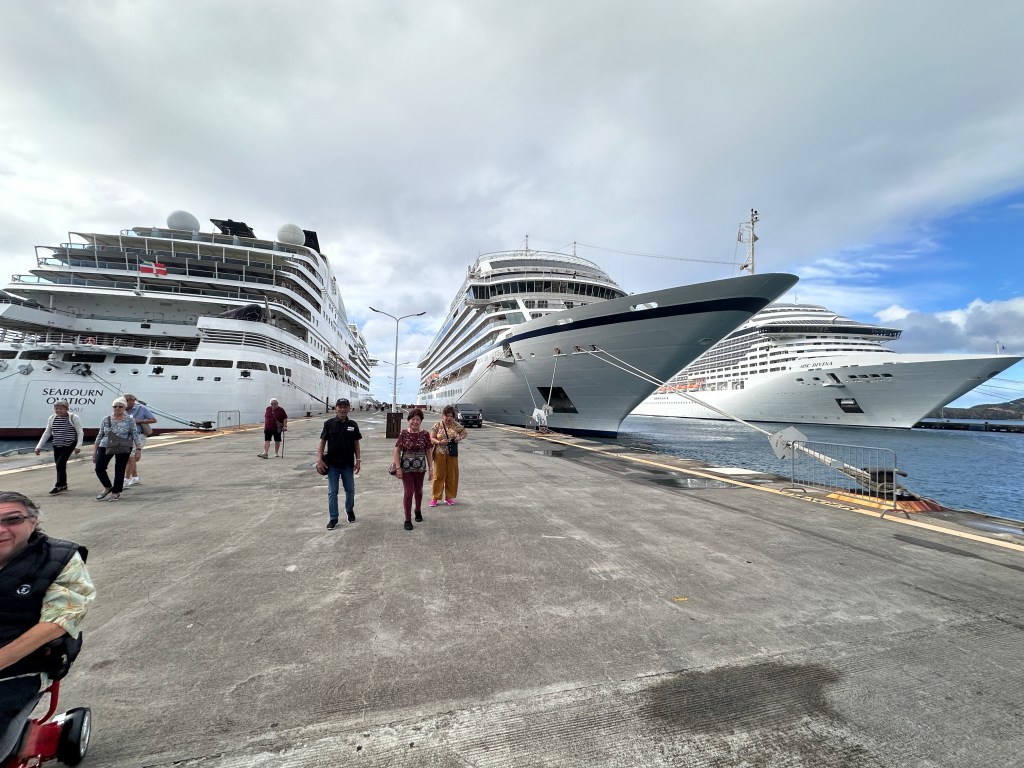
Our ship sandwiched between a Princess and MSC cruise liners.

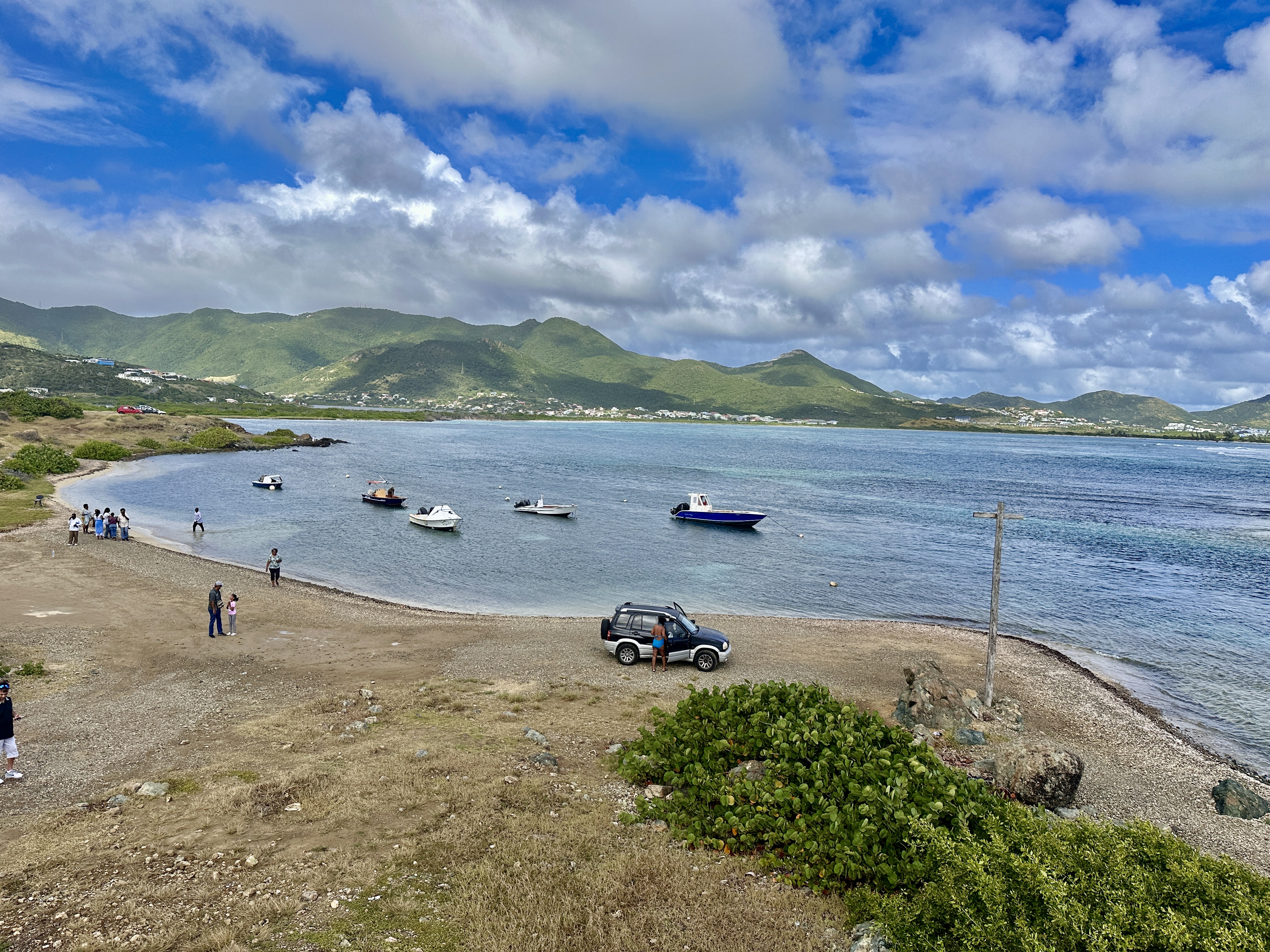
We docked in the Dutch side of the island by its capital, Phillipsburg. It was dotted with colorful resorts and casinos. Below is the Rotary Lookout Point with stunning views of the vast

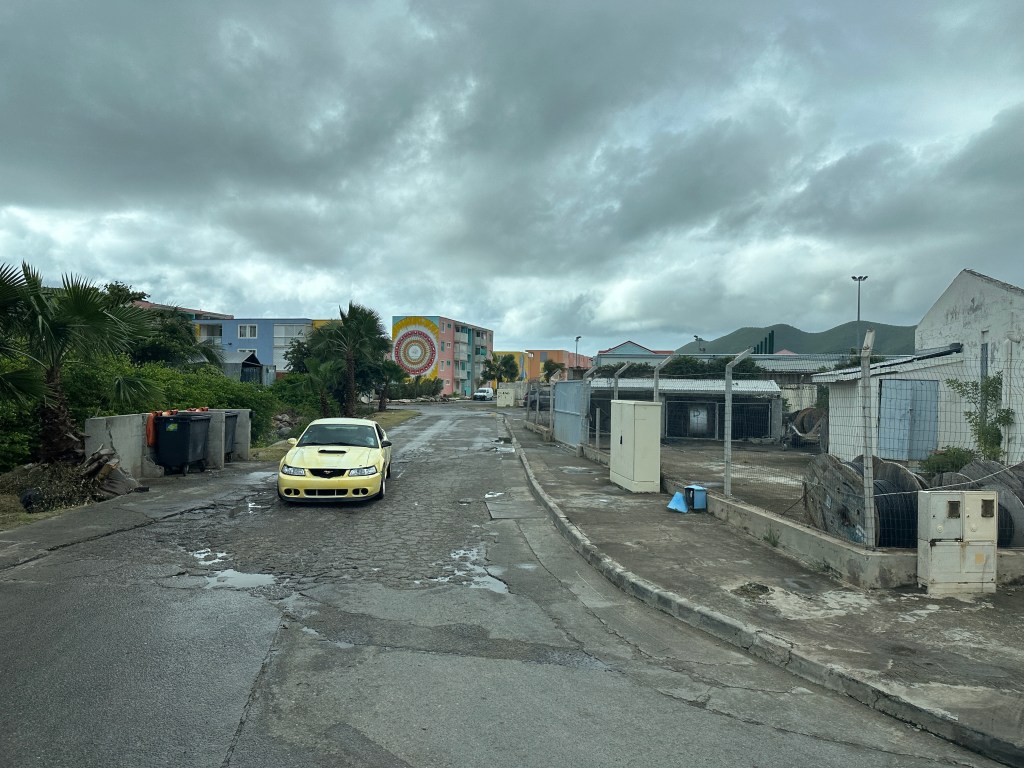
Some of the evidence of the hurricane’s devastations.

You could tell we crossed over to the French side of the island by the signs in the business establishments.

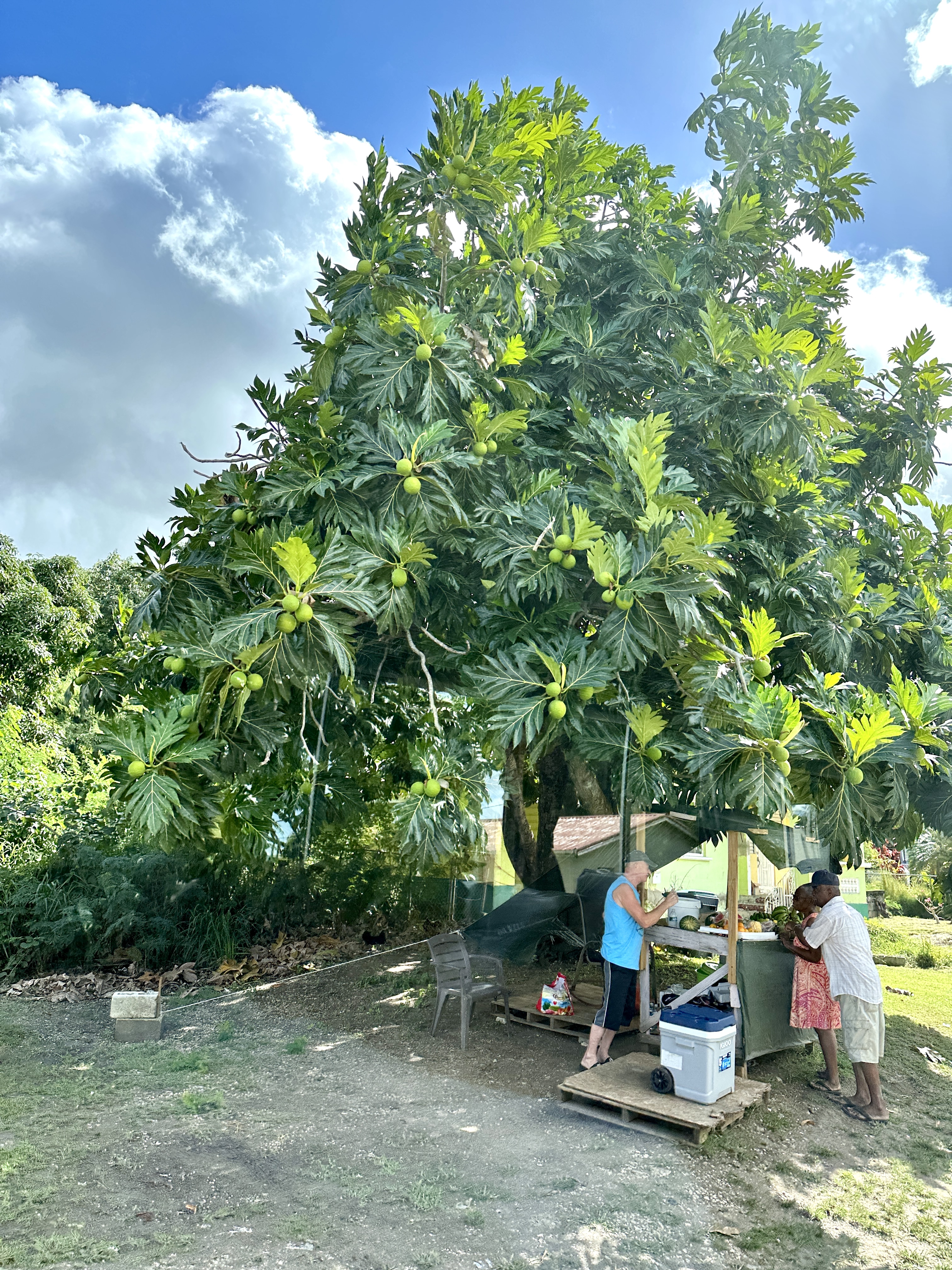
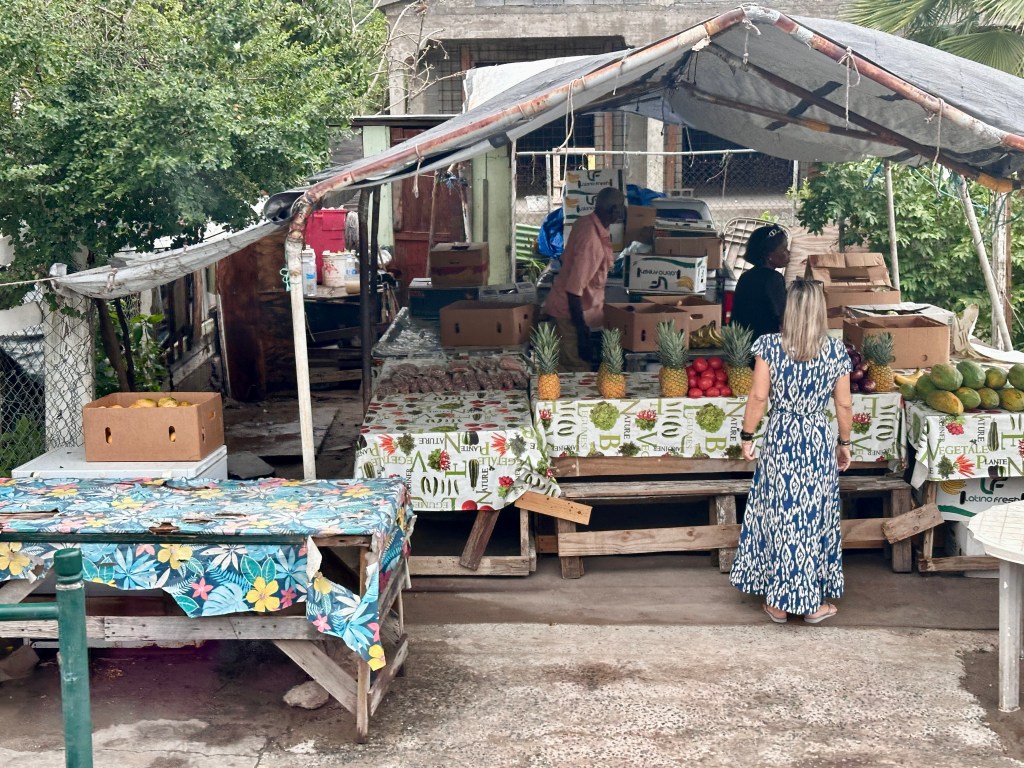
A fruit vendor we passed along the way.

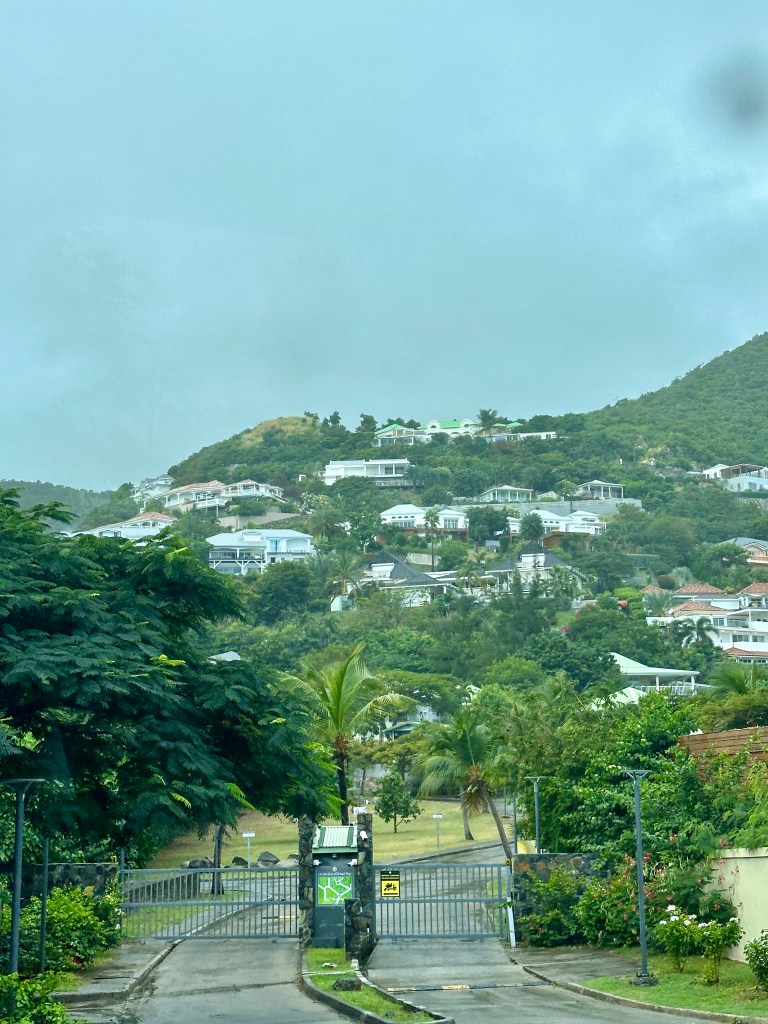
A gated community for the more privileged residents of the island.

An invasive type of flowering vine is found almost everywhere the island (we call this plant cadena de amor in the Philippines).

You could always tell tourists from the clothes they wear!

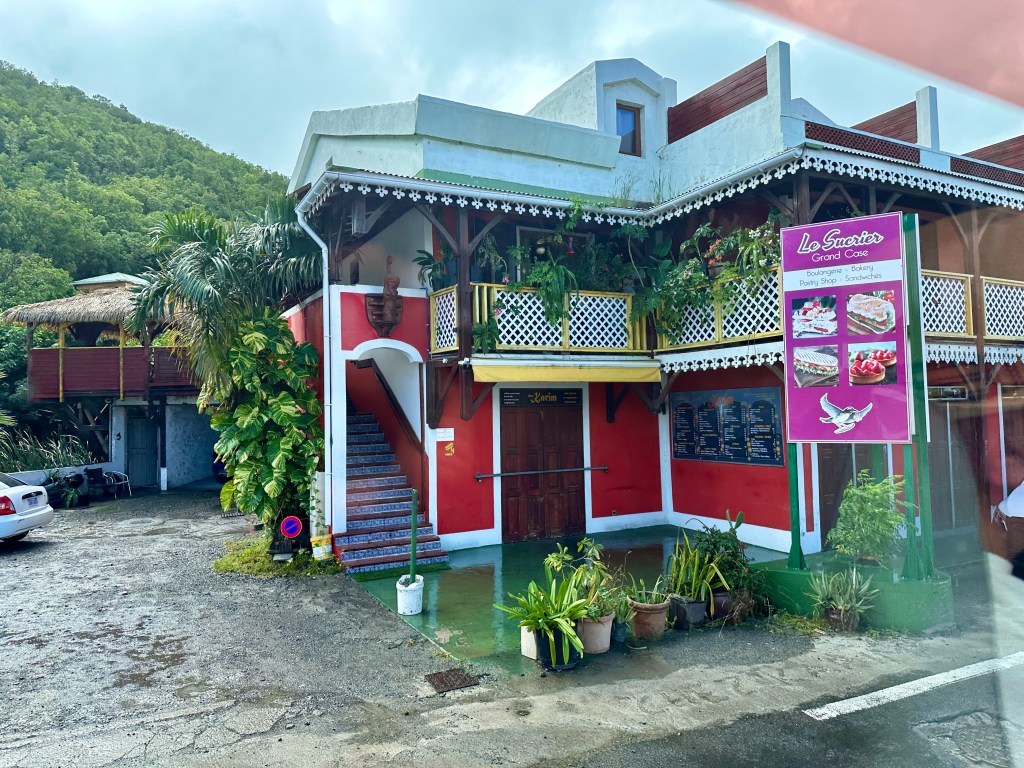
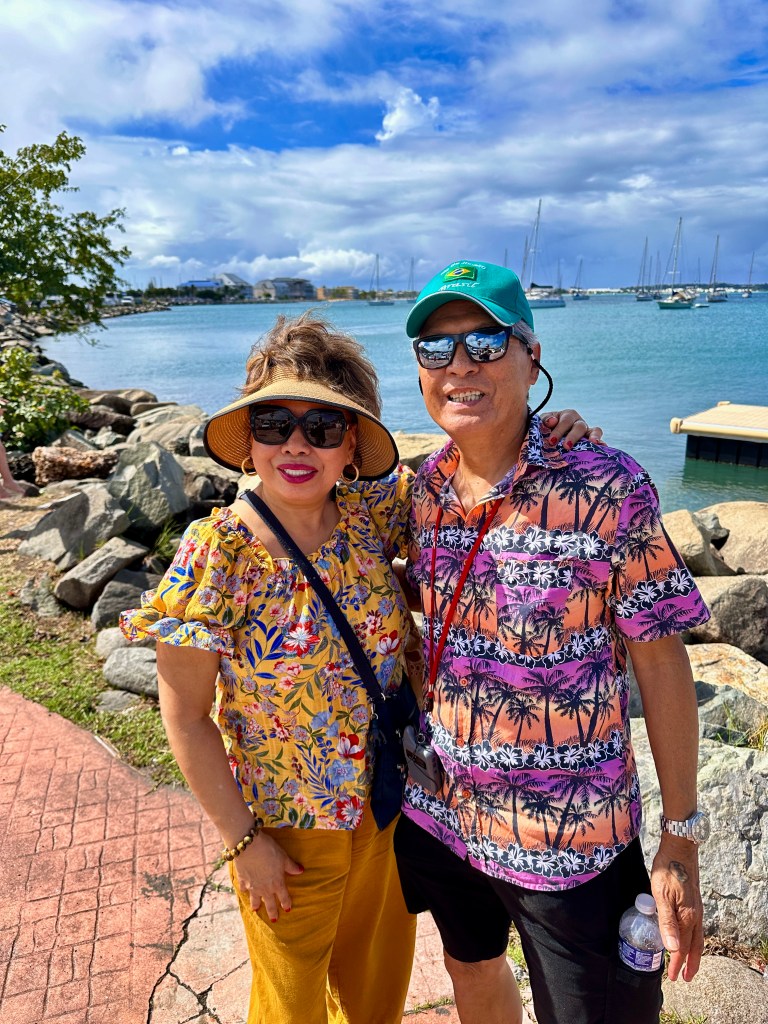
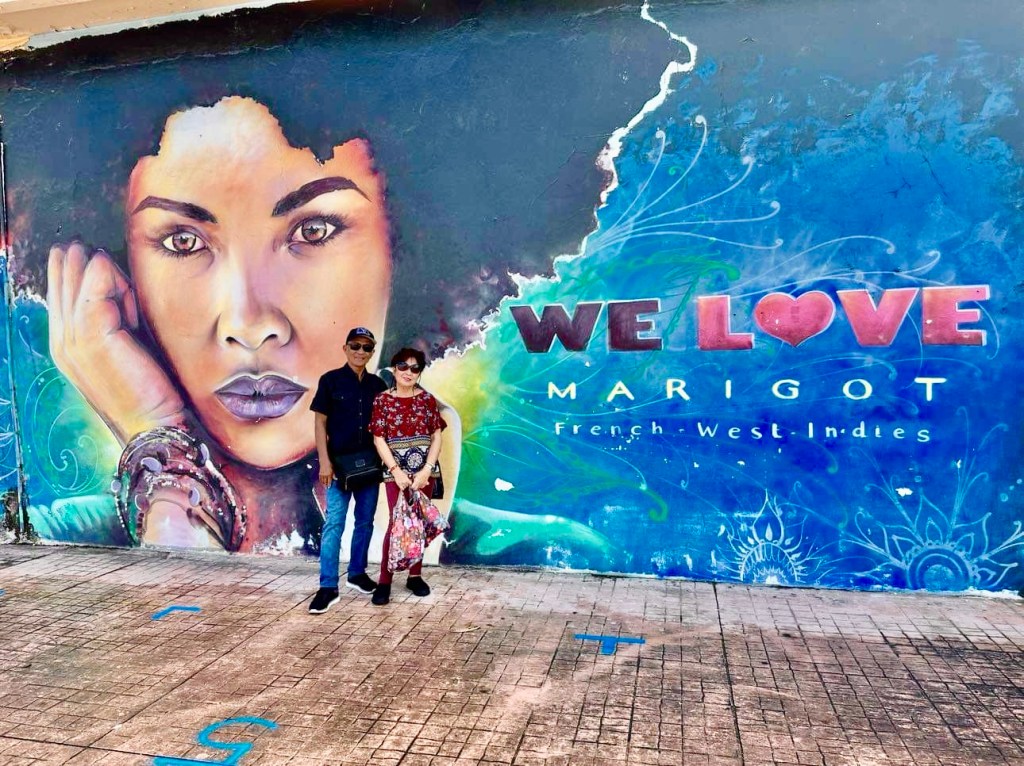
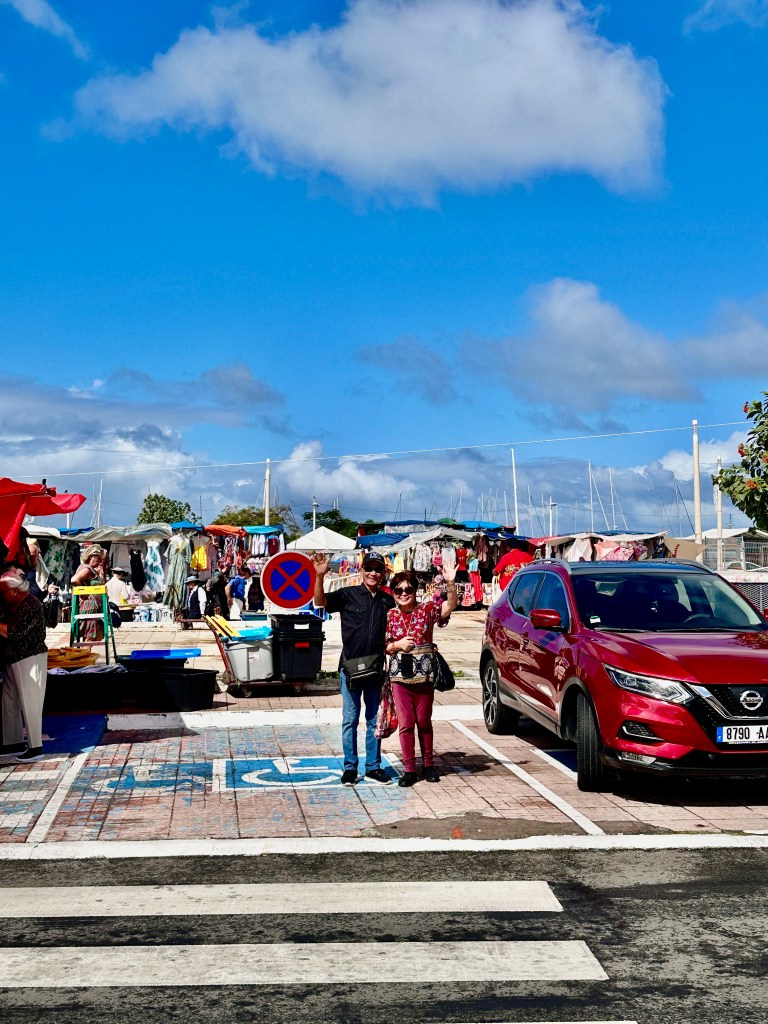
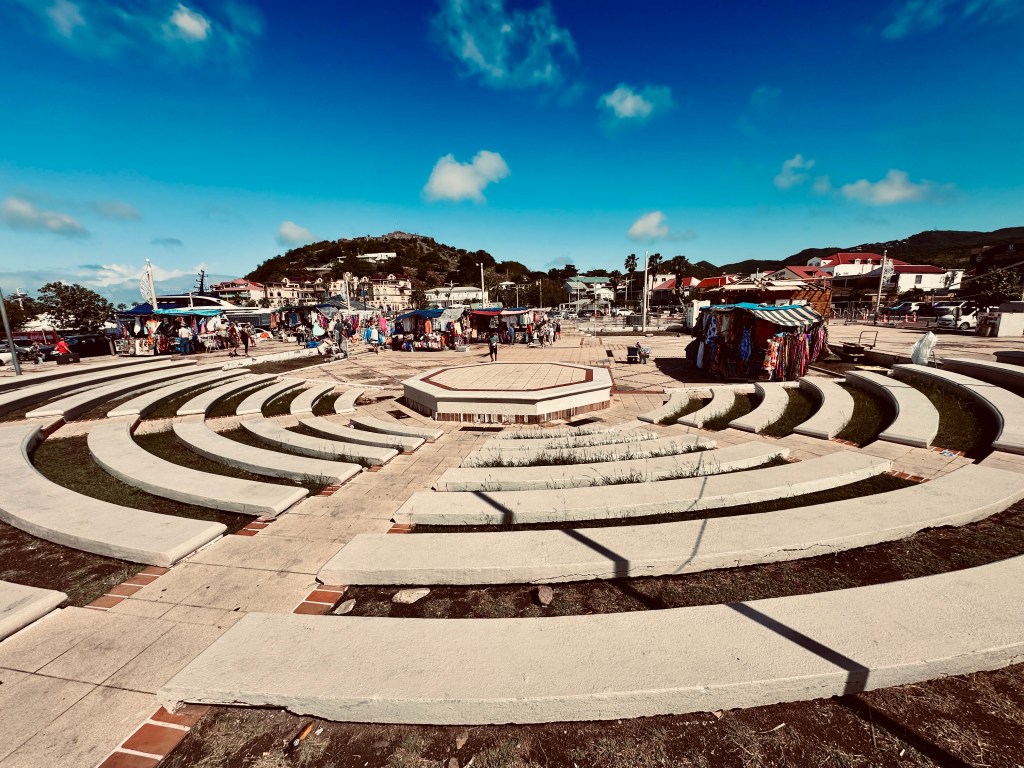
Our tour bus took us to the French side whose capital is Marigot. Shopping was mostly done here since many of the stores in the Dutch side were still closed when we started the tour.

Tommy and Oya looking for bargains in the vendors’ square. Haggling is acceptable.

Trini with a pretty island girl.

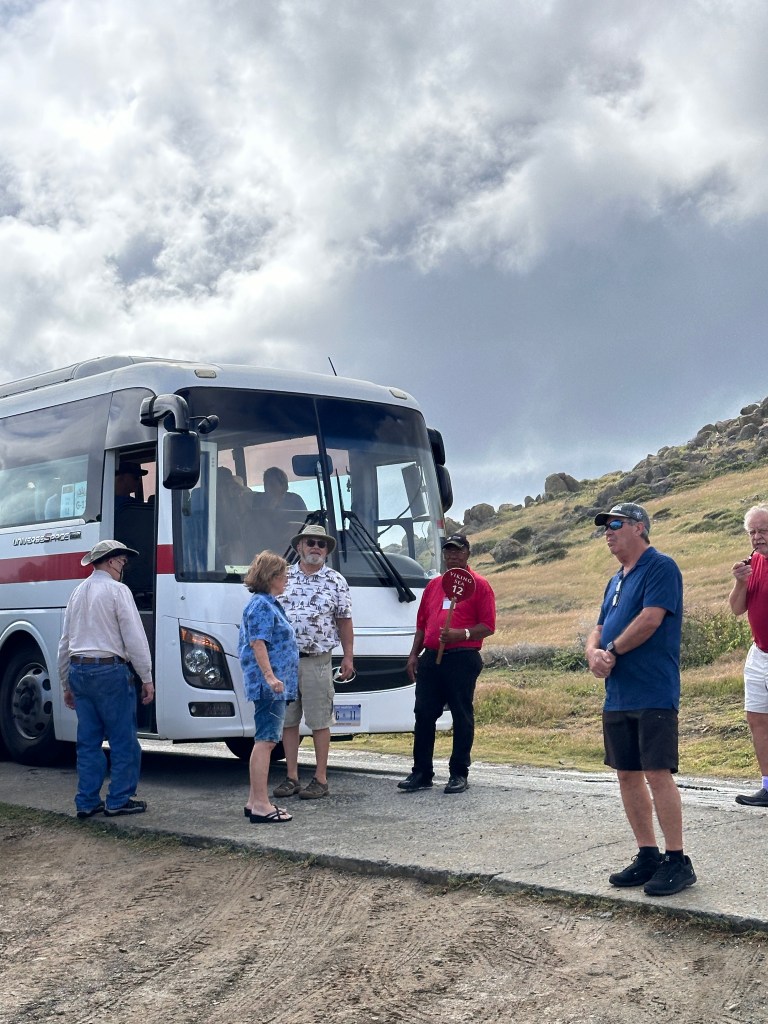
Our tour guide, Felix was a very funny guy and used humor to educate us and at the same time entertaining us. We asked him if he spoke Dutch and French and he said NO and that he was never really interested to learn these languages.

The ship’s itinerary for the next several days.