FINALLY, after thirty years, our bucket list to visit the 7 modern wonders of the world is complete! It seems that we saved the best for last. Due to the distance of India and the negative stories we read about its cities, we intentionally delegated the Taj Mahal as the last wonder to visit. But how wrong those information were! It’s true that the streets are very congested (so is Manila, Rio, Beijing, Istanbul,etc). While some of the mega cities we’ve visited like Tokyo are cleaner and less chaotic, Delhi is not as bad as described by people who’ve never been here. We’re glad we have finally spent a few days in India, memories to cherish and tell our grandchildren!
The other wonders of the world below. I apologize for the poor quality of the photos:
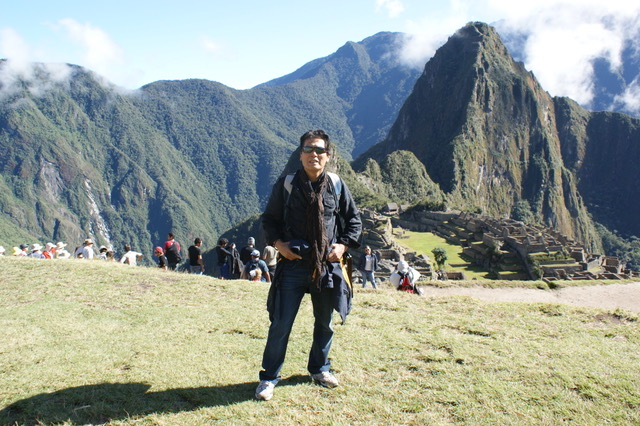
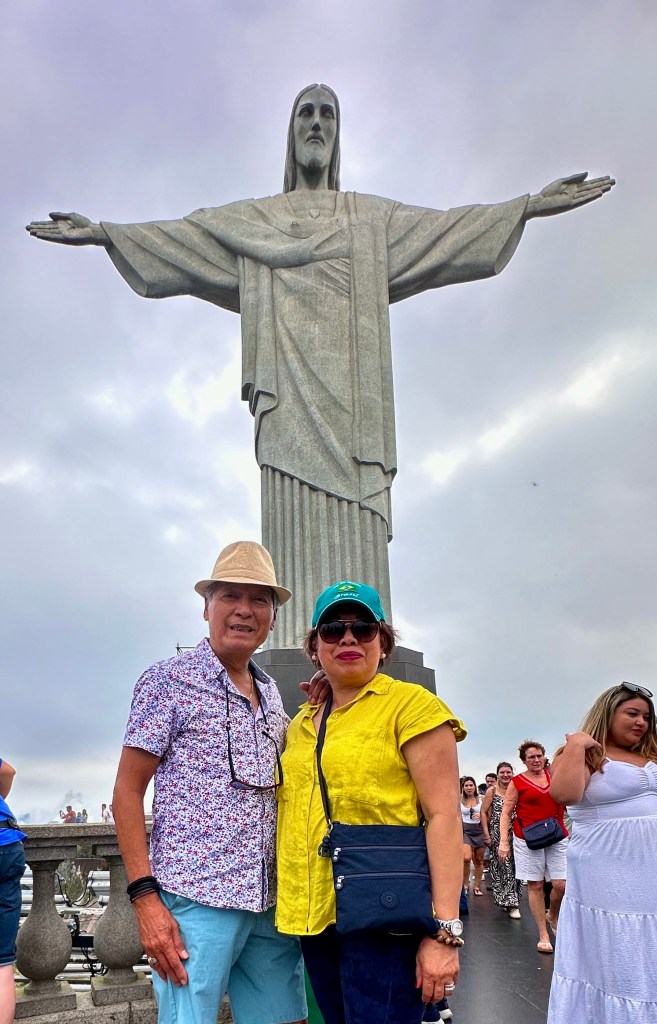
1994: CHICHEN ITZA (MEXICO) with the Marasigans2005: THE GREAT WALLS OF CHINA2007, 2012, 2018: COLOSSEUM (Rome)2010: MACHU PICCHU (Peru), where I also celebrated my 60th birthday2018: The Treasury in Petra, Jordan2023: CHRIST THE REDEEMER (Rio de Janeiro, Brazil)
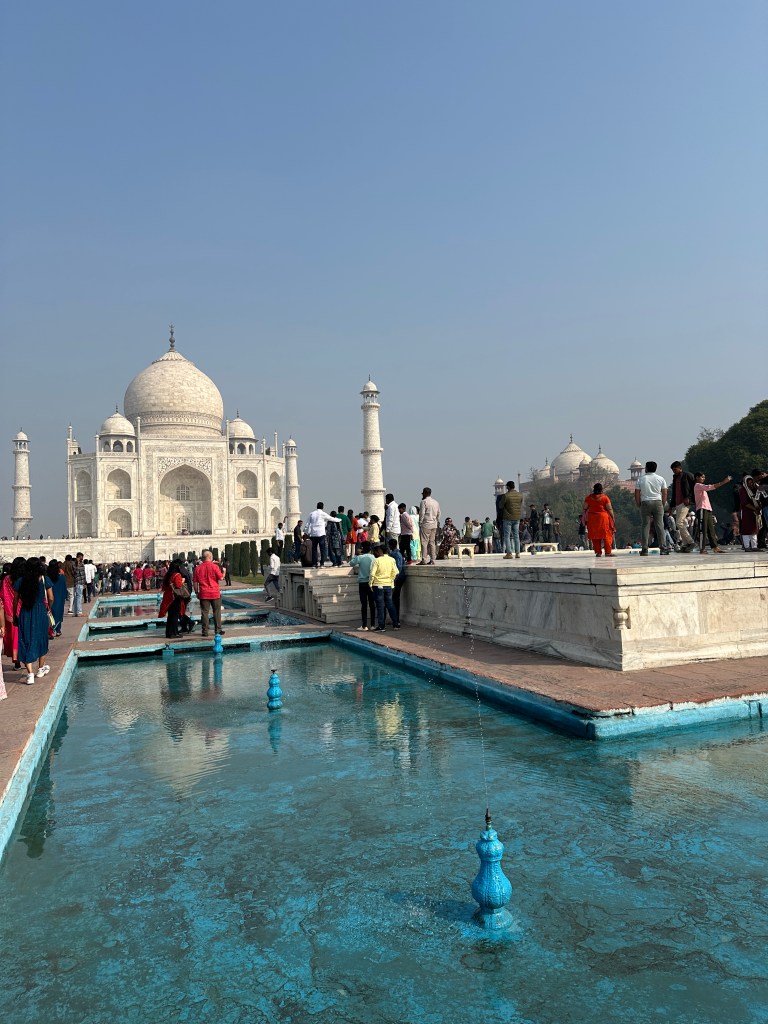
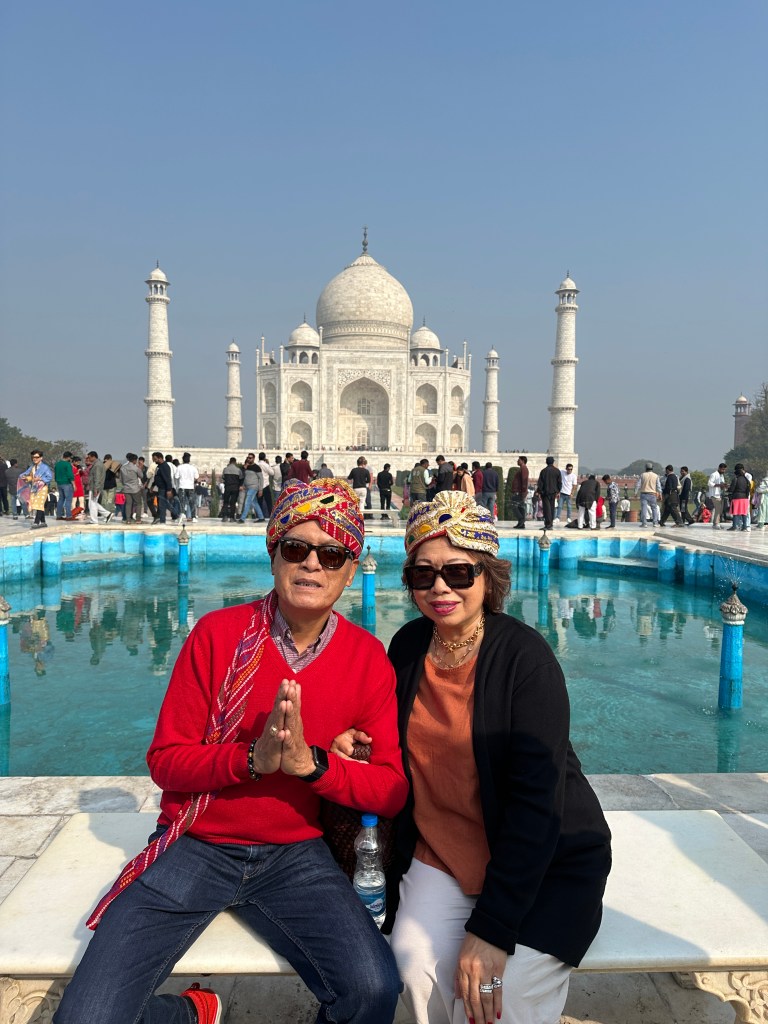
TAJ MAHAL: A monument of love which took 22 years to build and completed in 1653, in memory of the emperor’s beloved wife Mumtãz Mahal. The white marble came from Makrana in Rajasthan and the red sandstone from Sikri. Precious and semi-precious stones like jade, turquoise, lapis lazuli, sapphire, coral and diamonds were brought in from far-flung places like Tibet, China, Sri Lanka, Persia (now Iran), and Afghanistan. It is truly a wonder of the world! Just like the other six wonders of the world, this awesome monument takes away your breath and makes you wonder how they even began to conceptualize the project. The symmetry is perfect and the aesthetics would rival any modern structures today!
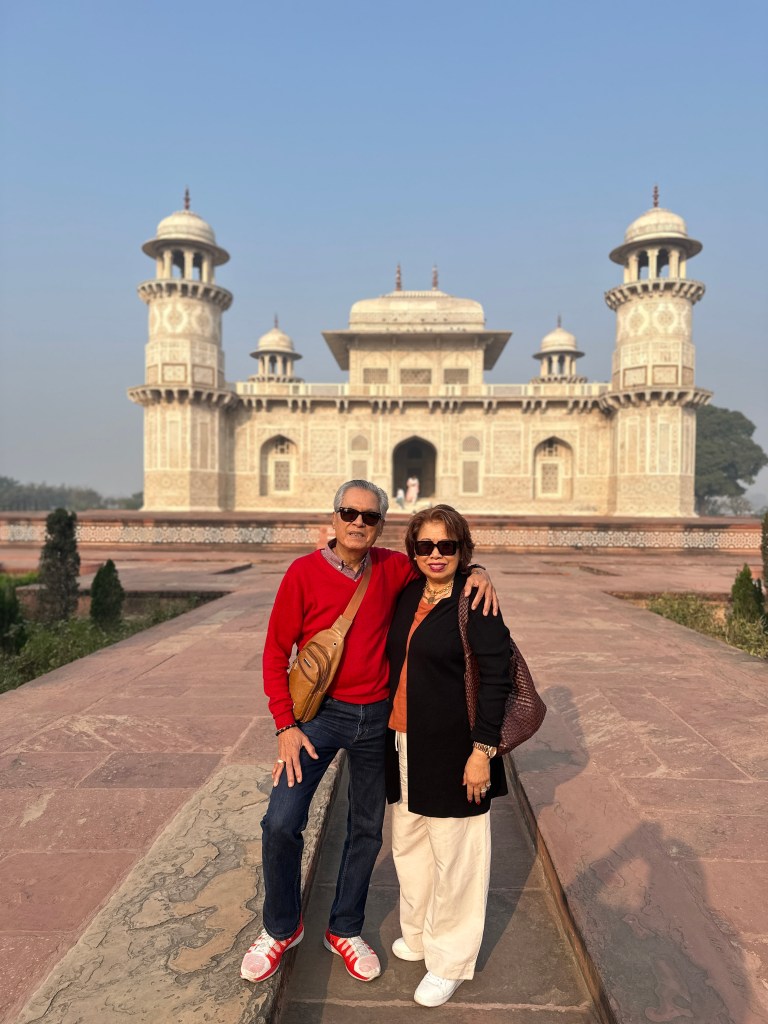
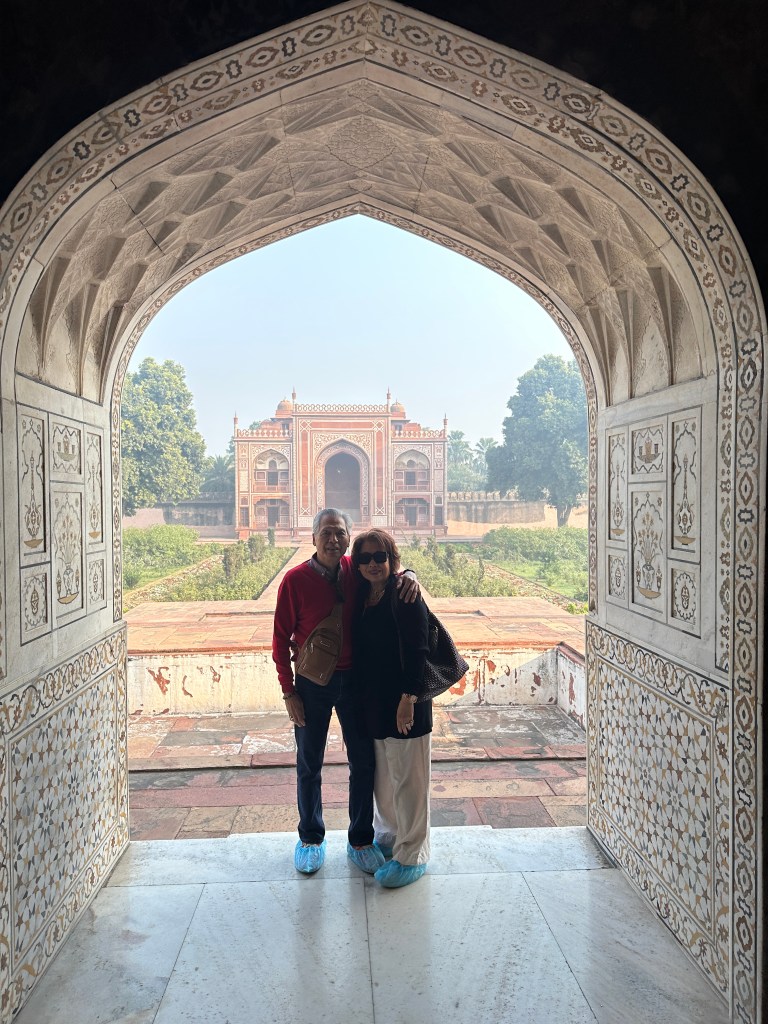
Before we had the honor to set foot in the great mausoleum, we visited a tomb not far from Taj Mahal – the Itmad-Ud-Daulah also known as “The Baby Taj” for its similarity to the Taj. This tomb was designed by Empress Noor Jahan for her father and was the first Mughal monument that used marble inlay work.
The Baby Taj MahalOur guide explaining amazing stone inlay
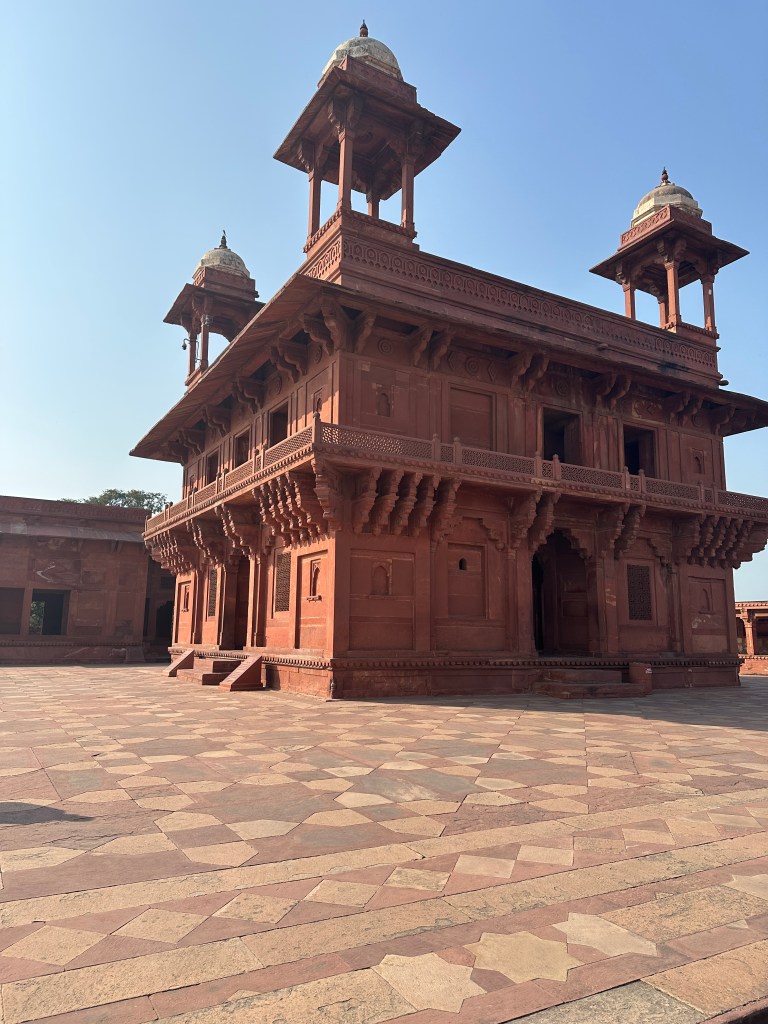
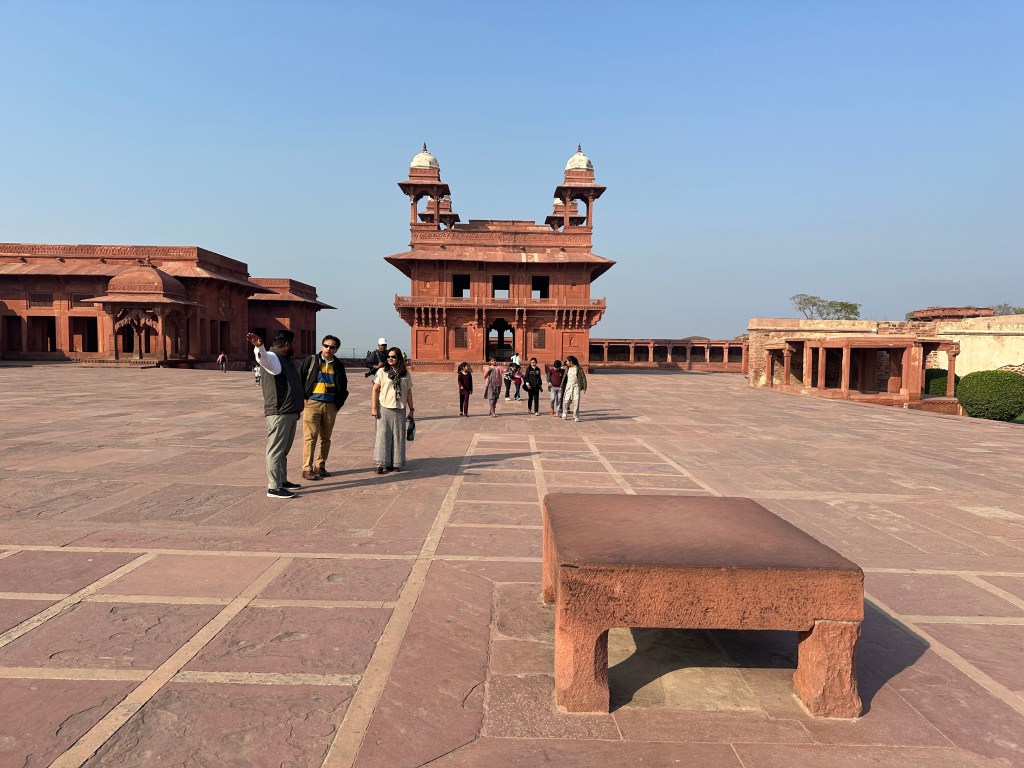
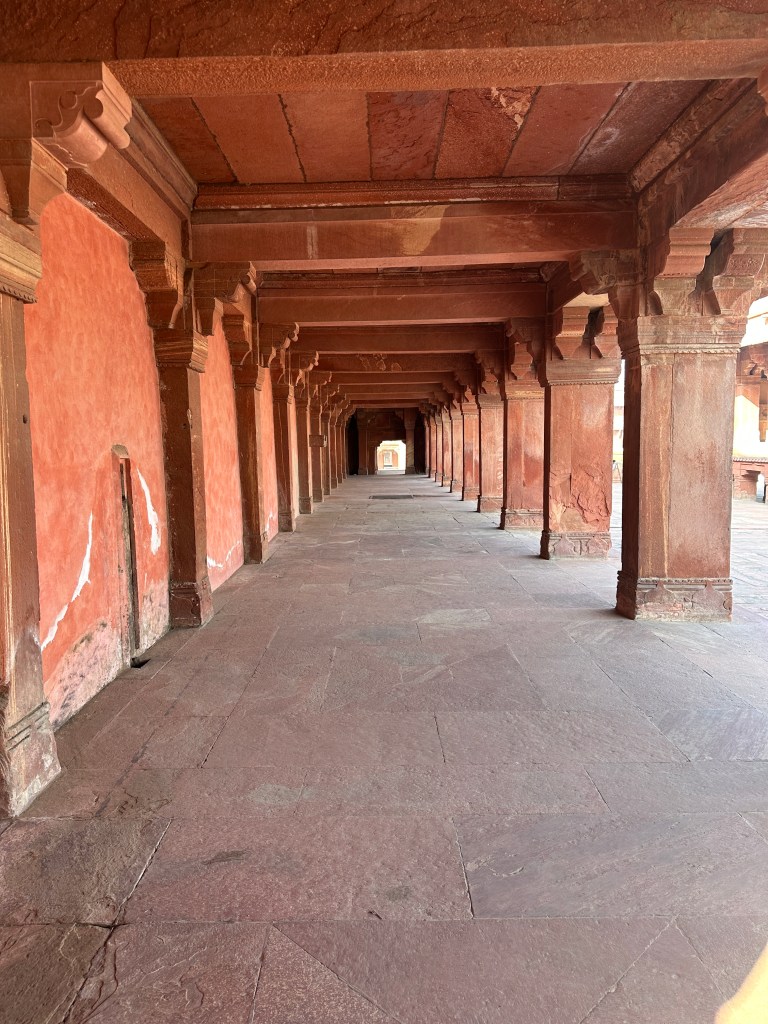
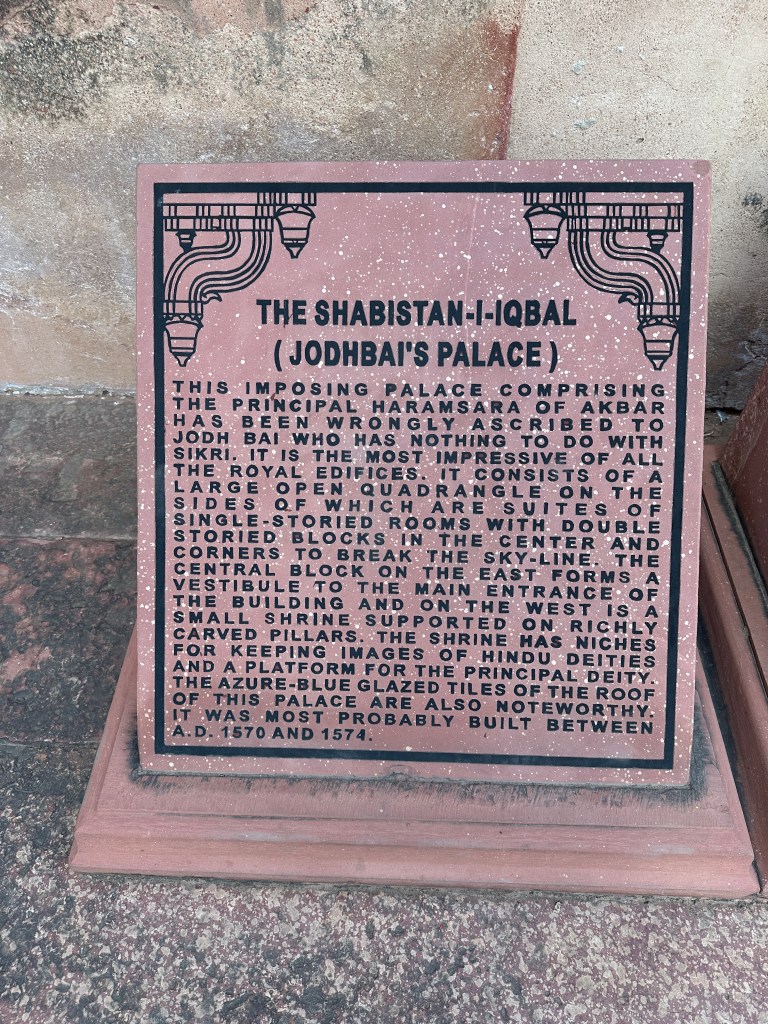
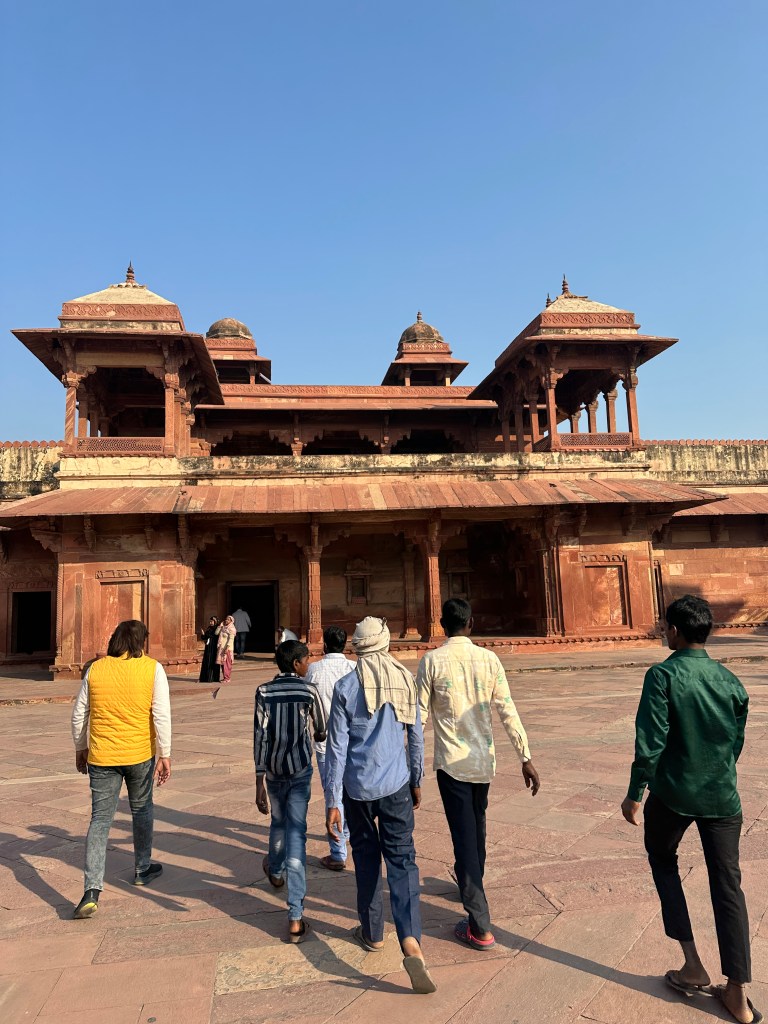
The last place we visited was Fatehpur Sikri – the Ghost Capital of Emperor Akbar also built in red sandstone which is abundant in this area. The fortress is a UNESCO world heritage site.
All the structures are made from red sandstone
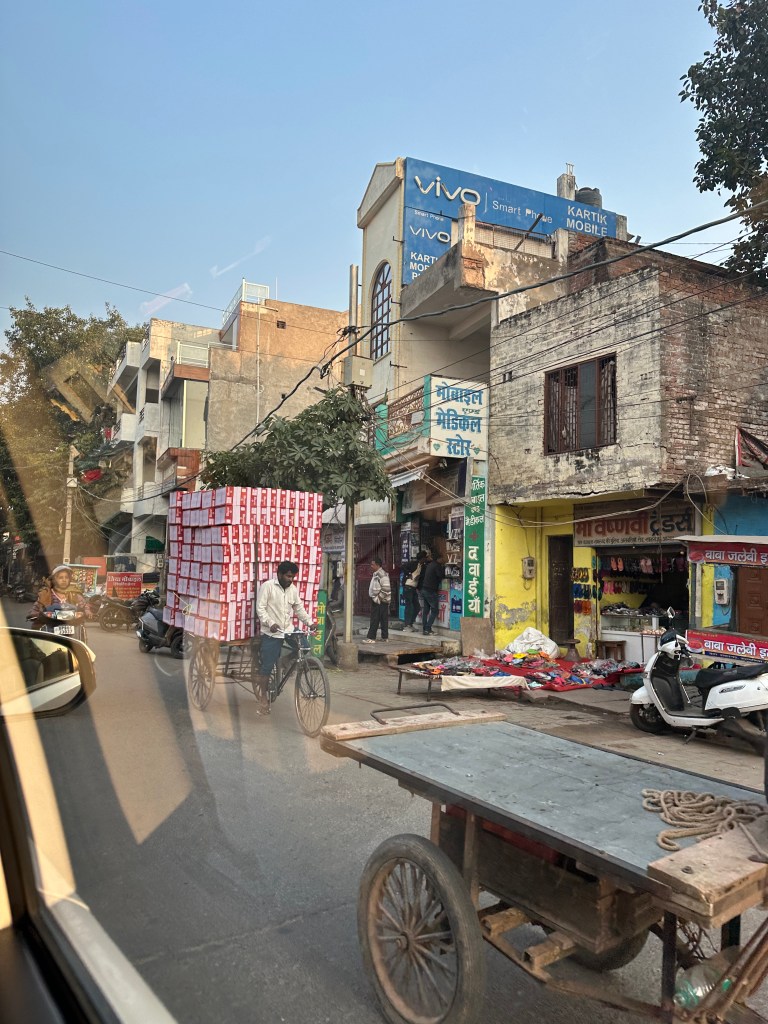
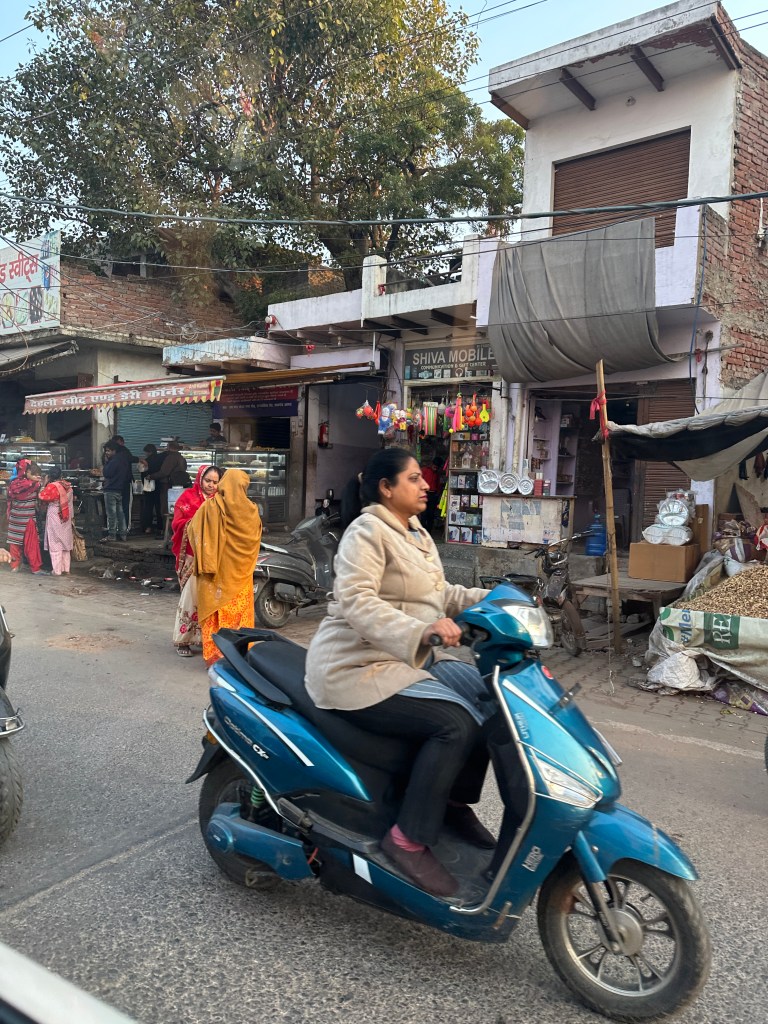
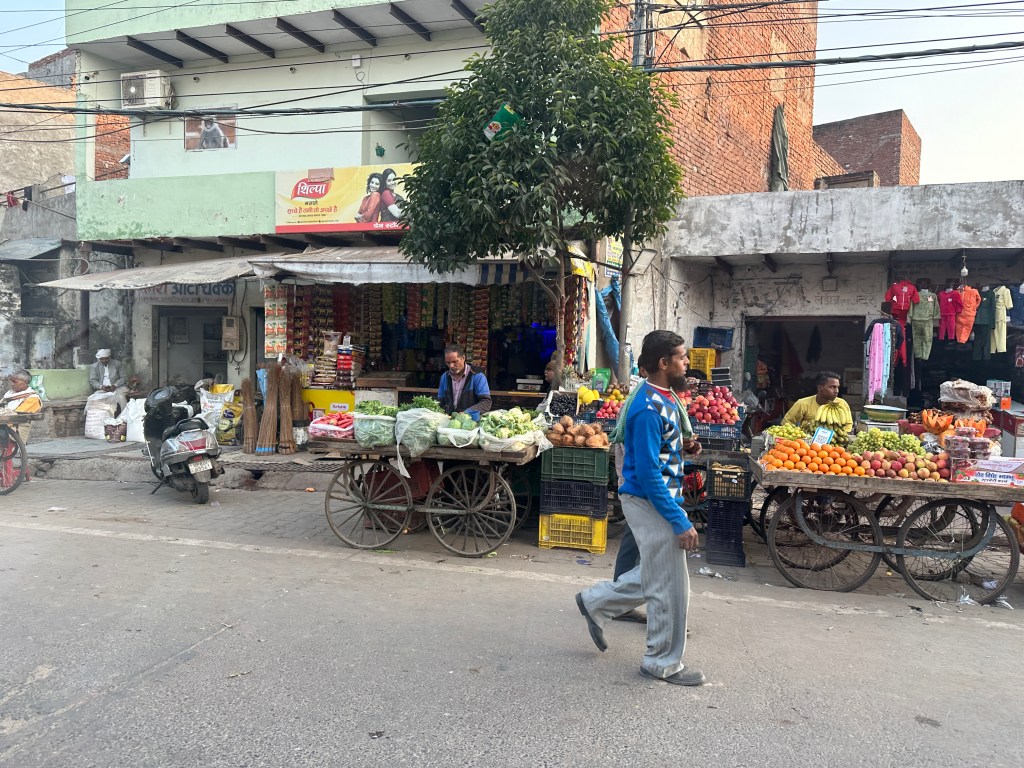
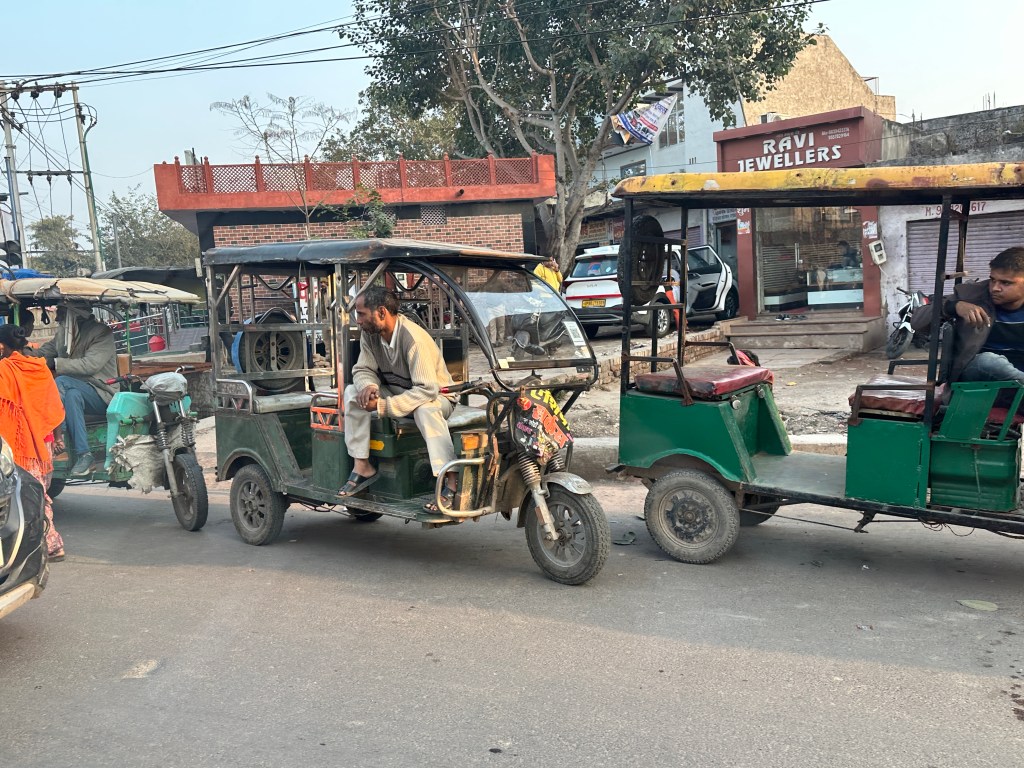
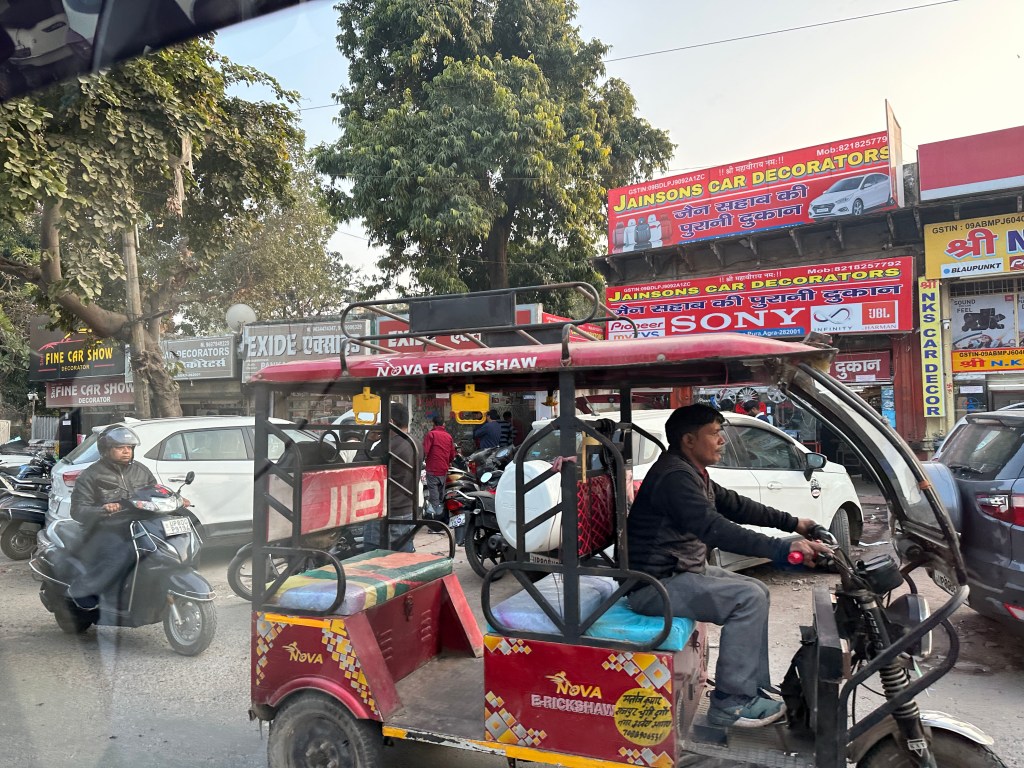
I randomly took the below photos after we visited our last stop in Sikri just to show similarities of other cities in Asia with that of India.
Today, we fly back to the Philippines. I remember in one of our cruises the cruise director said: “When traveling keep an open mind and heart“. We did and we learned a lot about India’s culture and heritage that we will them treasure for life!
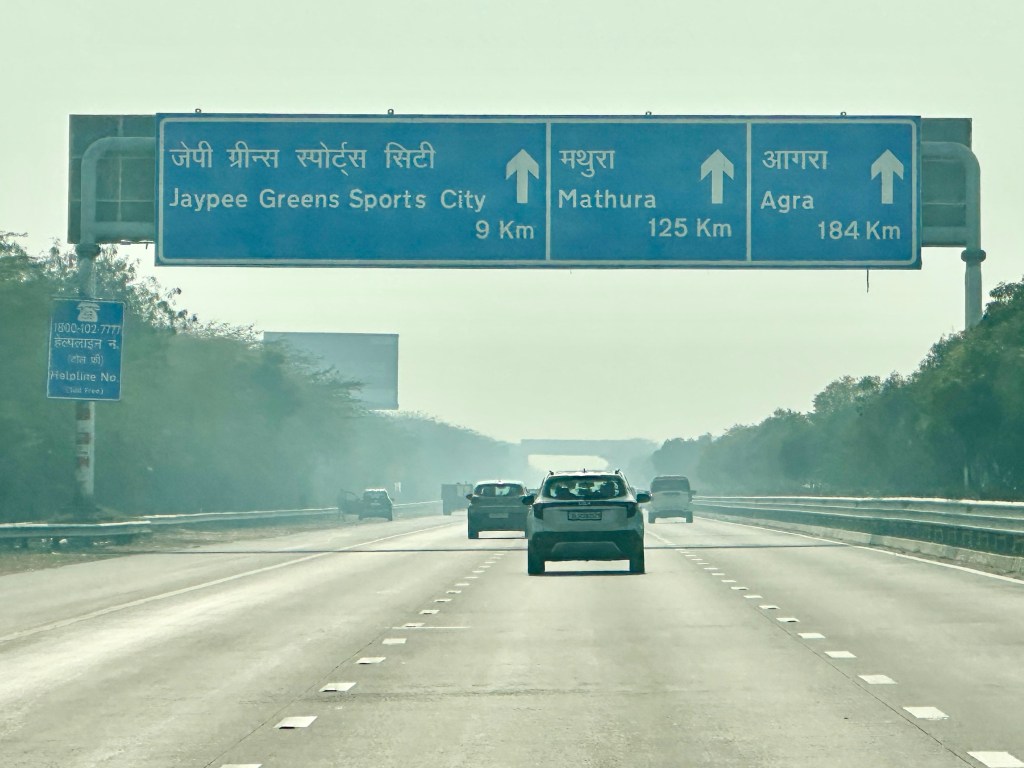
Our driver, Sunil, picked us up at La Meridien at exactly 10:00 am to drive us to Agra (about 4 hour drive, 220km). We took the expressway and was surprised to see all sorts of traffic – tricycles, bicycles, goats, and cows. Although the animals were along the side of the expressway, I was worried if they would suddenly cross which thankfully they never did.
The temperature started around the low 60’s F and was very hazy all day long. Sunil was a very safe and cautious driver who drove under the speed limit. I noticed the drivers never used their signal lights to change lane and usually straddles both lanes. I can drive in Manila but I don’t think I have the nerve to drive in India!
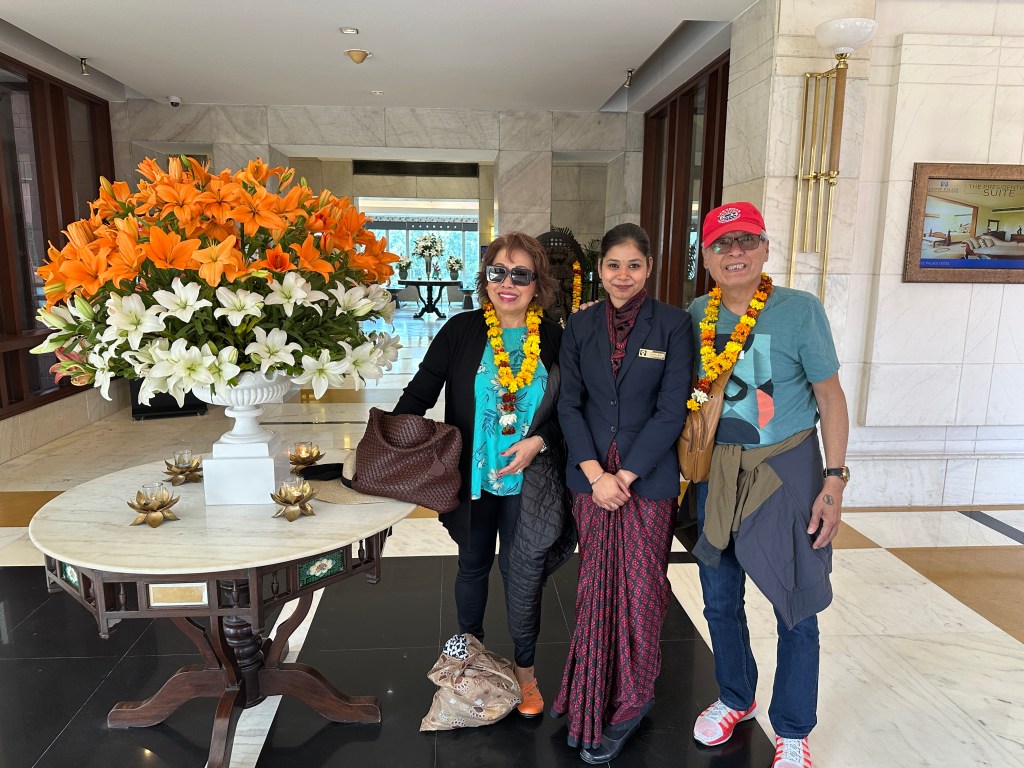
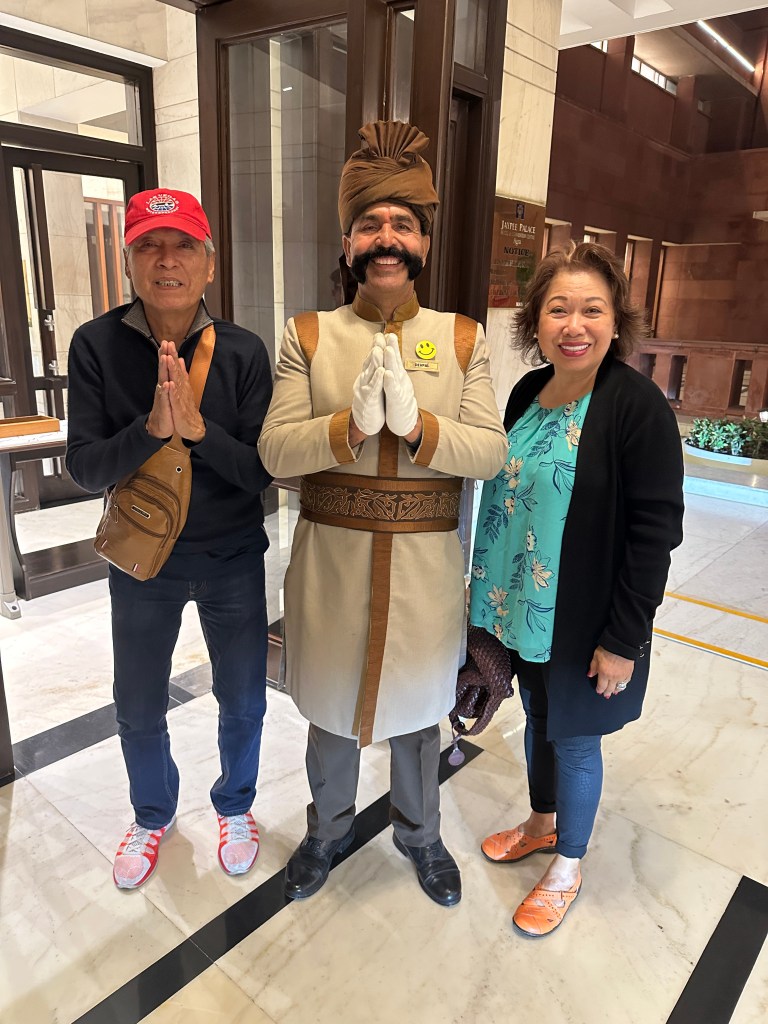
A warm welcome at Jaypee Palace Hotel
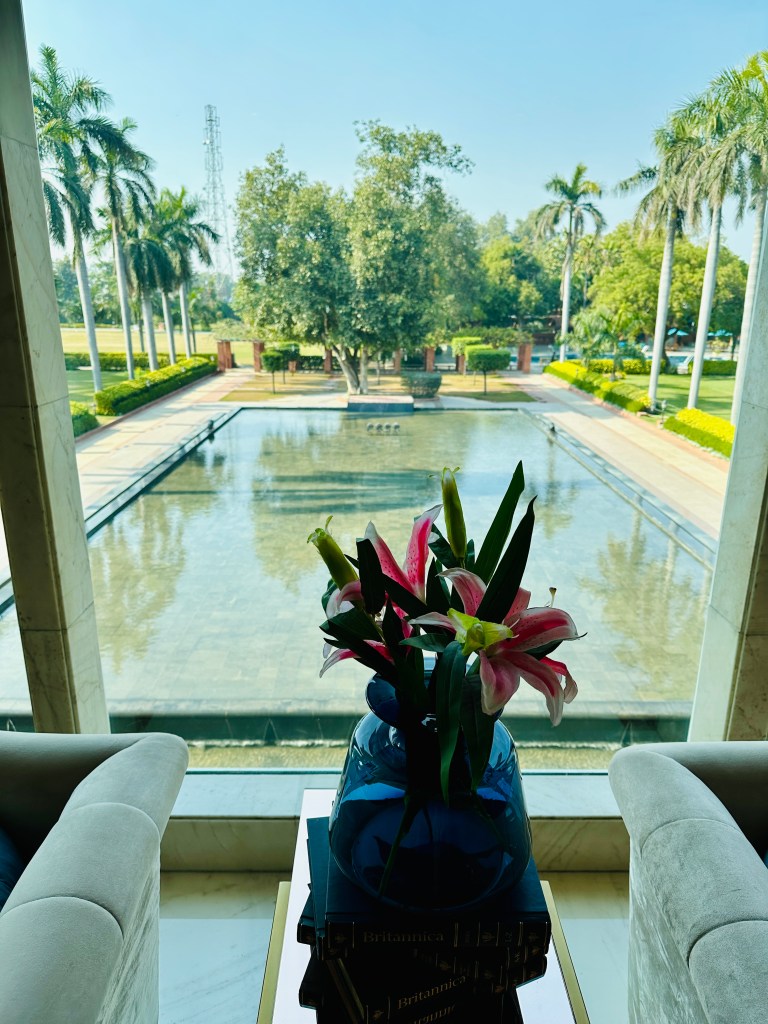
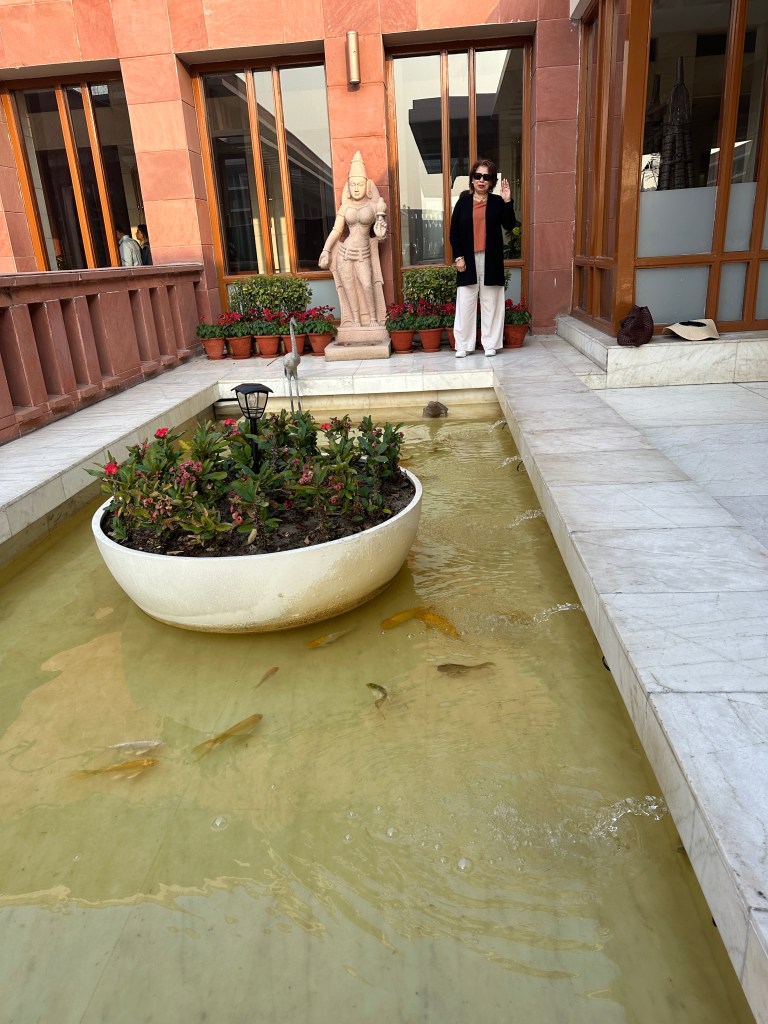
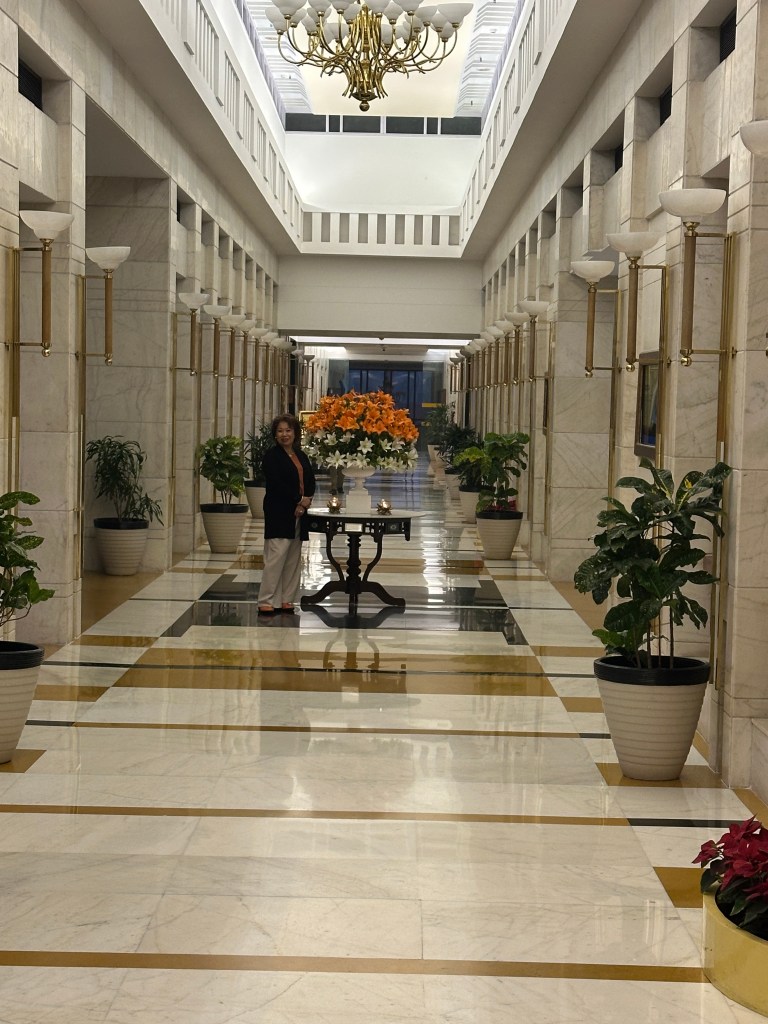
We checked in at our hotel, Jaypee Palace, where our tour guide, Deesh was already waiting. The hotel had impressive grounds and facility and made us feel like we were in the Colonial India era!
NAMASTE!
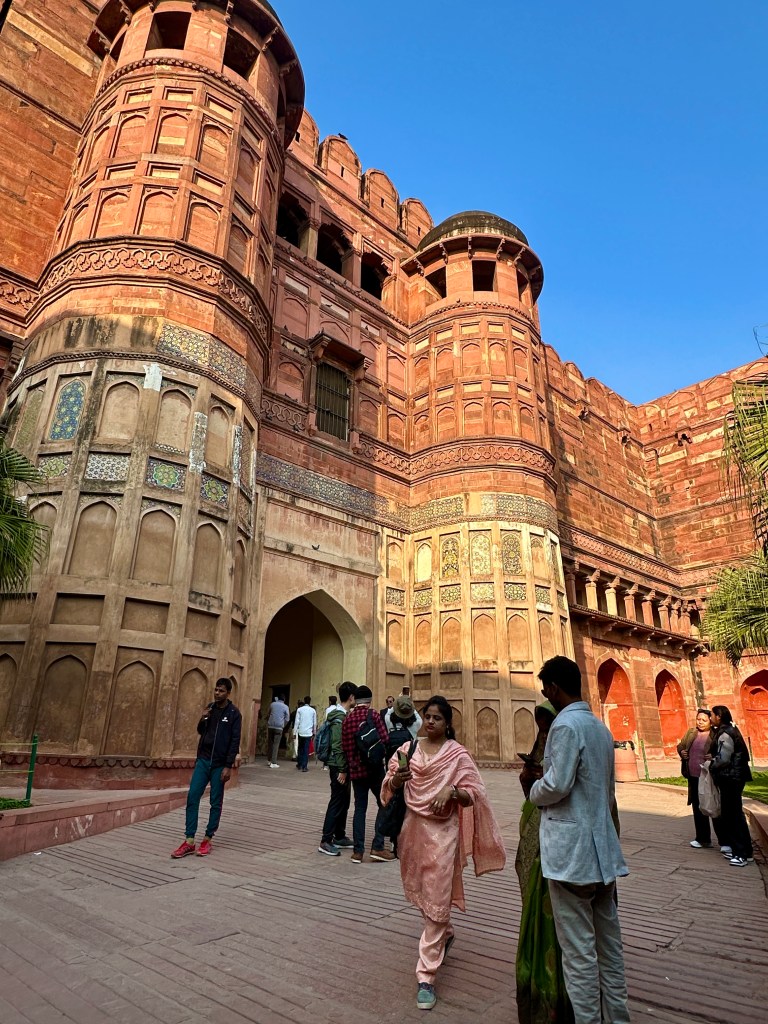
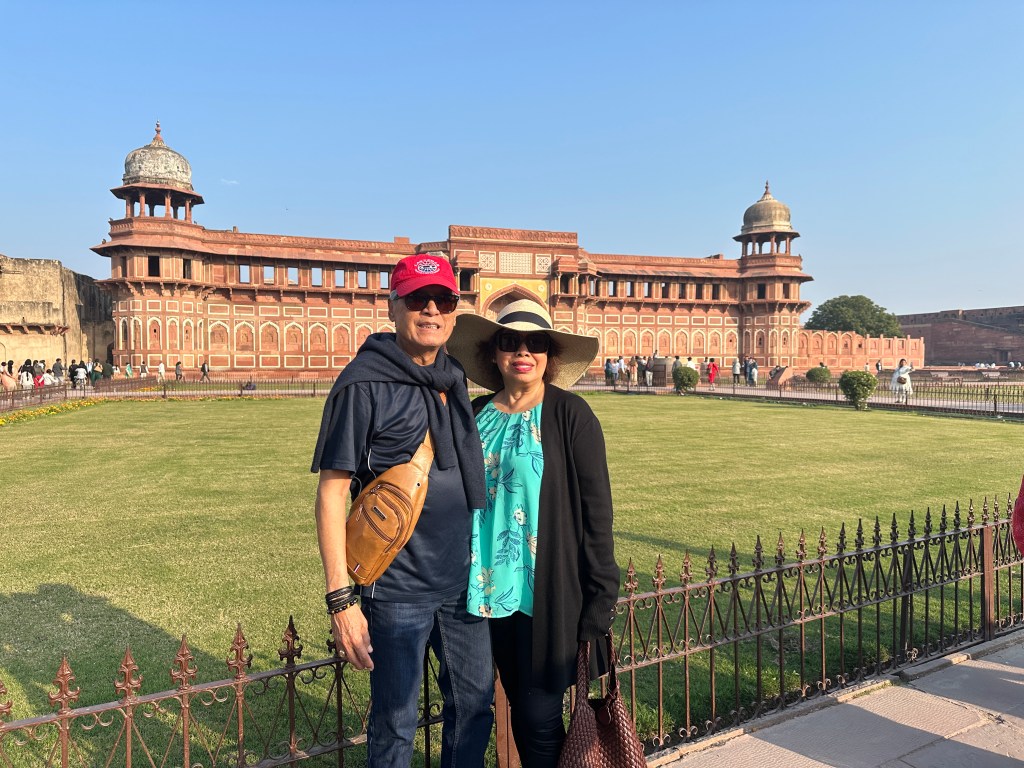
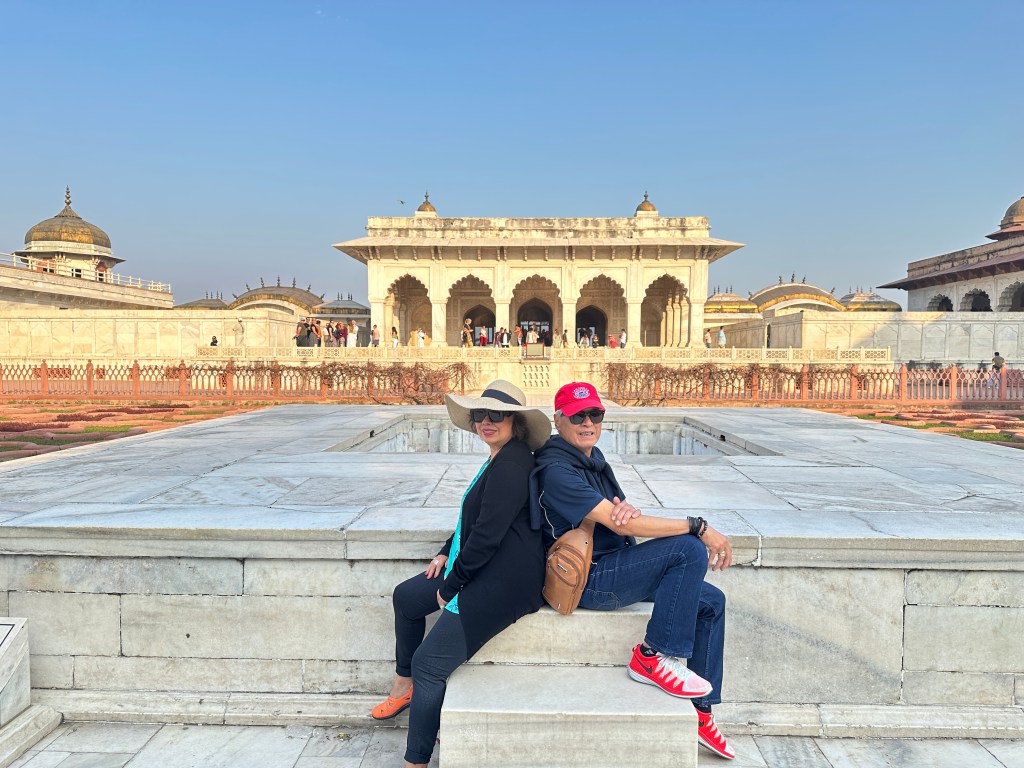
That afternoon, we went to the red sandstone AGRA FORT, built by Akbar in 1565 located in the banks of the Yamuna River with a view of the Taj Mahal. This was the time the Mughals ruled India. The fort seemed impregnable the way it was built – double wall with moats. This well-preserved fortress dominates a bend of the Yamuna. The interior boasts of grand buildings including the Royal Pavilion.
The Agra Fort occupying 97 acres
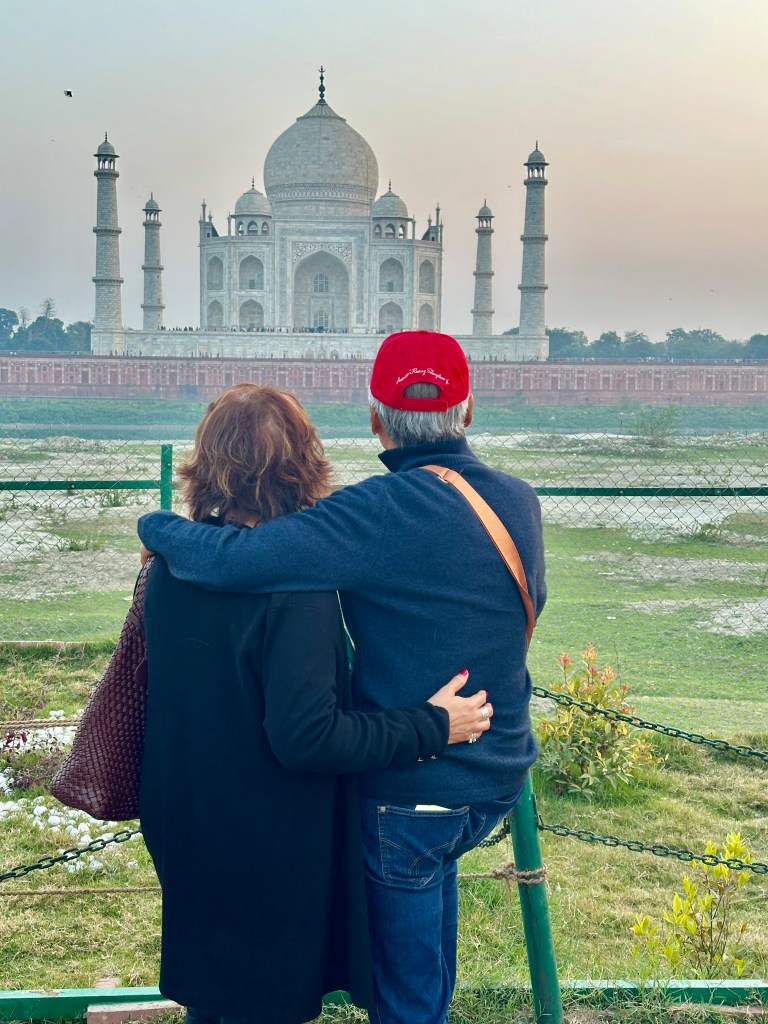
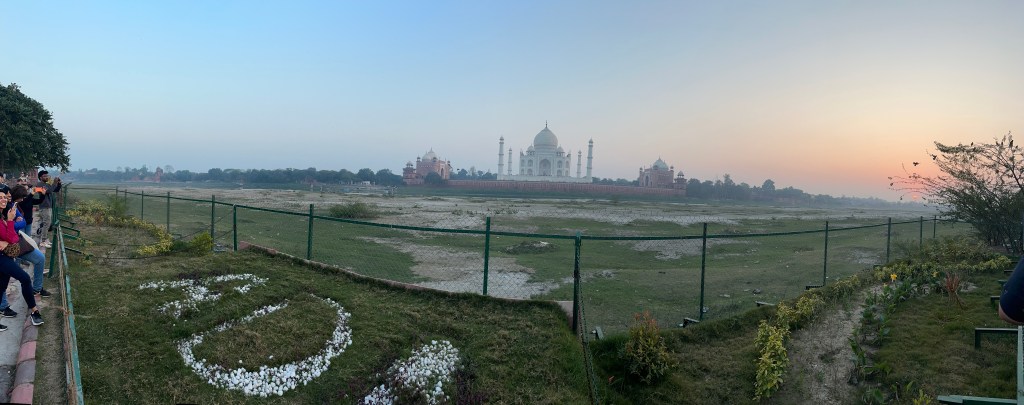
We drove on the other side of the river Yamuna to watch the sunset and admire the Taj Mahal from a distance. Sunil, our driver parked about a half kilometer away and we took the Tok-tok (similar to that in Bangkok) to reach our destination.
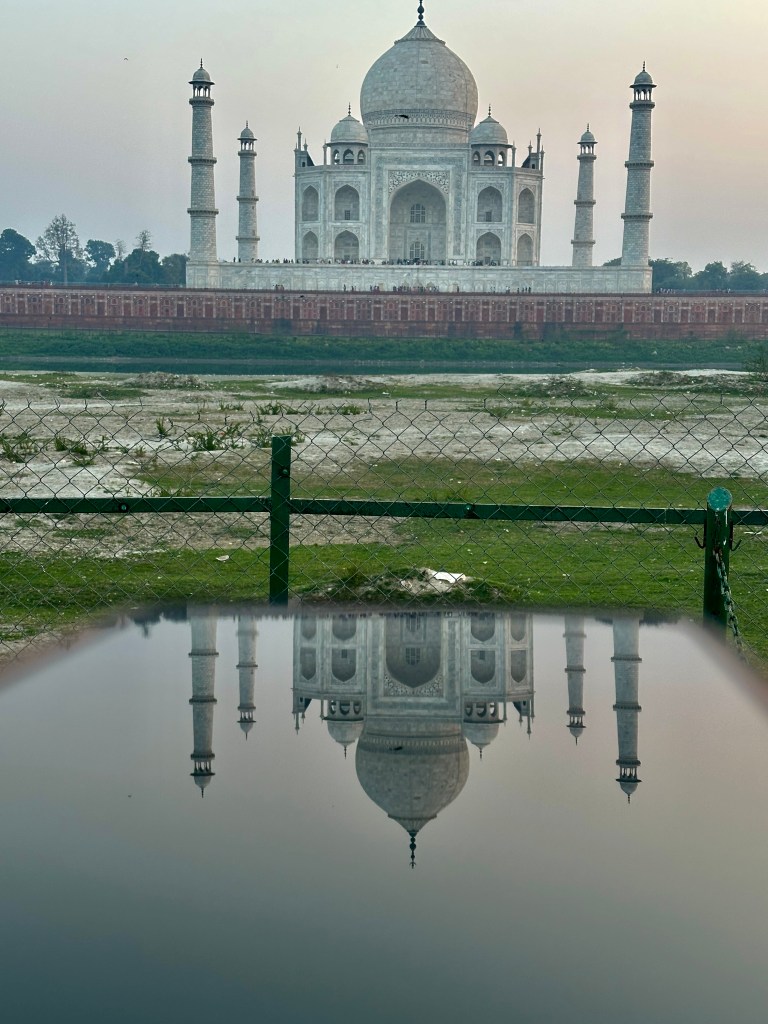
The reflection is caused by the screen of another cell phone. There is no actual water
Watching the sunset and the Taj from the other side of the river Yamuna
Our tour guide showed us a few tricks on how to use the cell phone. He made the Taj Mahal appear as if was reflected from the water when the reflection actually appeared from the screen of another phone! He was also a great story-teller narrating about the love stories of Mughal rulers. One emperor that was very interesting was Shah Jahan who built the Taj Mahal for his beloved wife – Mumtaz Mahal.
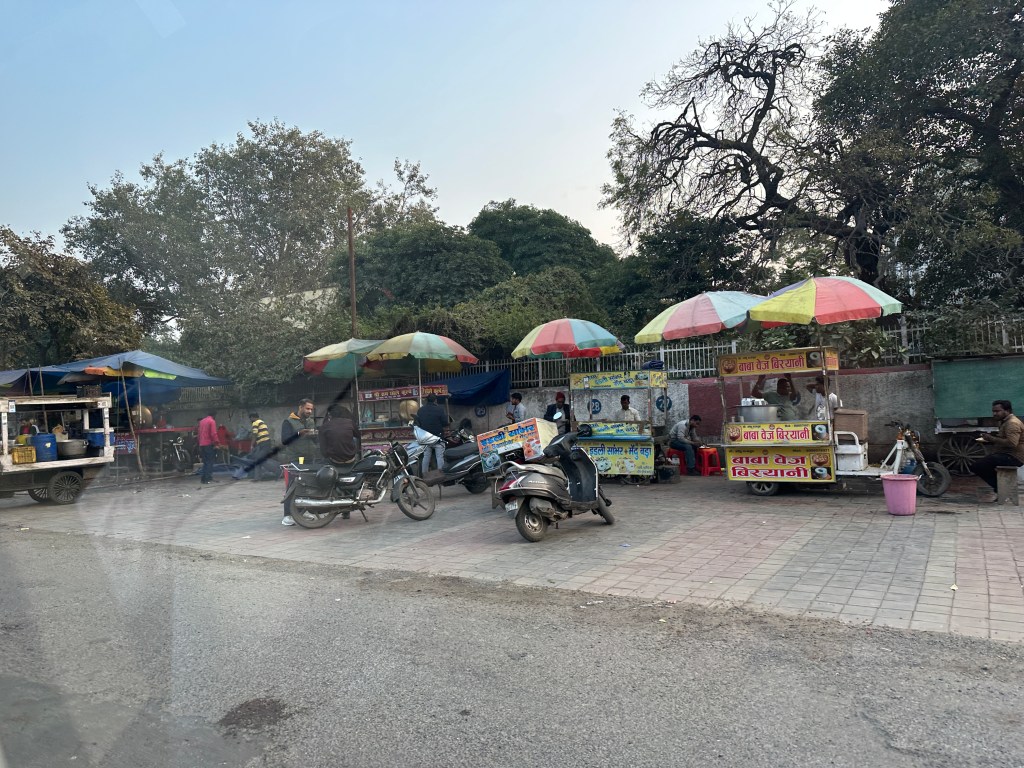
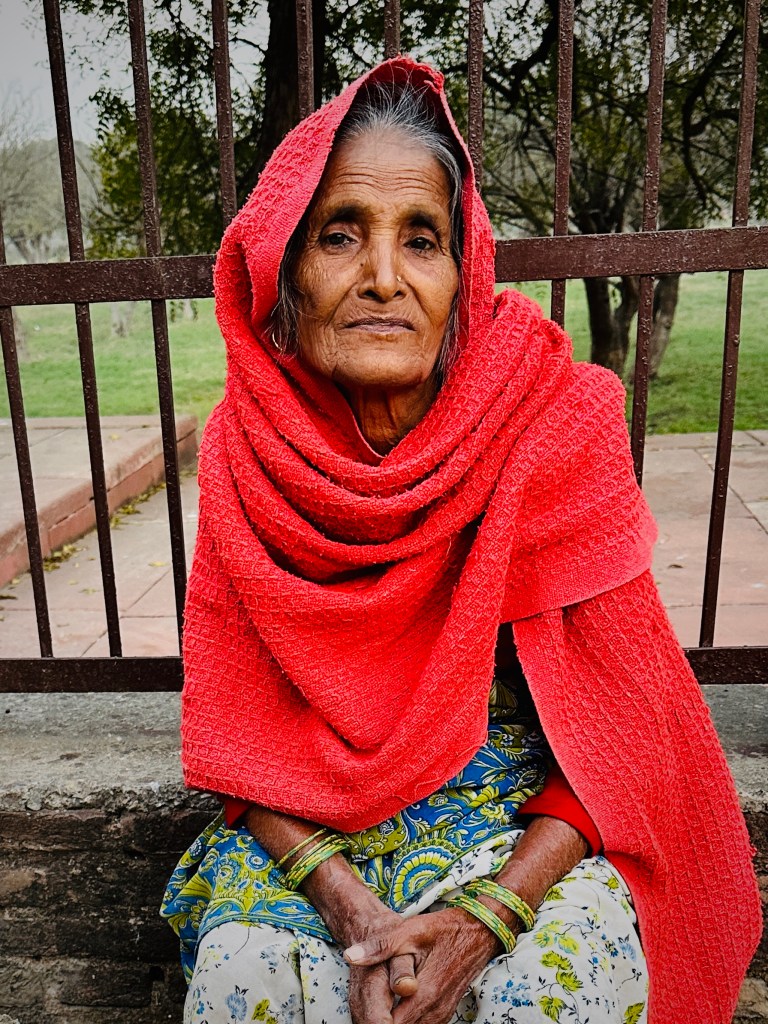
I saw this old lady sitting by a fence It’s not unusual to see cows roaming in the streets
Tomorrow we will actually set foot inside the Taj Mahal!
New Delhi and Delhi (Ravi, our tour guide said the proper pronunciation is DILLI) are two different places altogether. With New Delhi serving as the capital of the country and Delhi being the more substantial city within which New Delhi is a ‘territory’ designed by the British while shifting the money from Calcutta to Delhi. New Delhi is known to be a seat to the three arms of the Government of India – Legislative, Executive and the Judiciary. The city is the second most populous in the worldafter Tokyo.
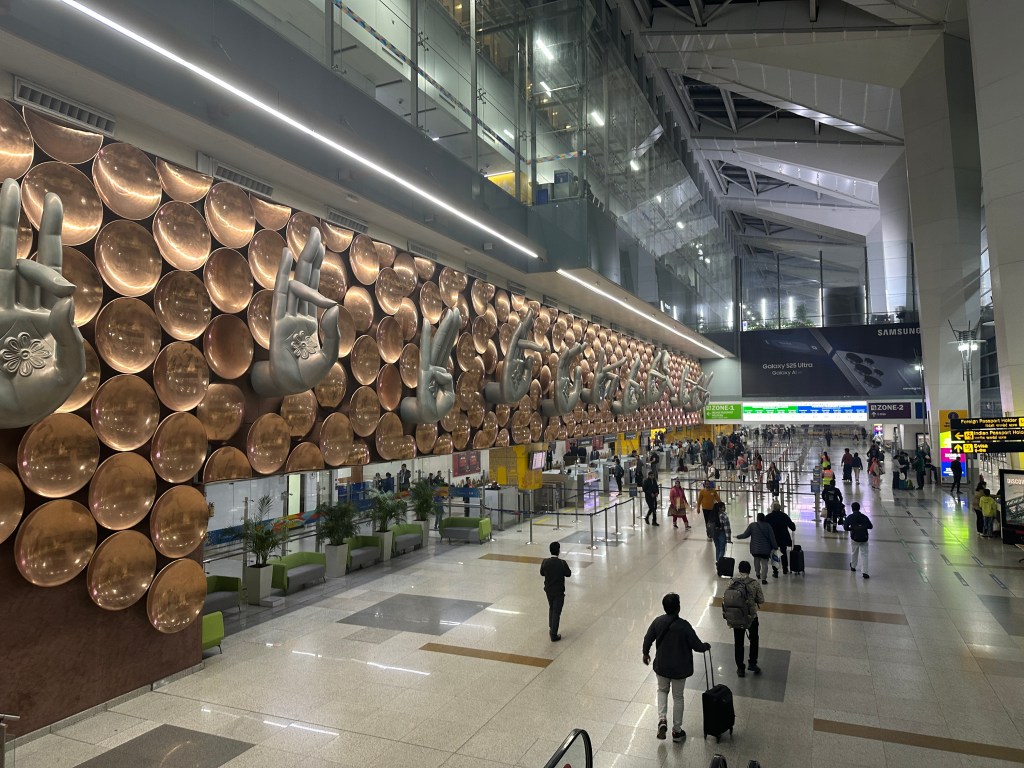
Inside Indira Gandhi International Airport
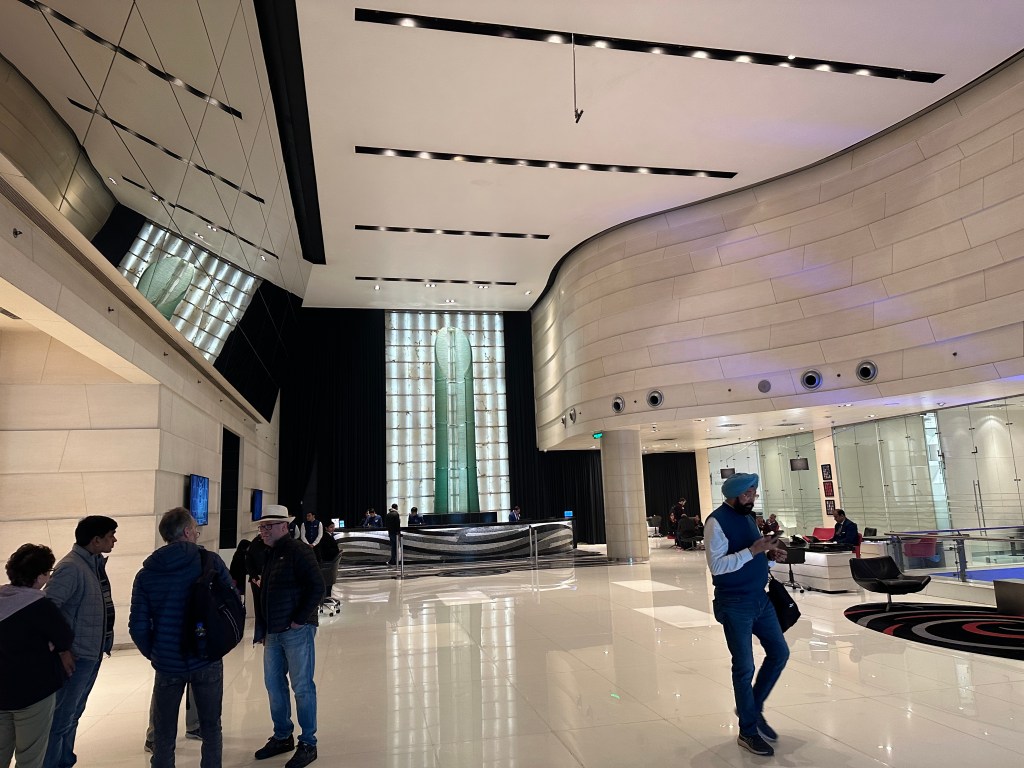
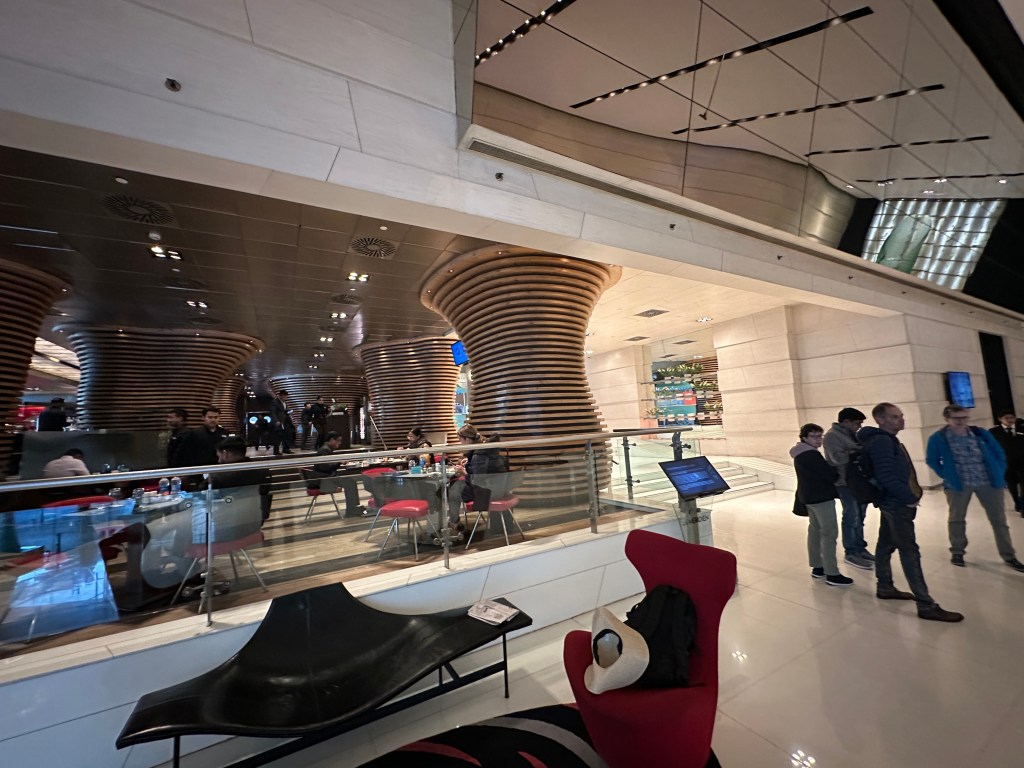
We landed at Indira Gandhi International Airport in New Delhi a few minutes after 10:00 pm; however, by the time we got out of the airport and reached our hotel (45 minutes drive) it was already 1:00 am. At least our travel agent booked us at the Le Meridien (a Marriott-Bonvoy chain). It has a very impressive modern and spacious interior!
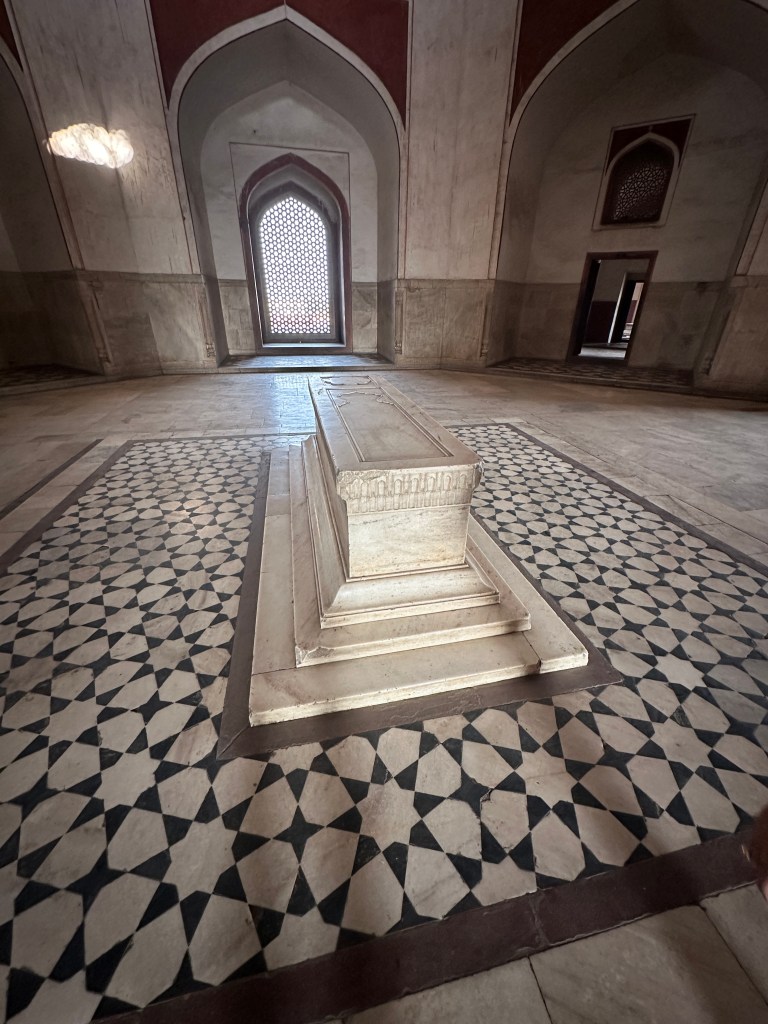
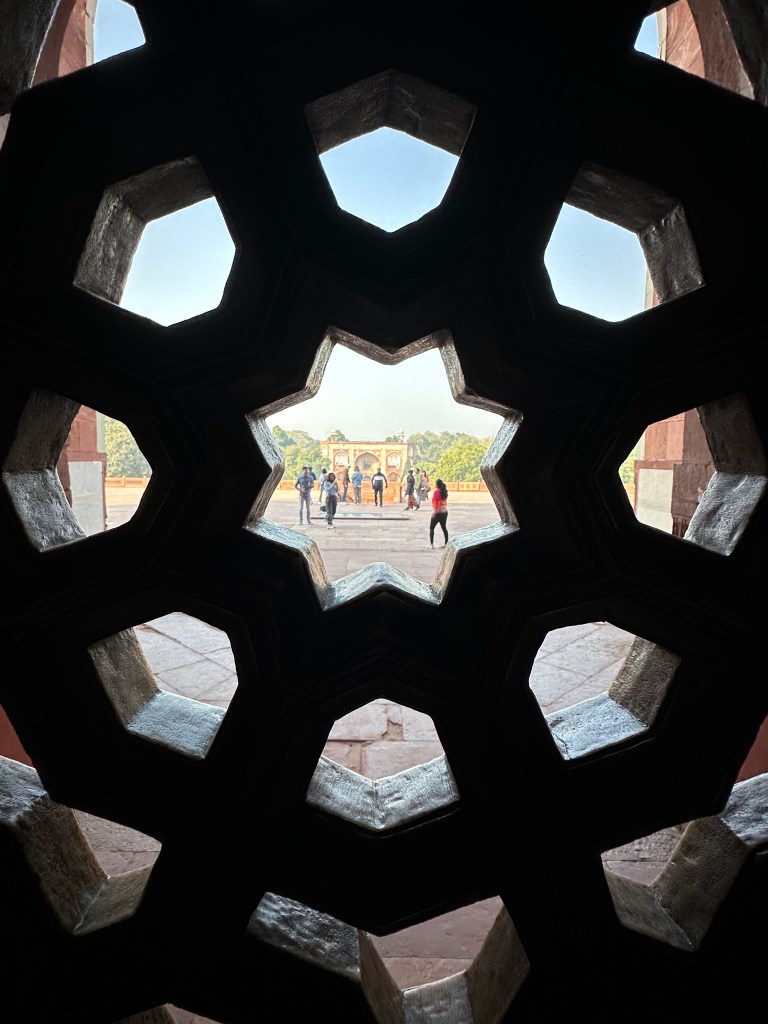
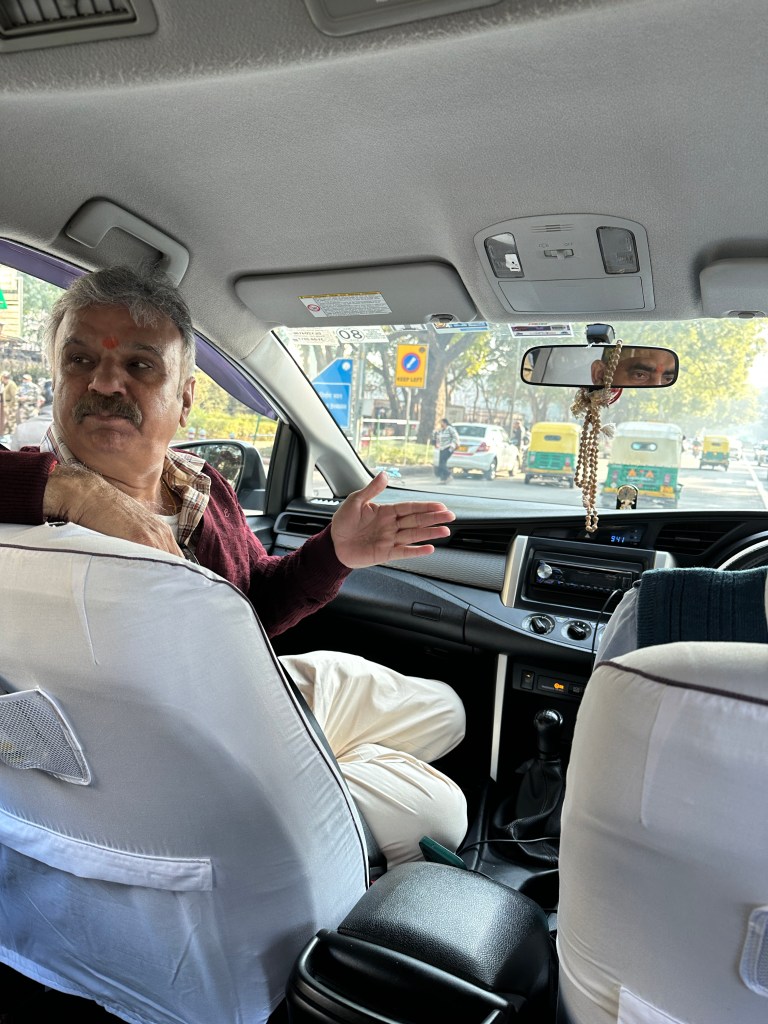
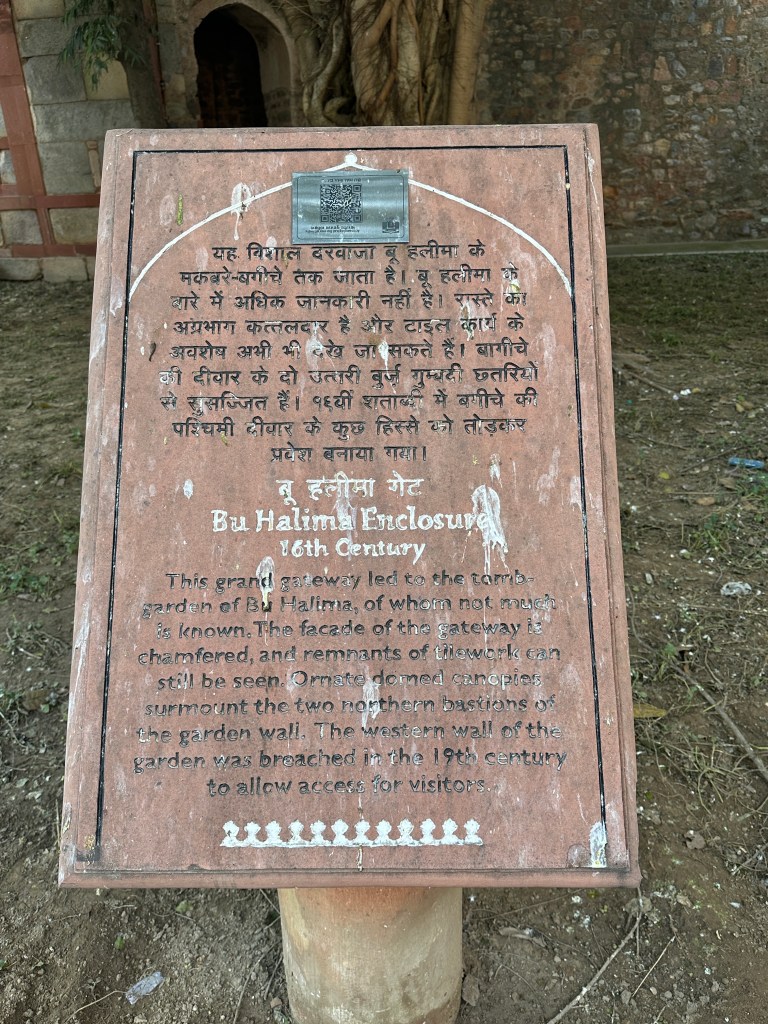
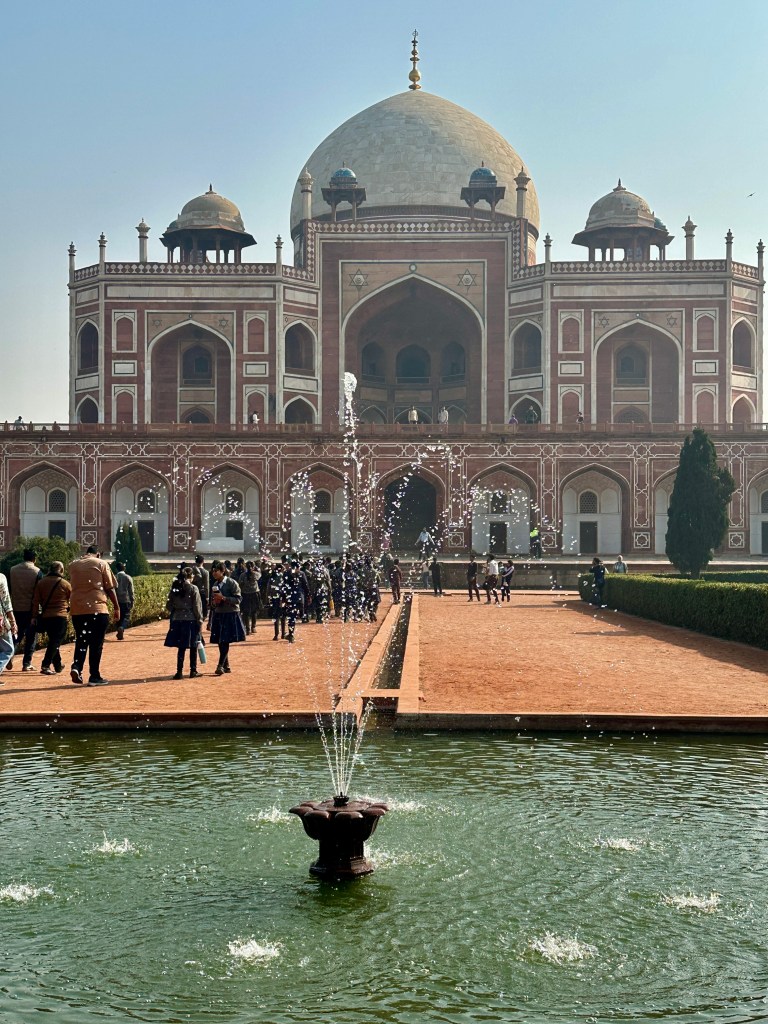
Our tour guide, Ravi, and driver Sunil picked us up at 9:30 am and since we already lost one day (we missed the connecting flight in Kuala Lumpur) it was an abbreviated tour itinerary. Still reeling from lack of sleep and the long flight (5 hours), we boarded our private tour vehicle. Our hotel is located in the “new” part of Delhi and we noticed immediately that the traffic was heavily congested. Ravi explained that it was a holiday (last day of celebration from the independence from British rule). We went to visit Hamayun’s Tomb, built by Human’s widow in 1562 and now a World Heritage Site. Built in India-Islamic style architecture it has a diameter of 47 feet at the base and 9 feet top.
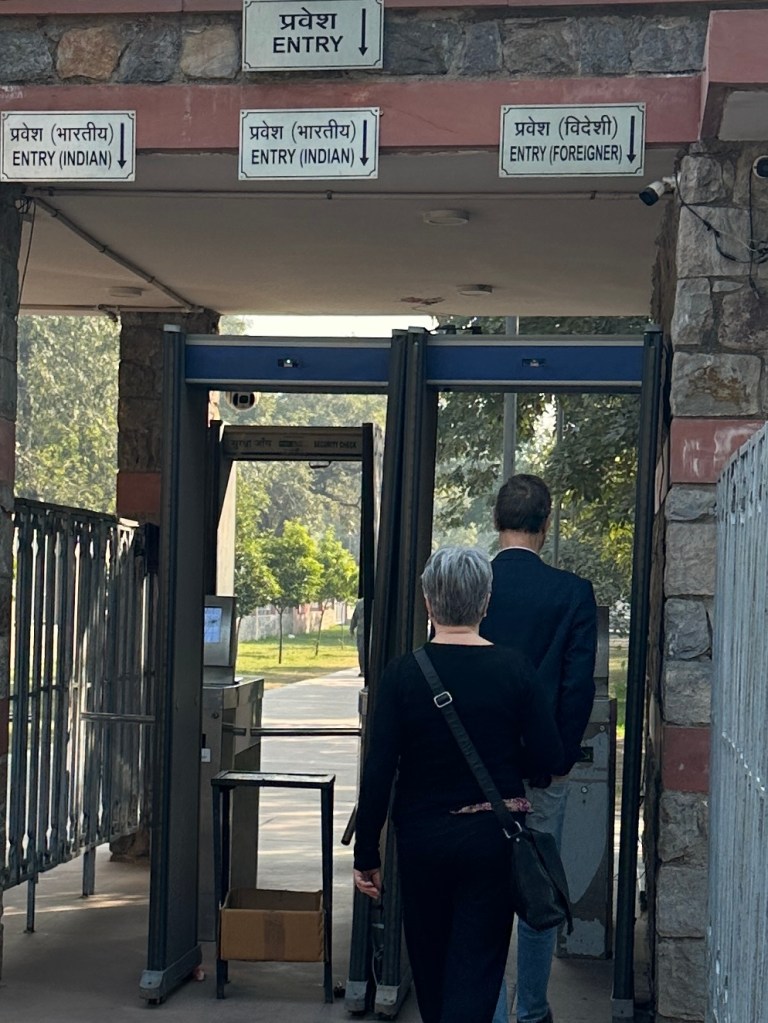
HUMAYUN’S TOMB IN THE BACKGROUNDNotice the entrance sign above -separate for foreigners and Indian!The early morning mist makes the structure a little hazy
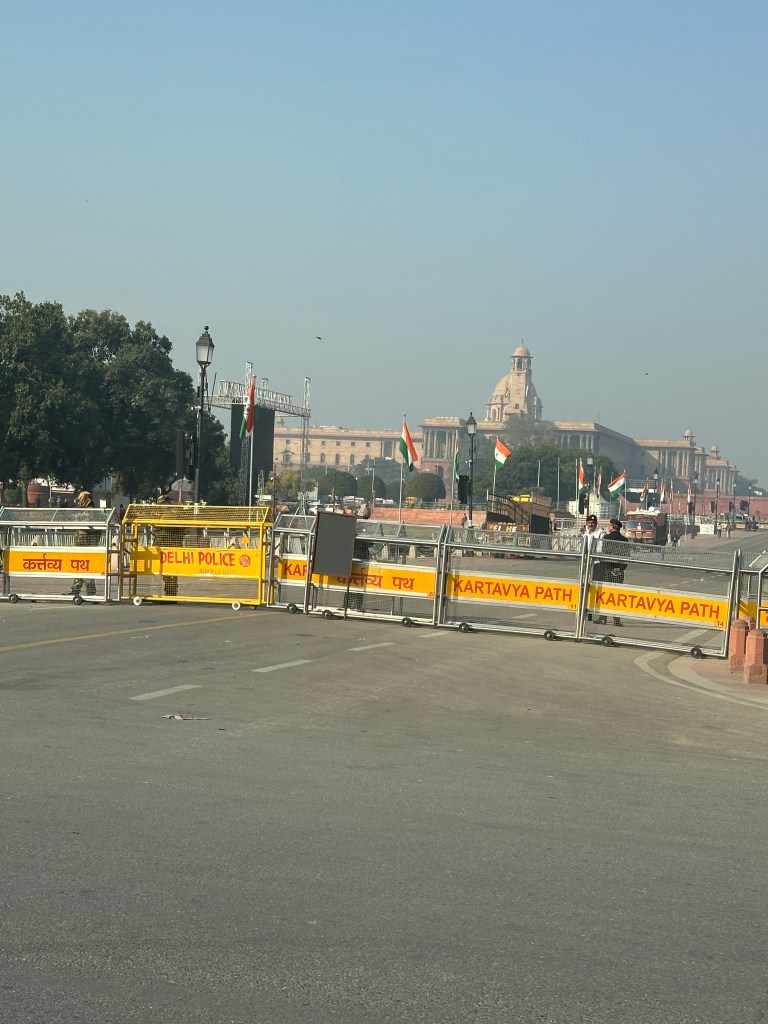
We drove past the government buildings and as expected there were traffic restrictions and plenty of uniformed men (I didn’t see any uniformed female) due to the holiday celebration. Traffic was chaotic and “beep-beeps” heard constantly!
Rashtrapati Bhavan (Presidential Palace with barricades all overRavi, our tour guide
We were lucky to have our own private tour since we could hear all the interesting facts instead of straining to listen to a group tour guide.
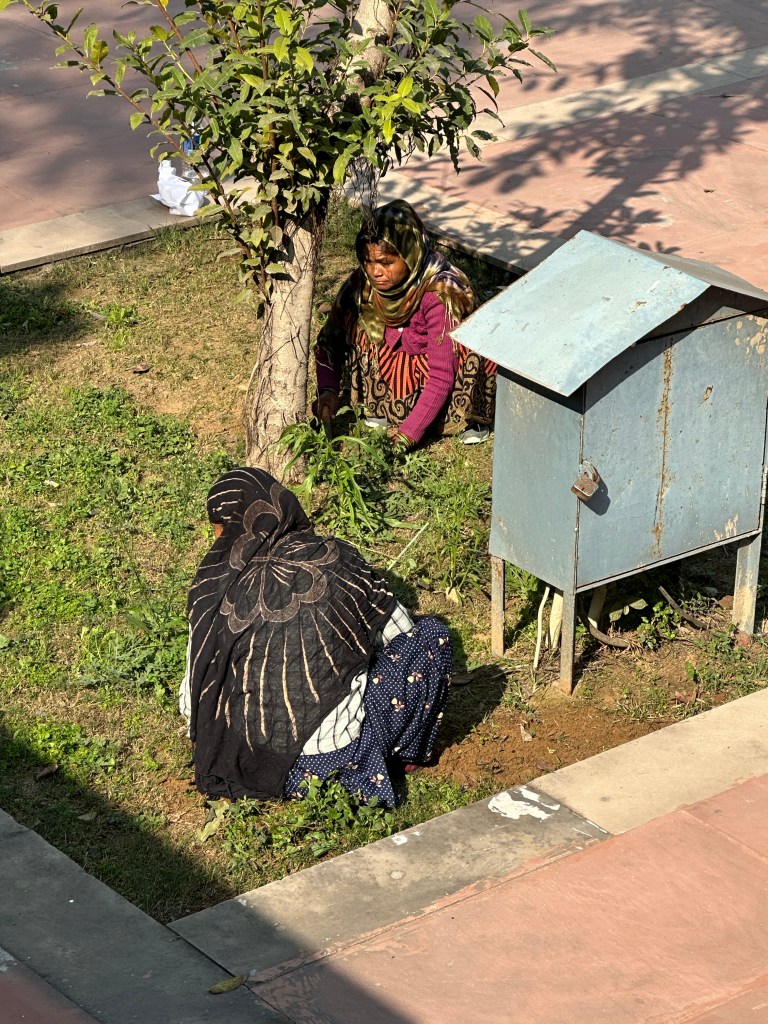
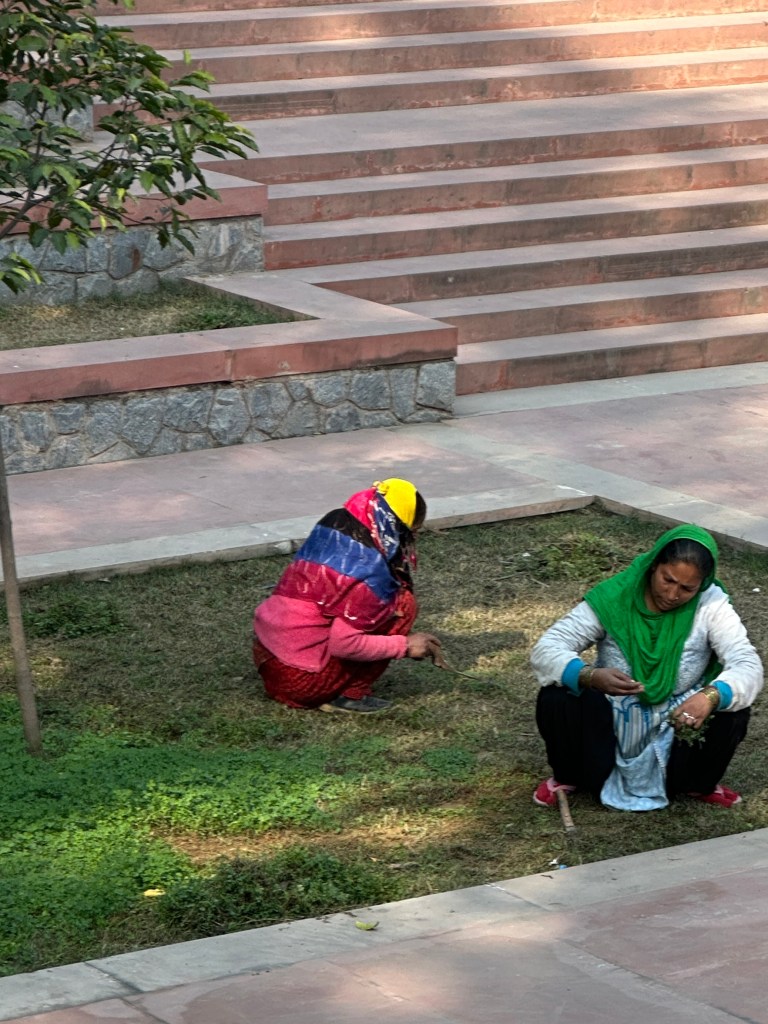
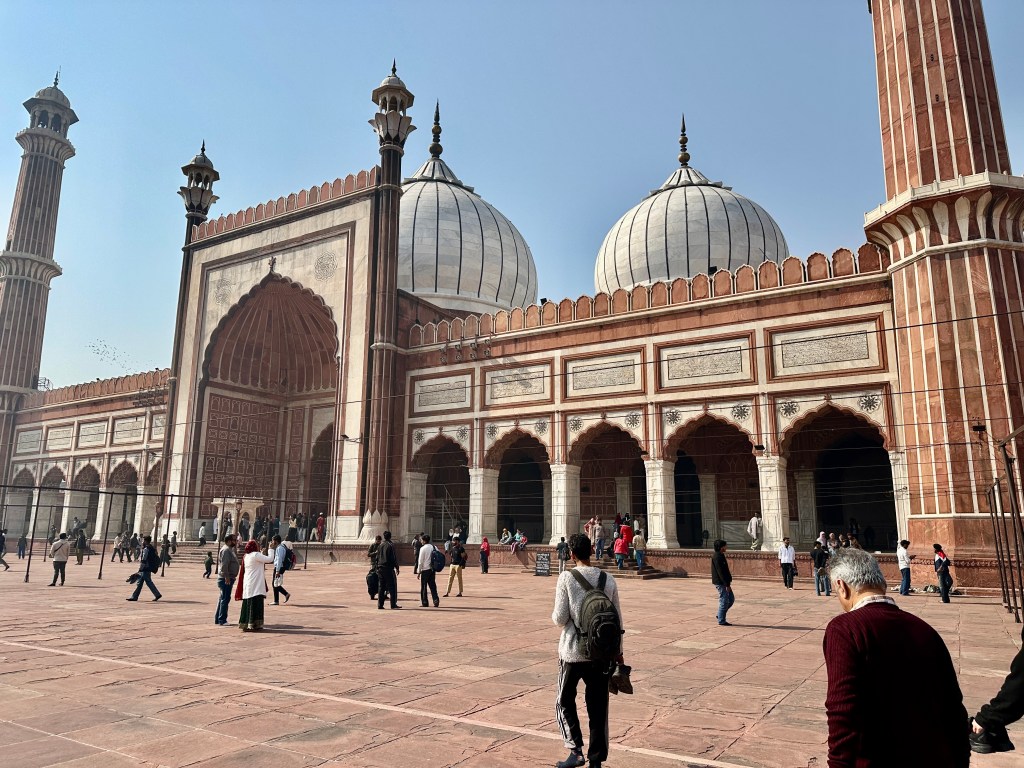
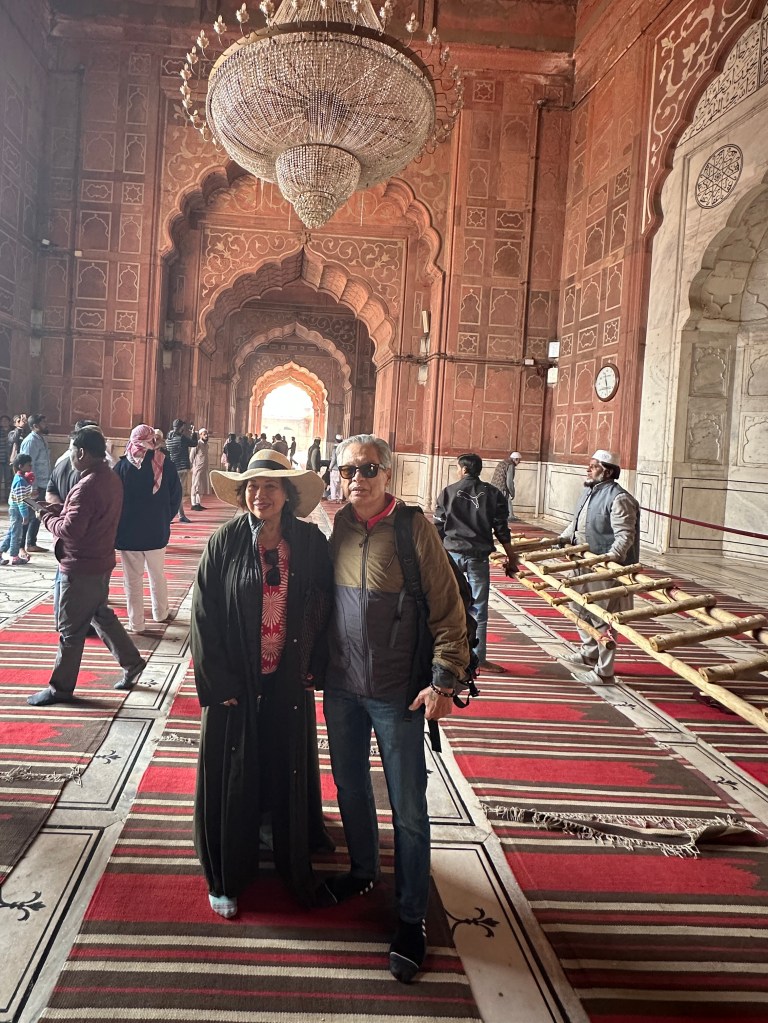
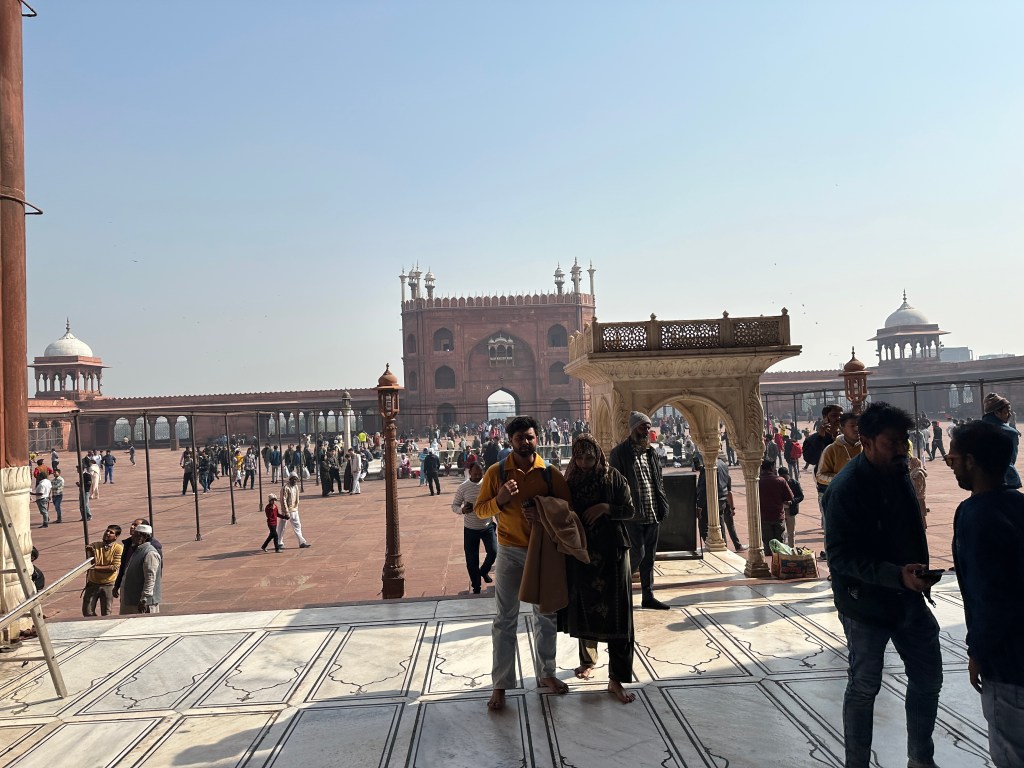
Humayun’s Tomb is also referred to as the Taj Mahal of DelhiThe “groundskeepers” of the parkThe women are manually digging the weedsThe huge mosque can hold a mind-blowing 25,000 people
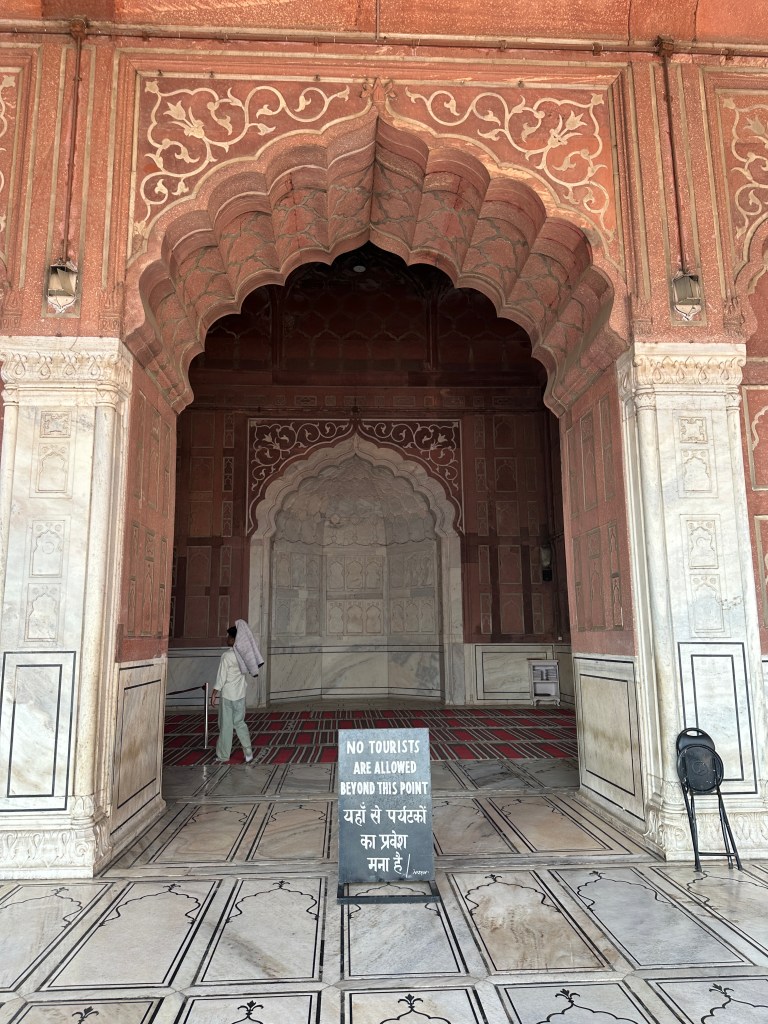
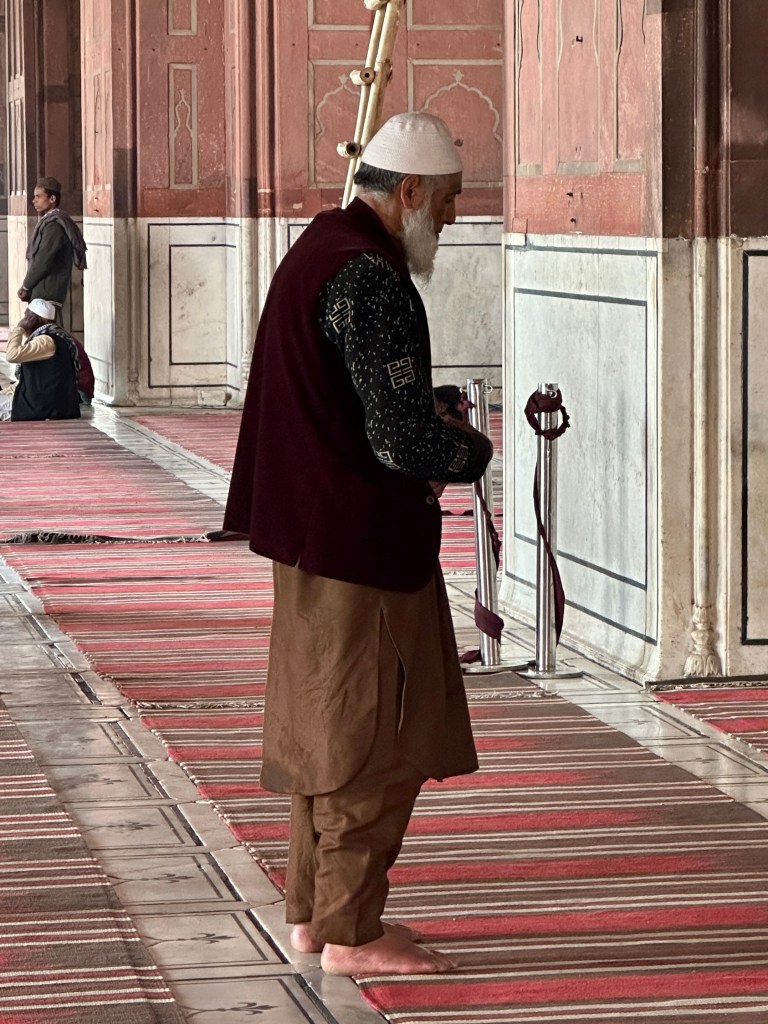
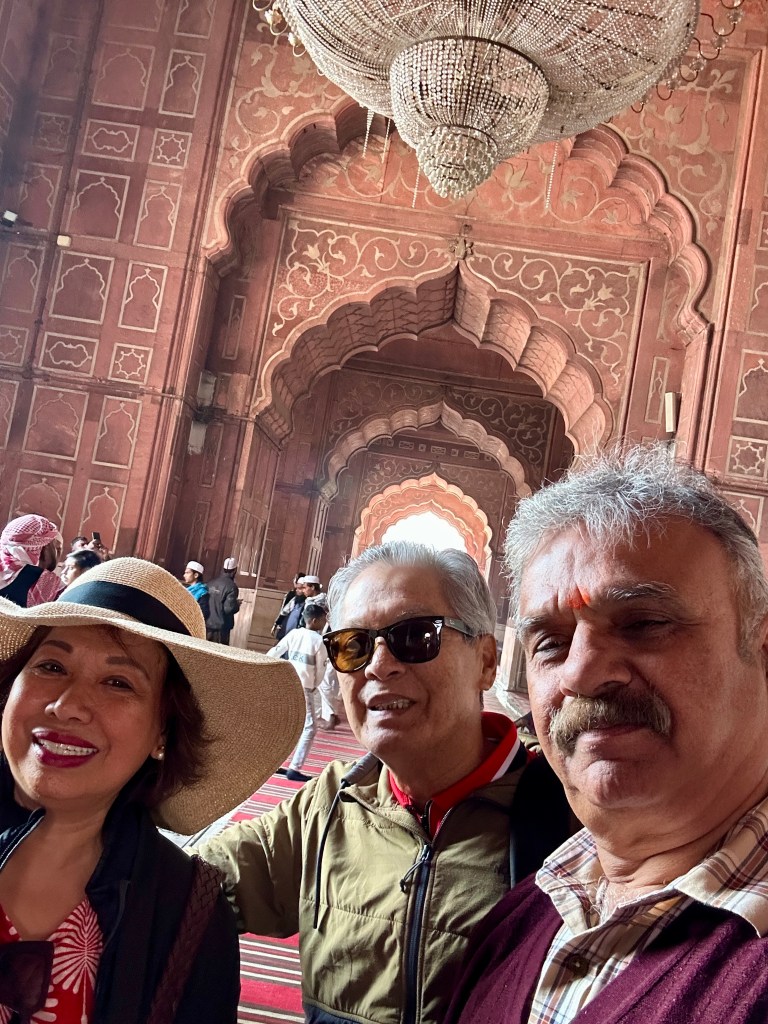
Jama Masjid is Delhi’s principal mosque, the place where the city’s Muslims traditionally gather for Friday communal prayer; Jama Masjid is Arabic for “Friday mosque.” The mosque is near the Red Fort, another of Shah Jahān’s buildings.
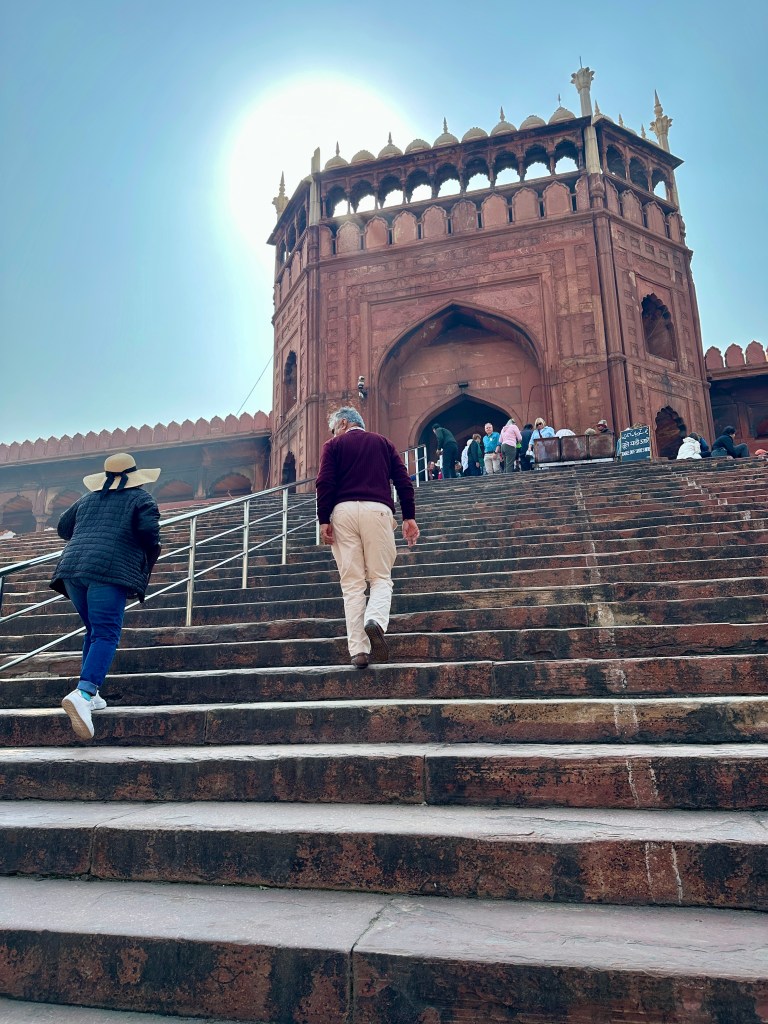
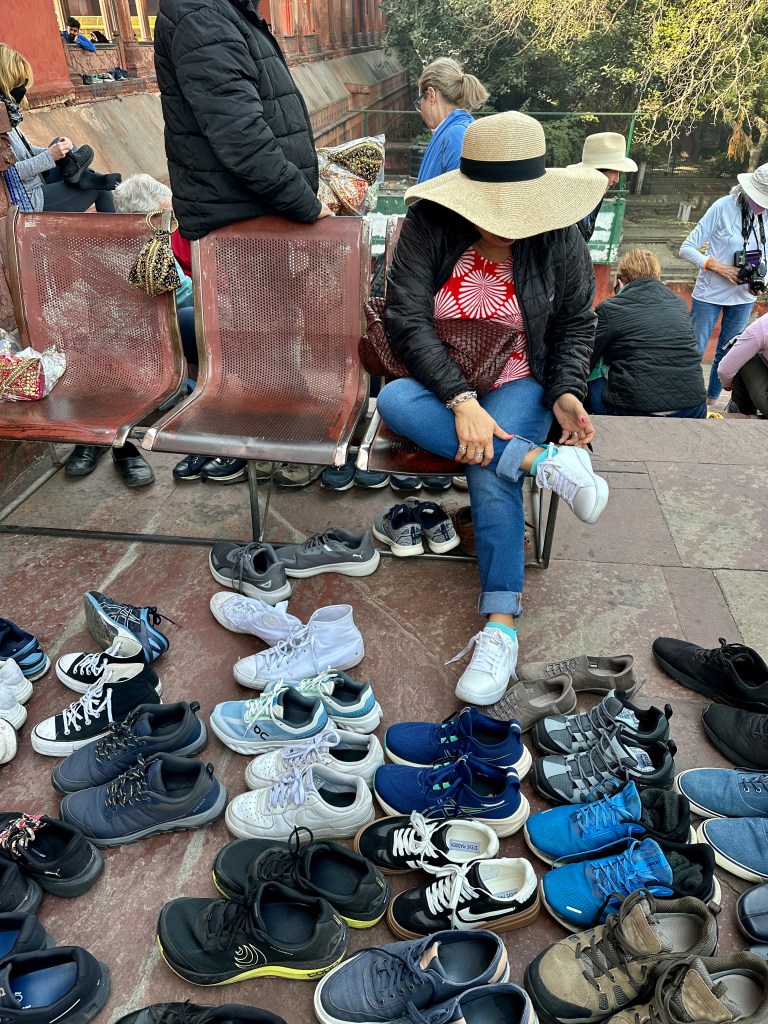
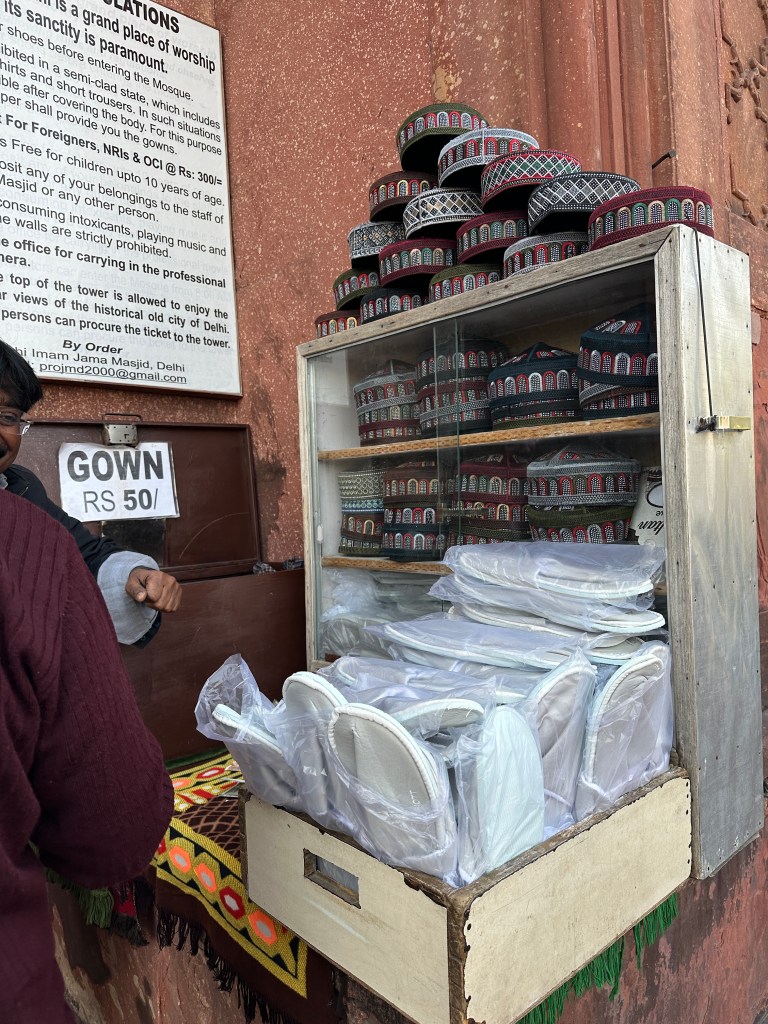
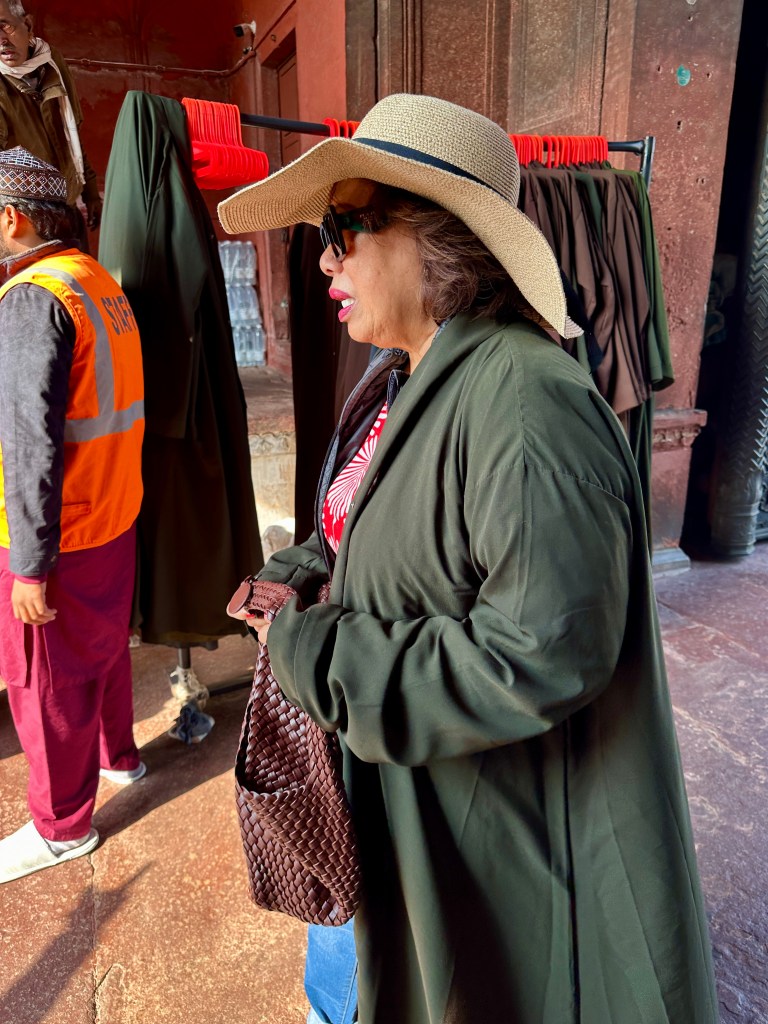
We had to remove our shoes to enter the mosque ground and Trini had to don a long black robe.
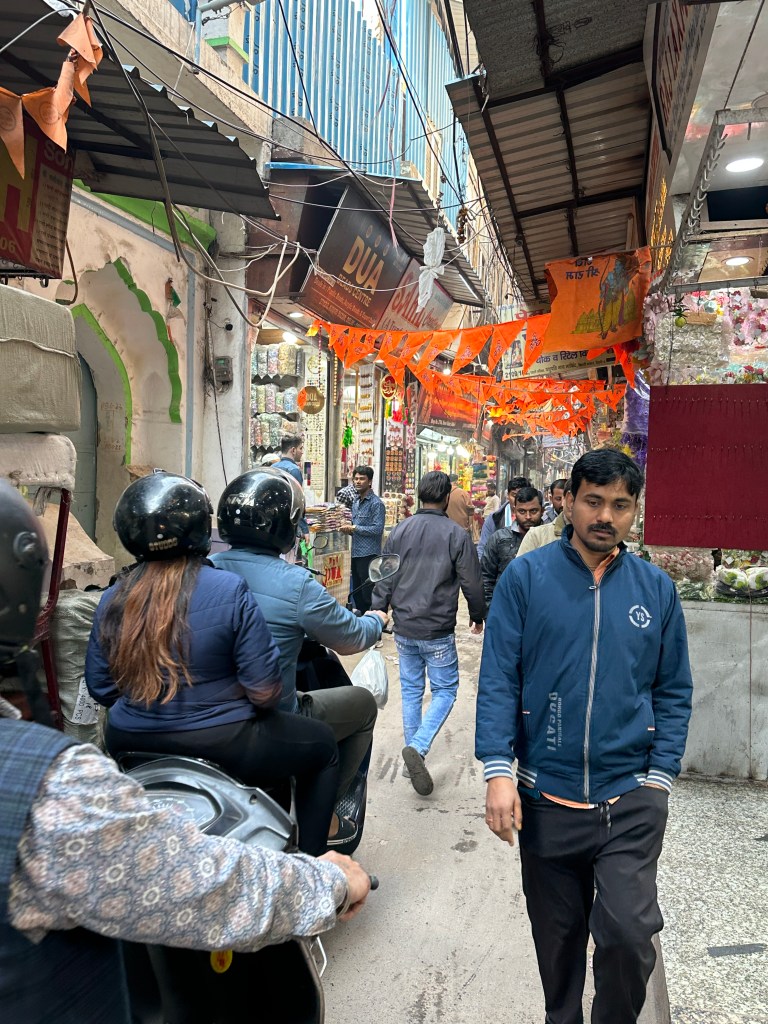
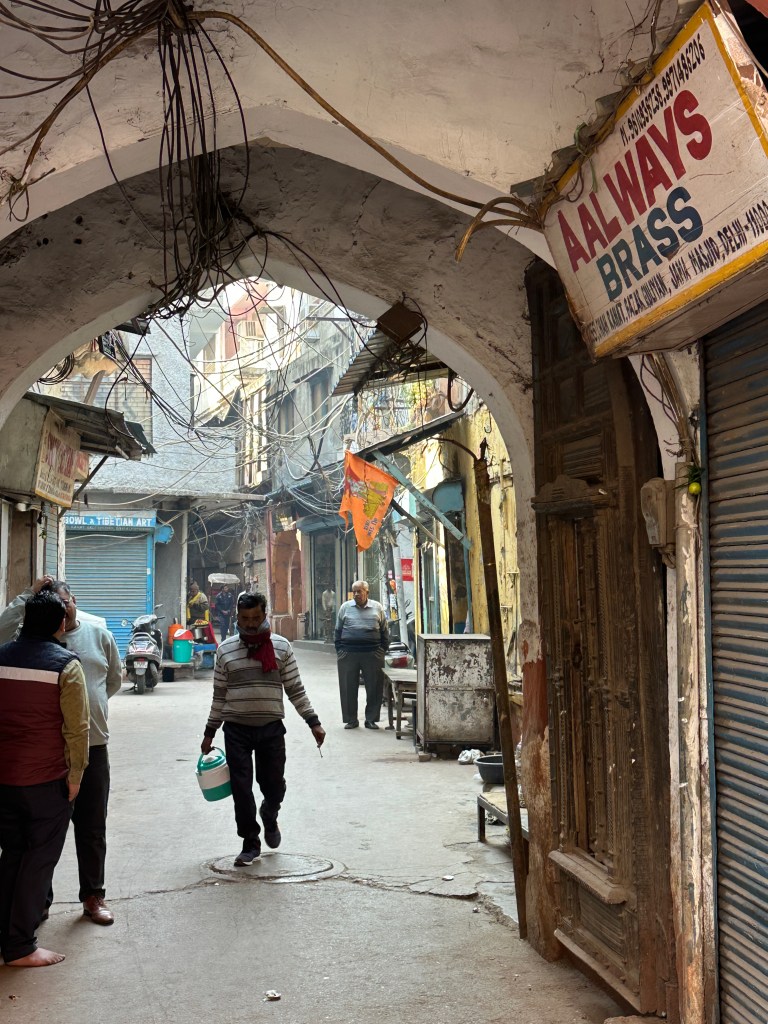
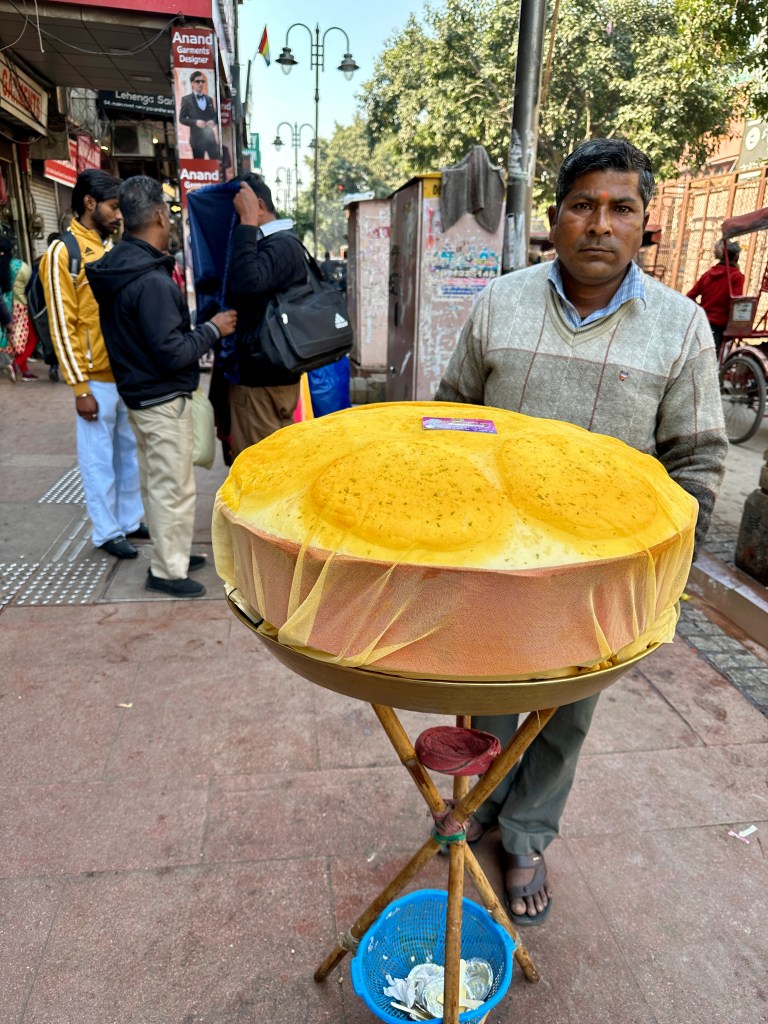
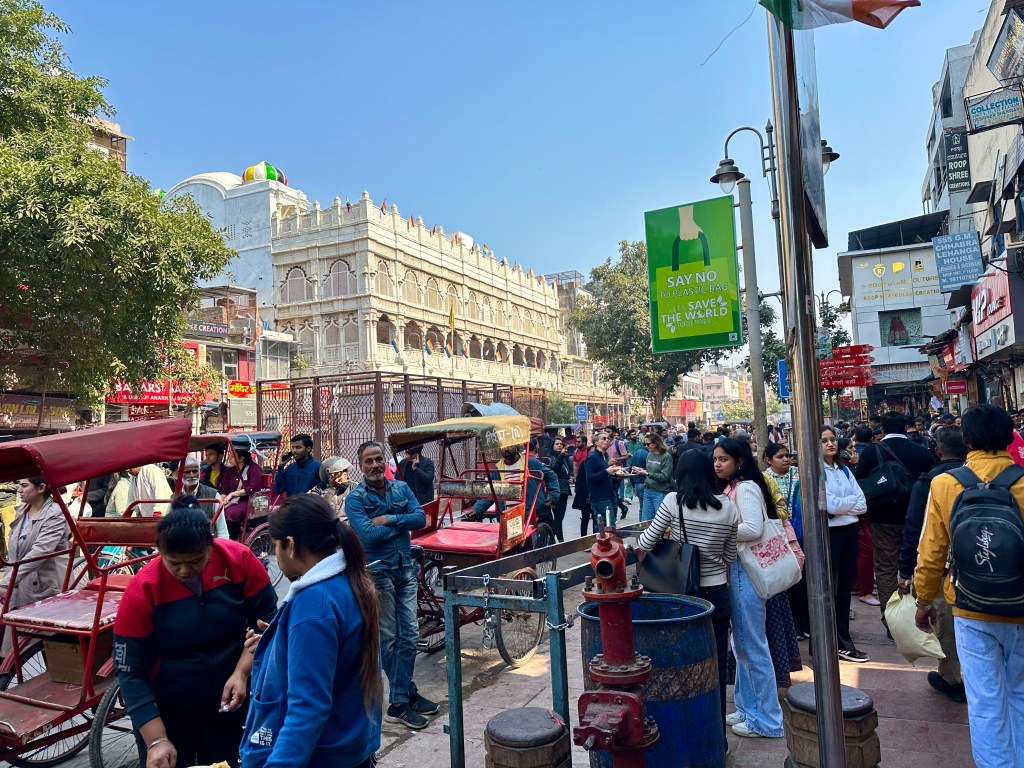
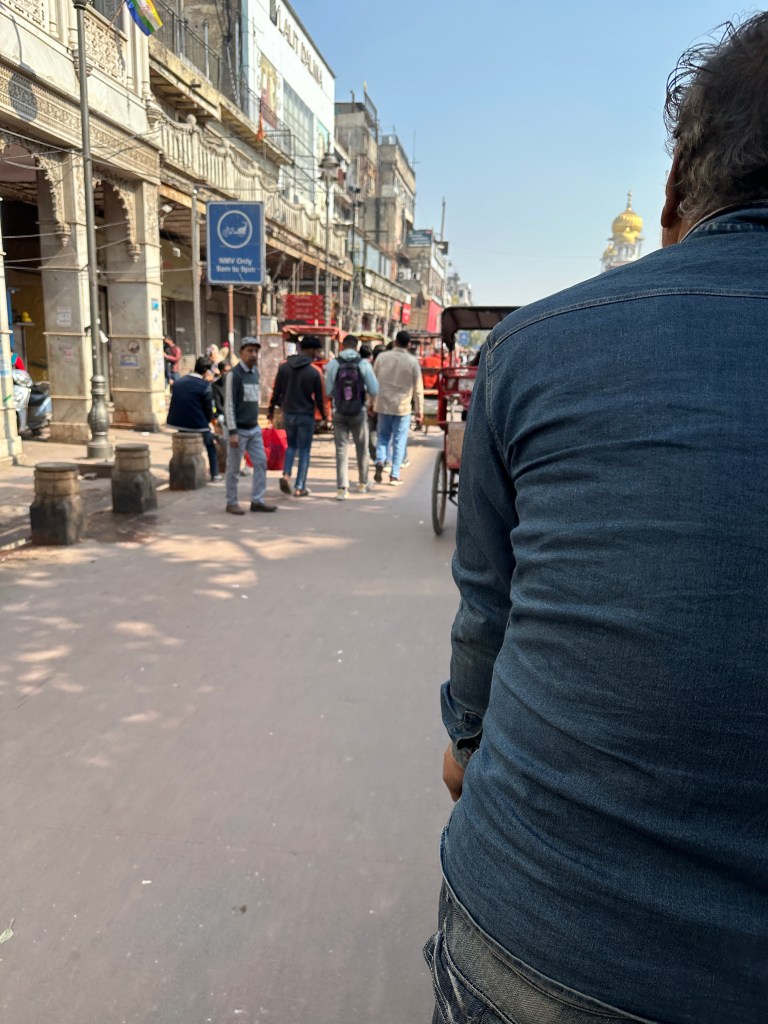
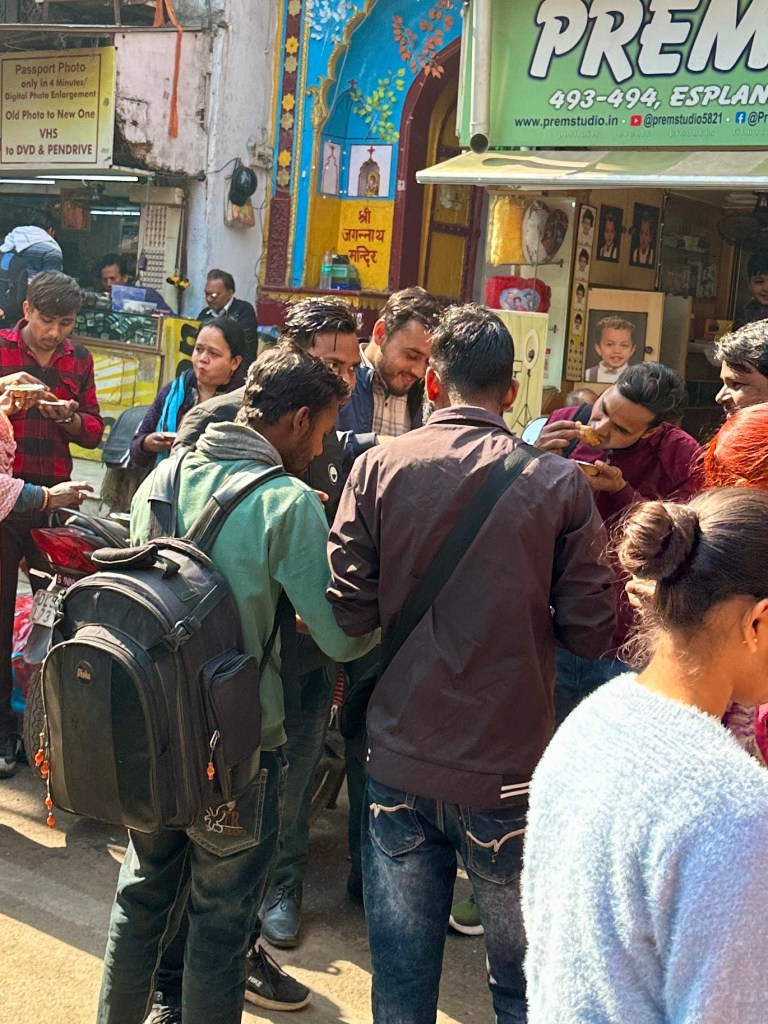
From the mosque we walked to the famous Chandni Chow Bazaars (once the the shopping avenue for Mughal royalty) lined along extremely narrow streets (and I really mean NARROW!) Motorcyles, rickshaws overflowing with their wares, tricycles and pedestrians all vying for the tiny square footage in the streets! WALK AT YOUR OWN RISK! I was grazed by a motorcycle while I was trying to capture these moments and the biker only mumbled something like an apology.
A Hindu-Nazi flag? The swastika is a sacred Hindu symbol representing good luck and prosperity
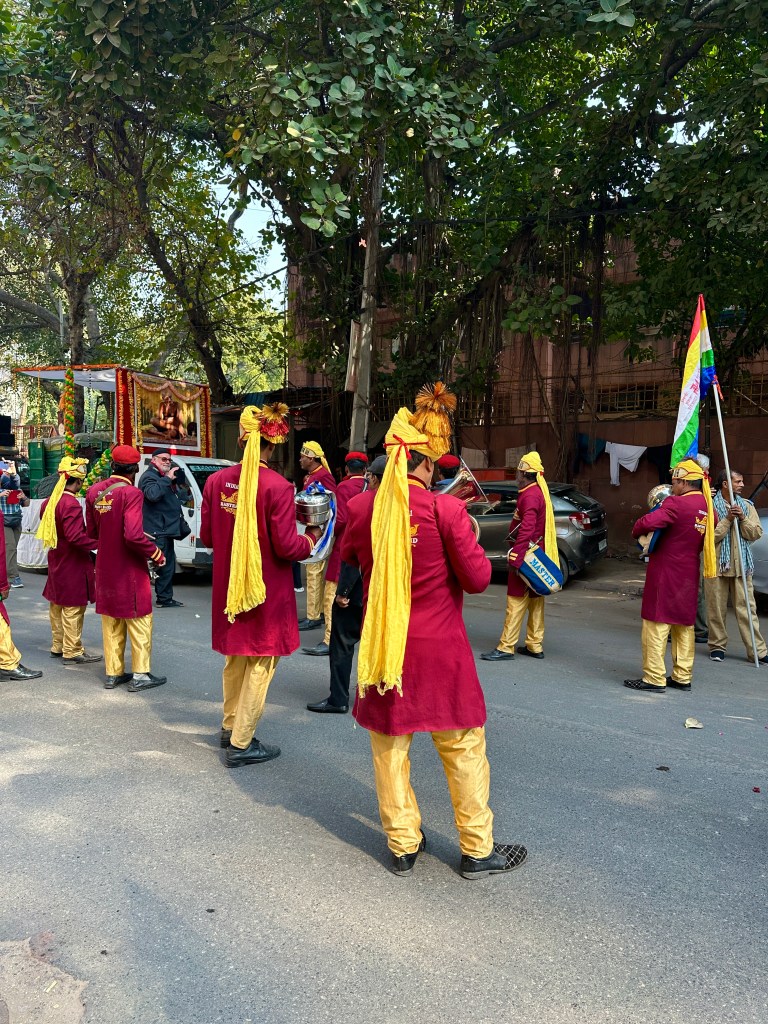
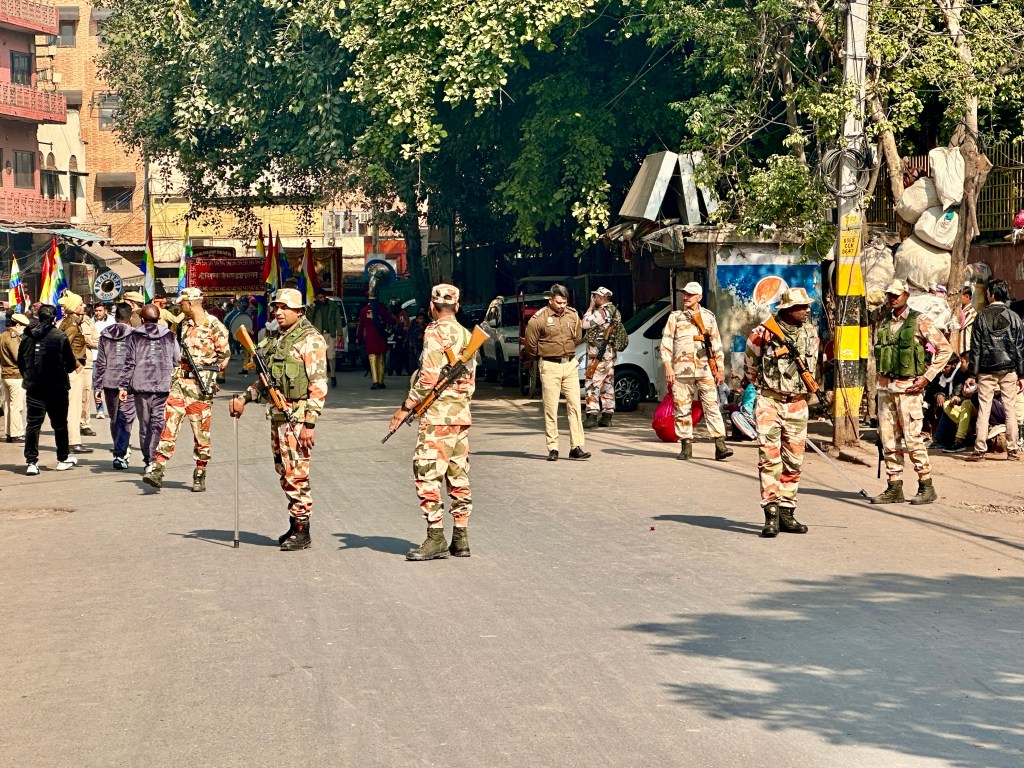
On our way to the bazaars we passed by a religious parade complete with their traditional music blaring from the speakers while soldier stood around to ensure safety.
Entering the narrow street where bazaars are located
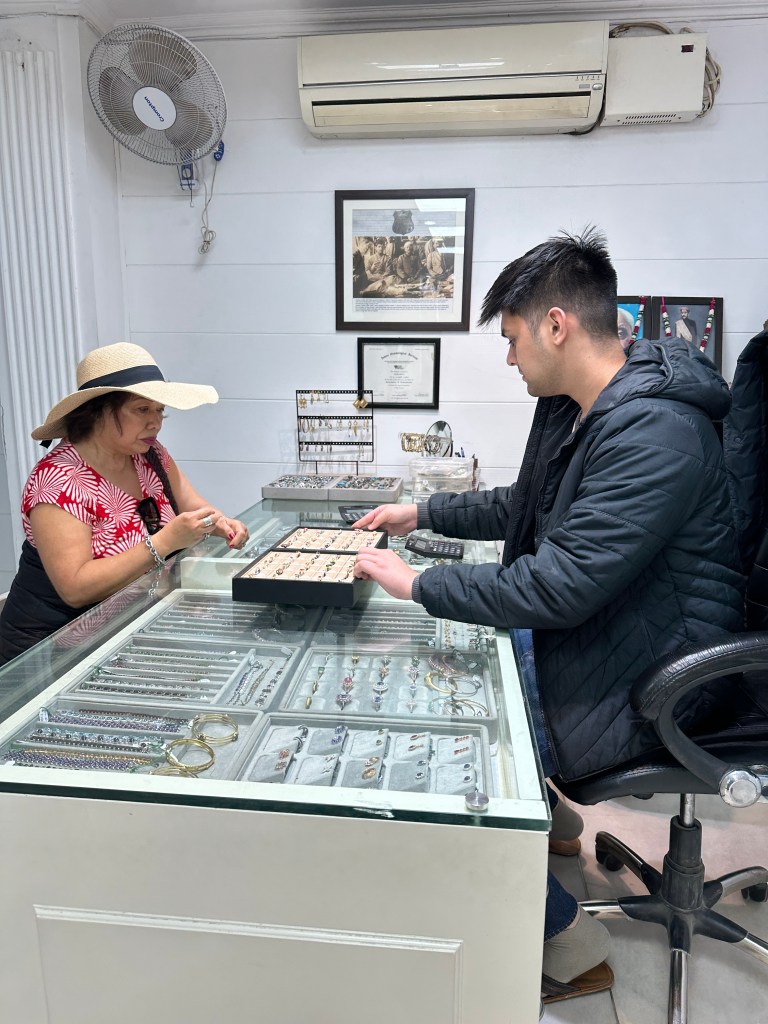
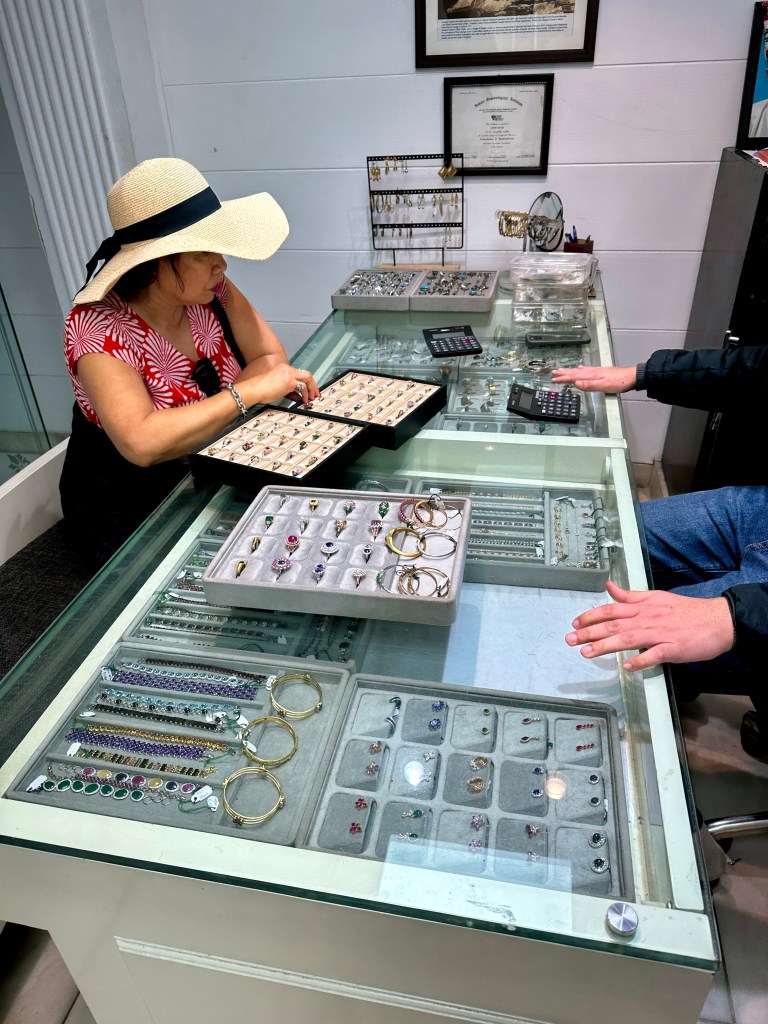
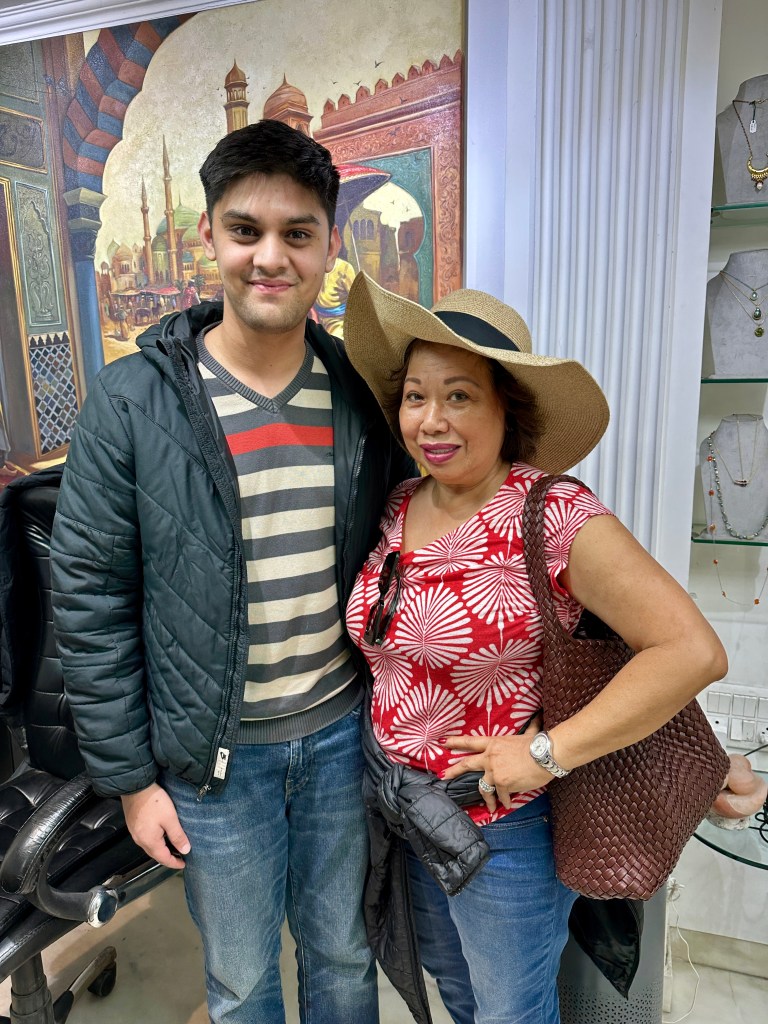
By this time, we really needed to use the restroom. Ravi took us to a jewelry shop (more of a “shoppette” since it’s just a hole in the wall). I used the toilet while Trini browsed their products. It was the most expensive use of a toilet ever!
After all the traveling we did, it seemed Trini mastered the art of haggling! Or maybe the vendor just made it look that way?
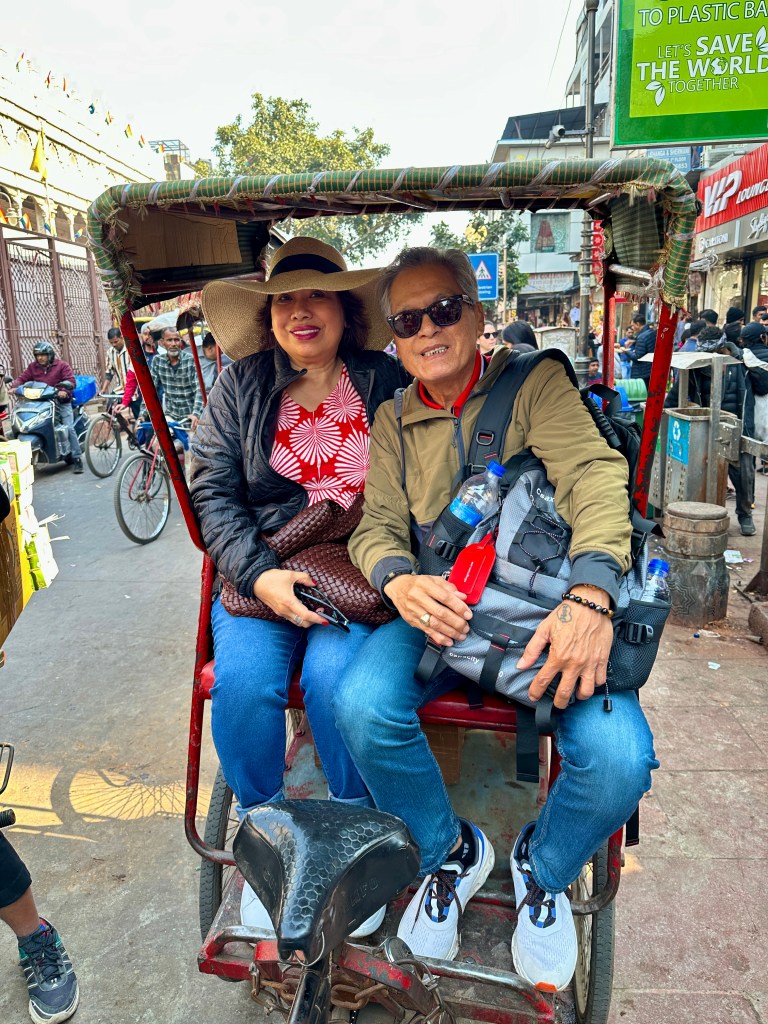
We took a very uncomfortable rickshaw ride to meet our driver (there was no parking). The rickshaw driver kept pointing at tourist spots but we did not understand a word he was saying due to the traffic and pedestrian noise! The place was teeming with humanity (25 million people in the city).
There was a brief verbal altercation here due to a near mishap People in circles eating lunch in the middle of the road
Trini and I were worried that our guide would take us to a “sidewalk” eatery but were relieved to see a clean and upscale restaurant! This is the first time that we enjoyed Indian cuisine albeit a little spicy for us. I guess the food Ravi selected made a difference – we ordered the mutton tikka, buttered chicken, a vegetarian dish for Ravi, naan, rice and an assorted of pickled vegetables. I was disappointed that they did not serve any alcoholic beverages though!
We visited the Kashmir carpet store and learned a little on how they make cashmere rugs
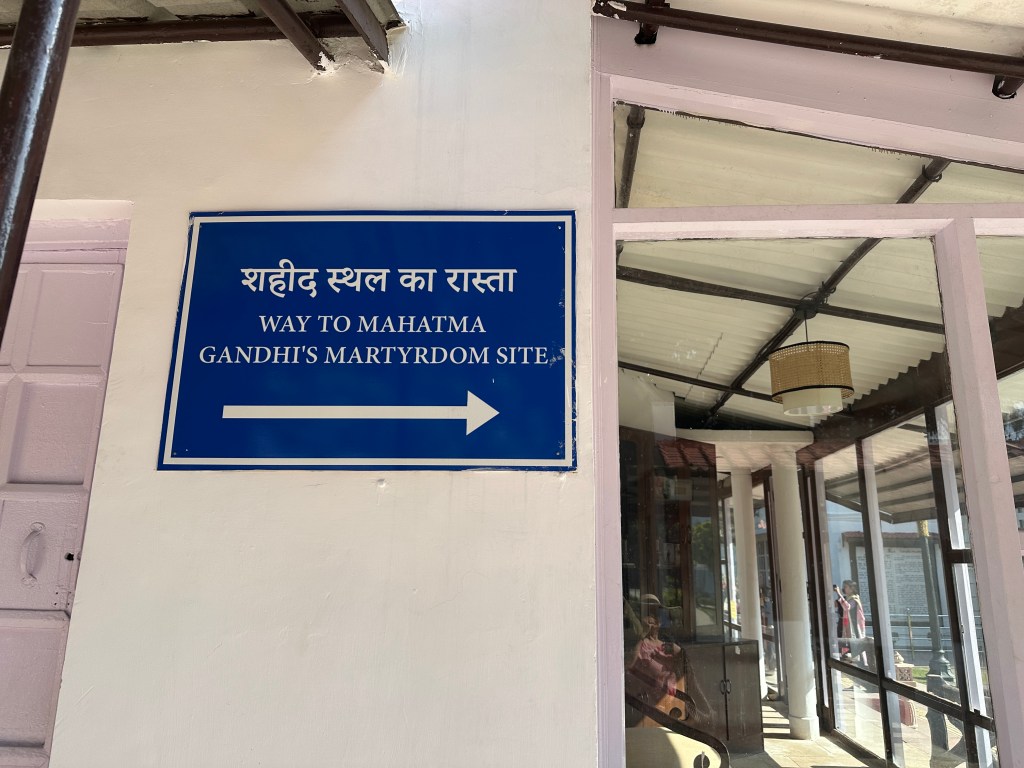
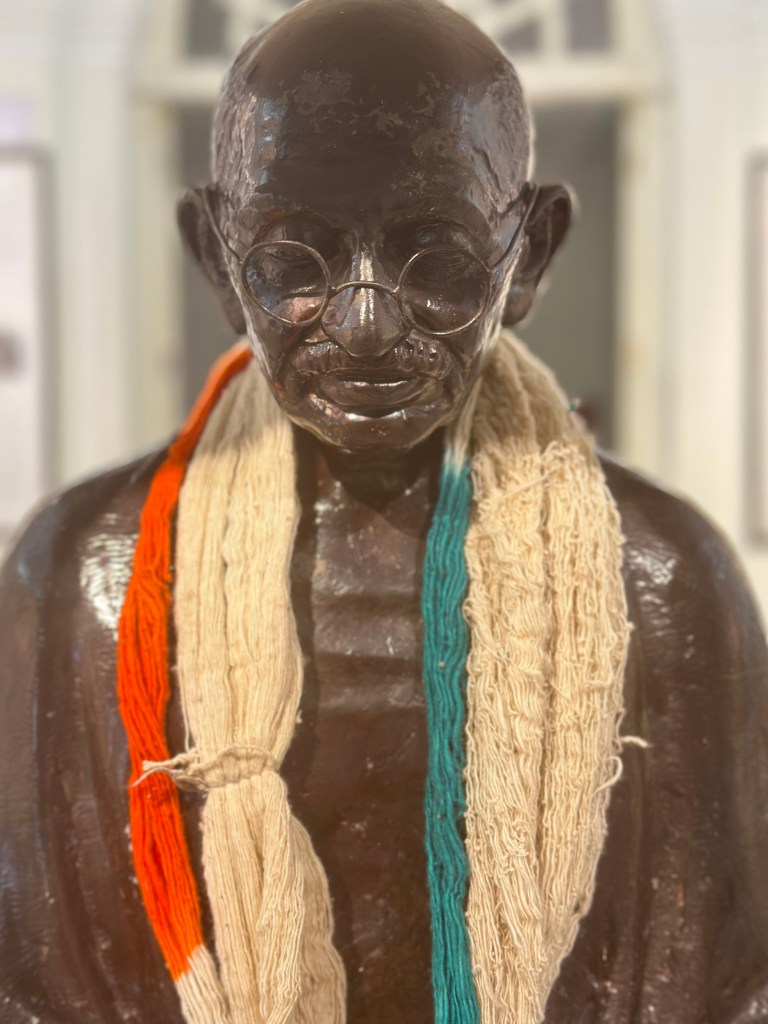
We visited Mahatma Gandhi’s house and the spot where he was assassinated! Mohandas Karamchand Gandhi (2 October 1869 – 30 January 1948) was an Indian lawyer, anti-colonial nationalist, and political ethicist who employednonviolent resistance to lead the successful campaign for India’s independence from British rule. He inspired movements for civil rights and freedom across the world. The honorific Mahātmā (from Sanskrit, meaning great-souled, or venerable), first applied to him in South Africa in 1914, is now used throughout the world.(WIKIPEDIA)
WIFI is slow, we’re in Agra now to see the TAJ MAHAL!


































 The Senior Travelers' Blog Site