
St. Lucia boasts some of the Caribbean’s most idyllic beaches, many near its capital of Castries. The British and French fought over it for 150 years. The British finally triumphed in 1814. Today St. Lucia is a sovereign nation but is still part of the British Commonwealth.
We took a stroll outside the ship’s terminal since our tour did not start until 11:30 AM. Immediately, a stench caught my nostrils – the smell of a “wet market“. It reminded me of Manila! The street was jammed with vehicles and pedestrians crossing at their own risks! Since it just rained the potholes were filled with water and navigating the almost non-existent sidewalk was tricky. We walked a couple of blocks and went back after browsing the ubiquitous souvenir shops along the crowded avenue. There were groups of cruisers from the ship docked across from us (looked like an Italian cruise ship).
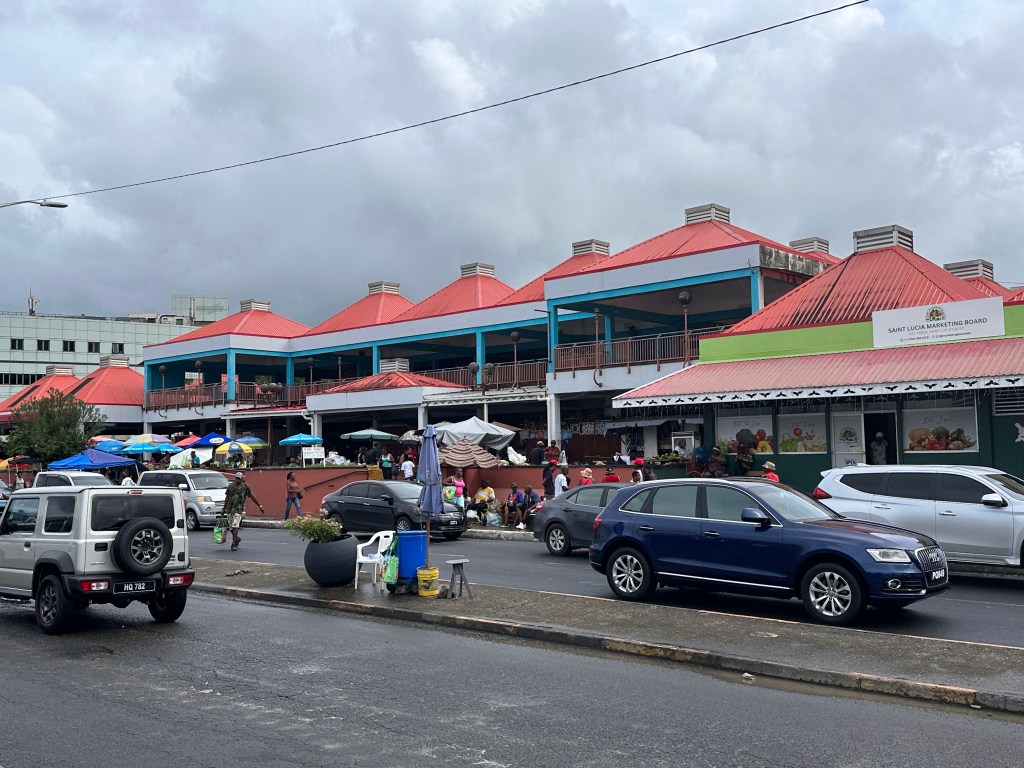


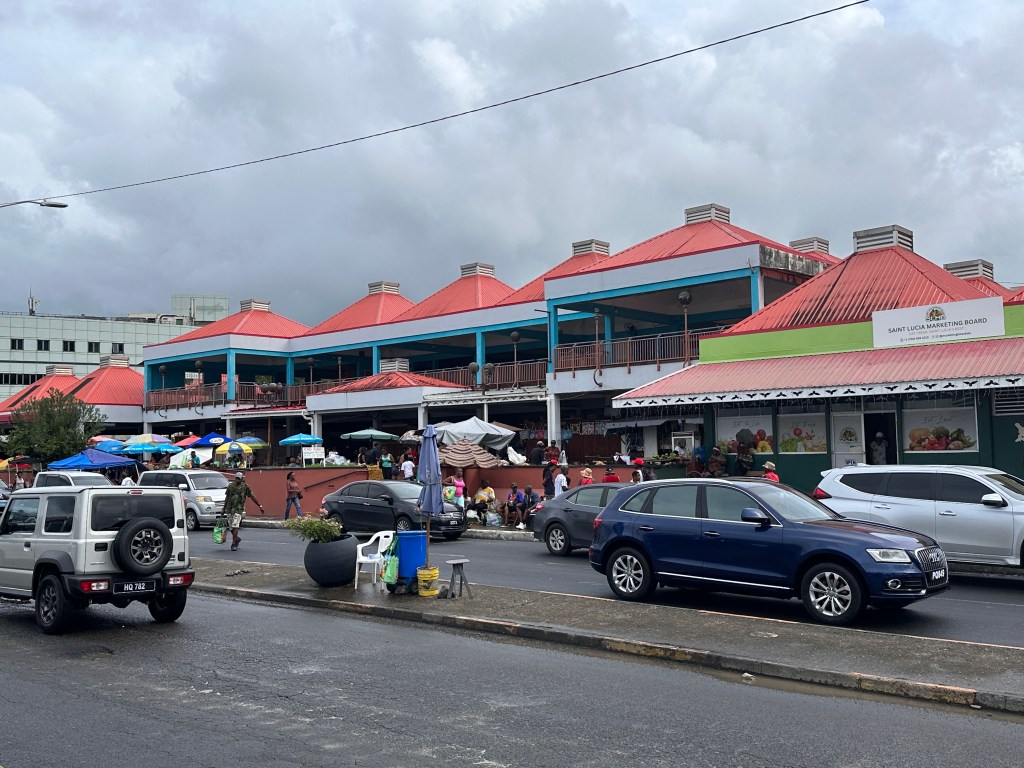

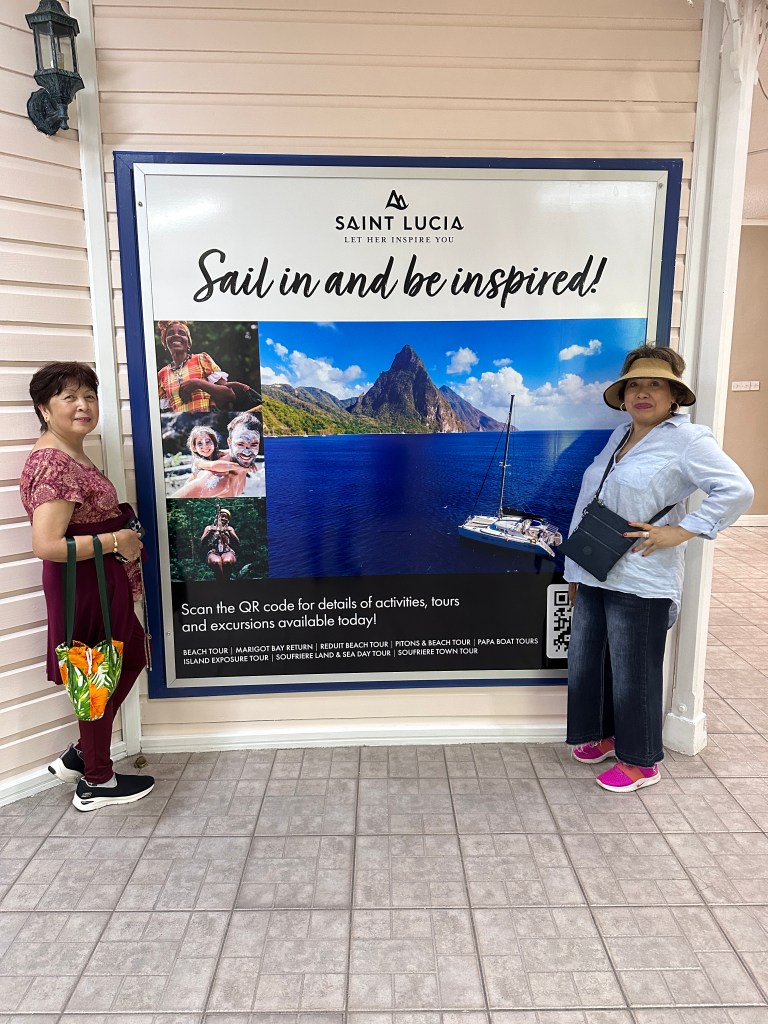
On our way back to the terminal, it started to shower, and that’s how it was the entire time we were outside – a peek-a-boo game with the sun! It would shower briefly and gets dark, then after about 10 minutes it would stop and become sunny again! We were given a cheap flimsy poncho as we departed the ship. An umbrella is also available in our stateroom for our use but too cumbersome to tote along while doing the excursion. So we packed our own light waterproof jackets.
We were herded to our small van to take us to the rainforest up in the mountain. Again, being a former British colony they drive on the left side of the road. Our driver, David was really a cautious and safe driver compared to the other hair-raising daredevils that seemed to forget that there other vehicles on the road! We drove narrow serpentine roads ascending to our destination. As I mentioned, the place reminded me of Manila but I should add that it was also similar to the small towns in the provinces in the Philippines where houses are built very close to the highway making the roads narrower.
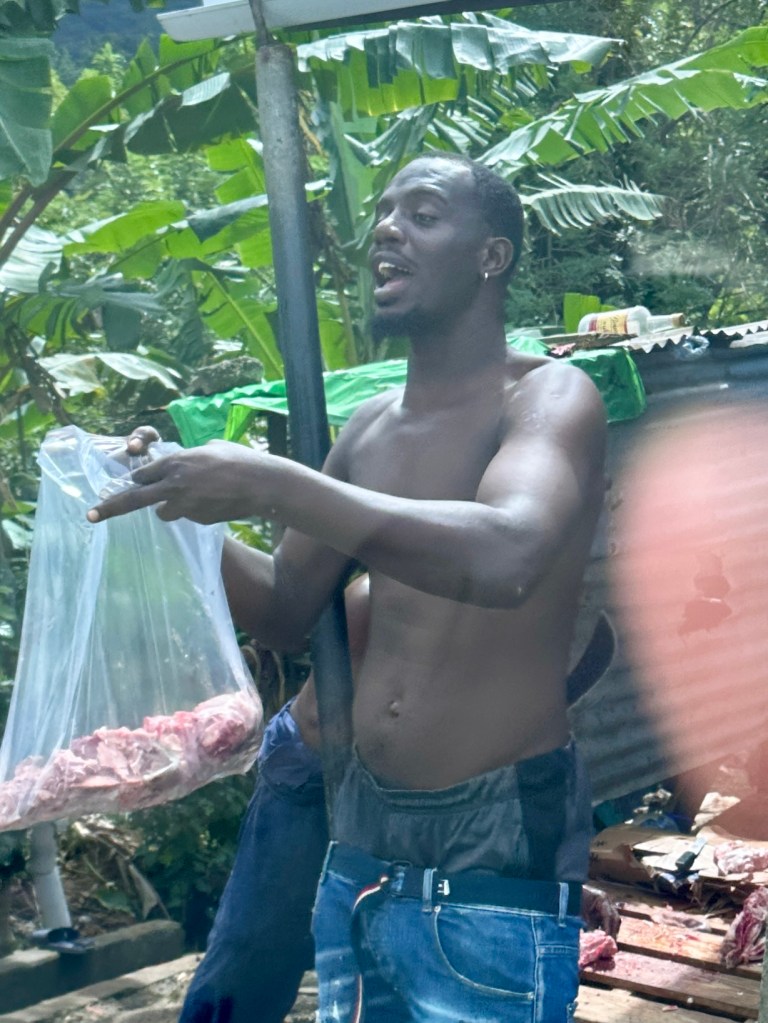
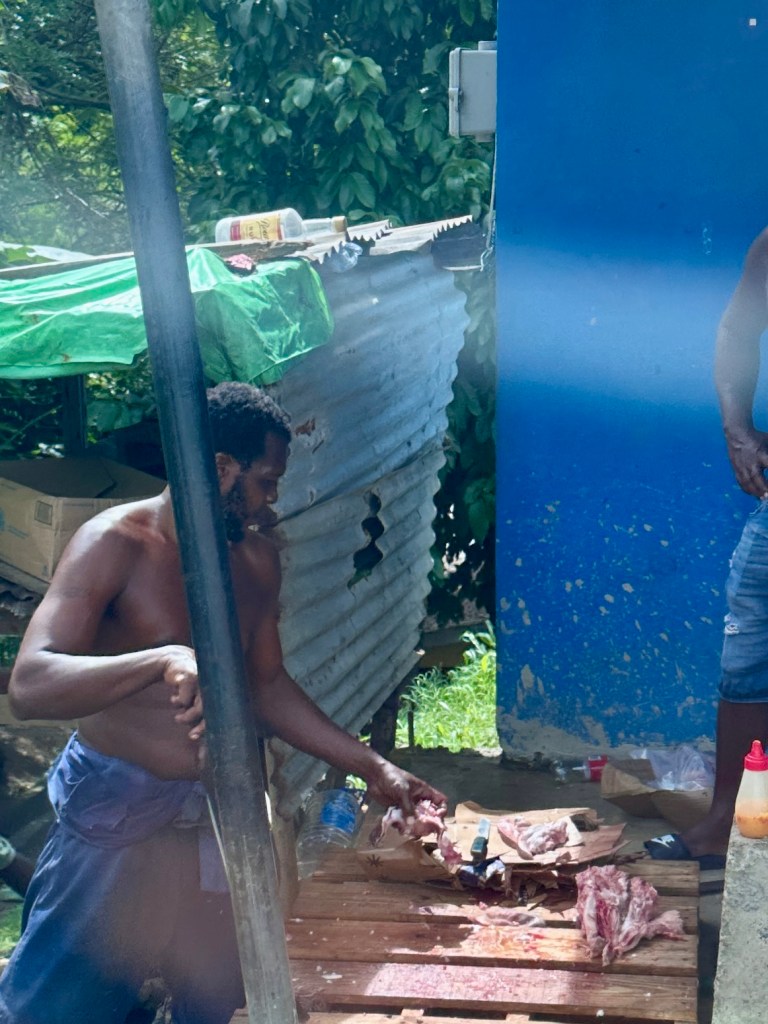
The photos above show a couple of locals butchering an animal that I could not identify. The guy on the left was either joking with the driver or was trying to sell the mystery meat.
Most of the plants and trees we passed along the way are pretty common in the islands – bananas, coconuts, mangos, papayas, avocados, etc. And all these plants too are found in the Philippines.
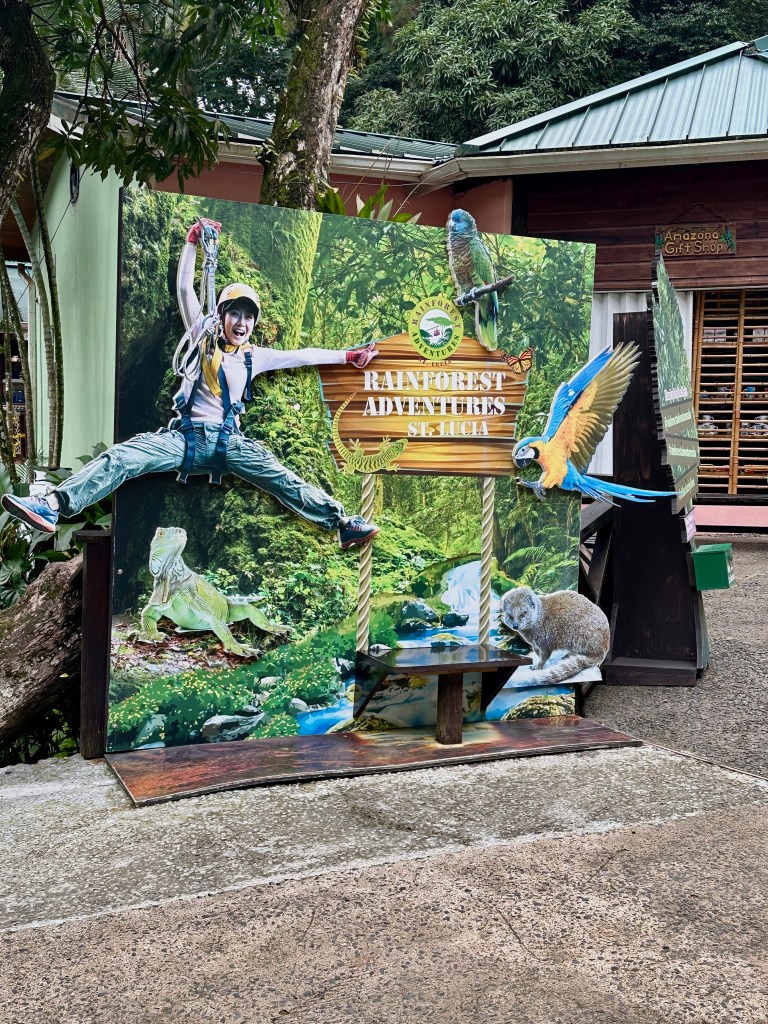

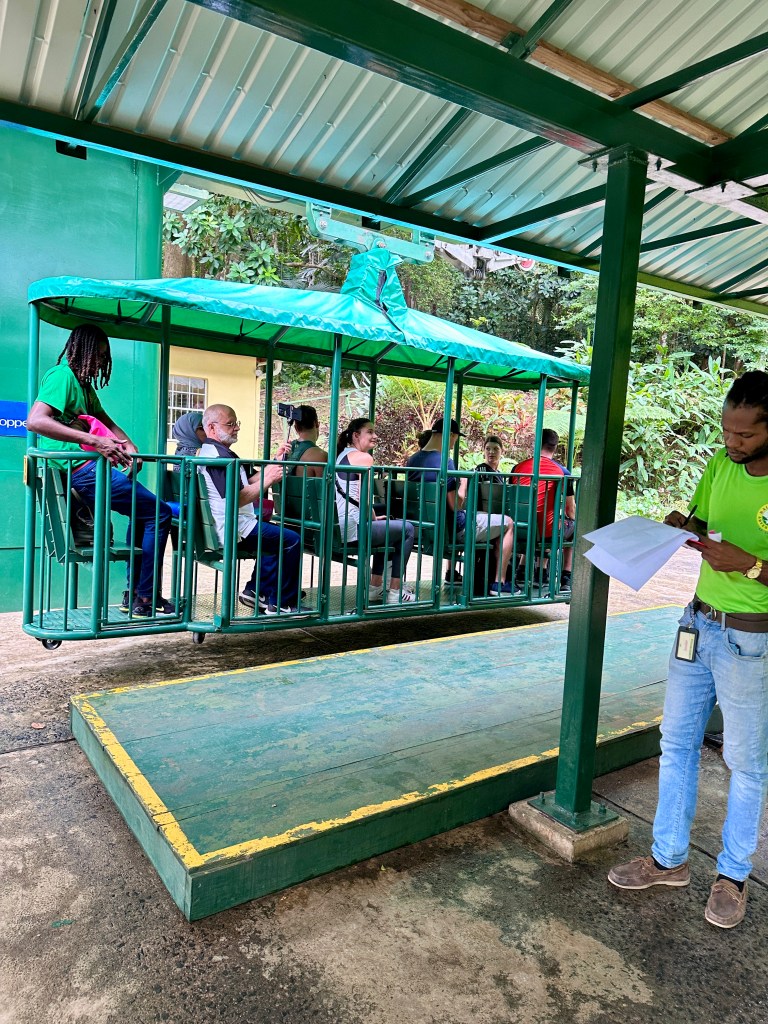
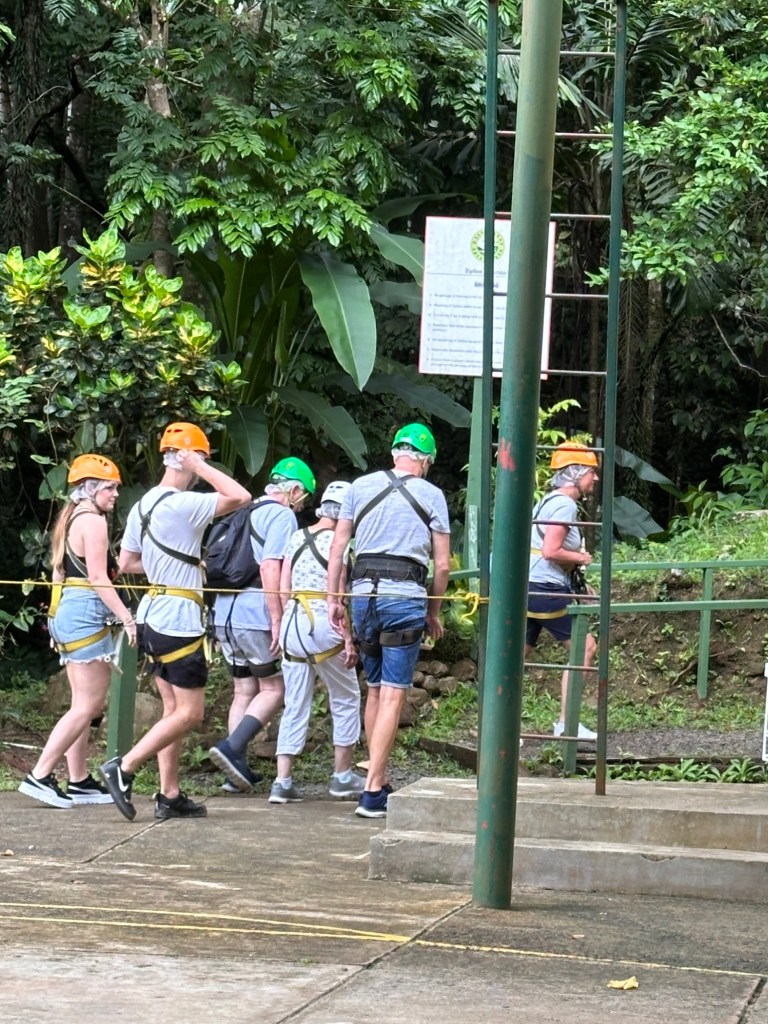
Finally, after those numerous near-misses along hair pin turns, we arrived in our destination to do the Aerial Tram ride.
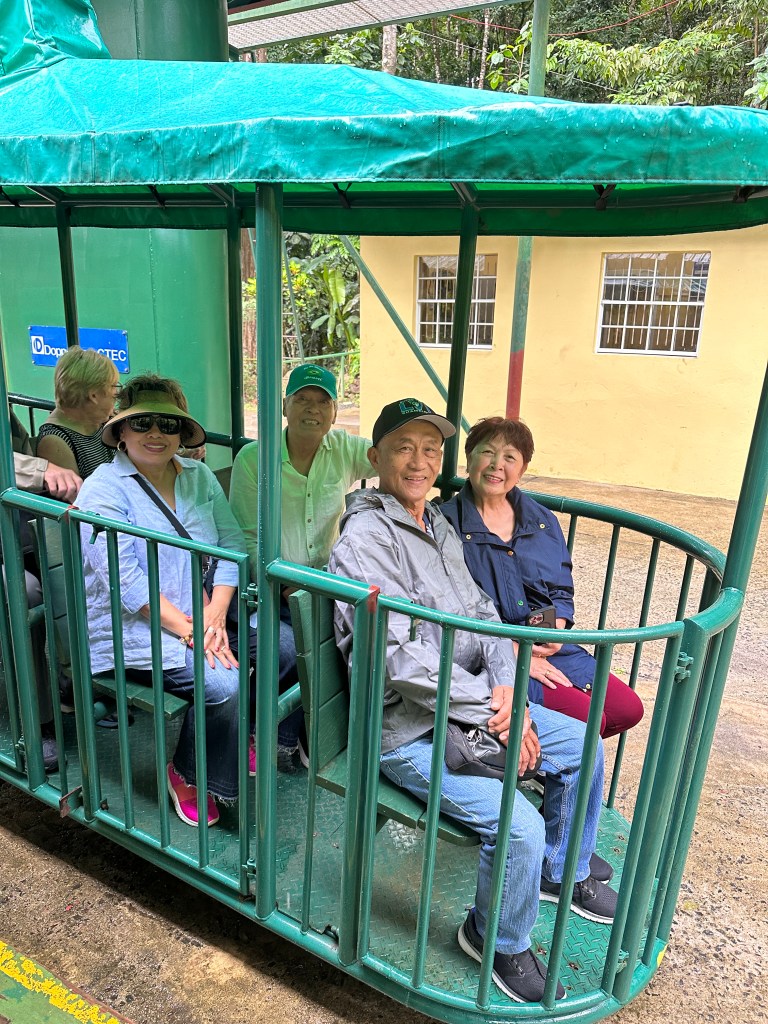
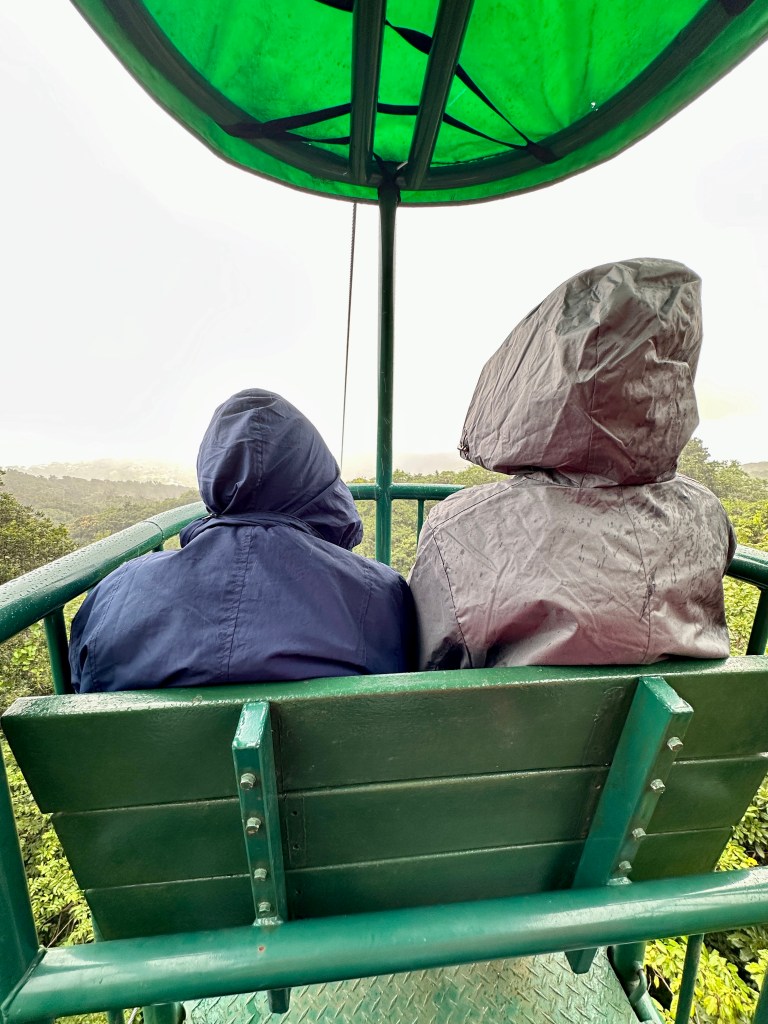
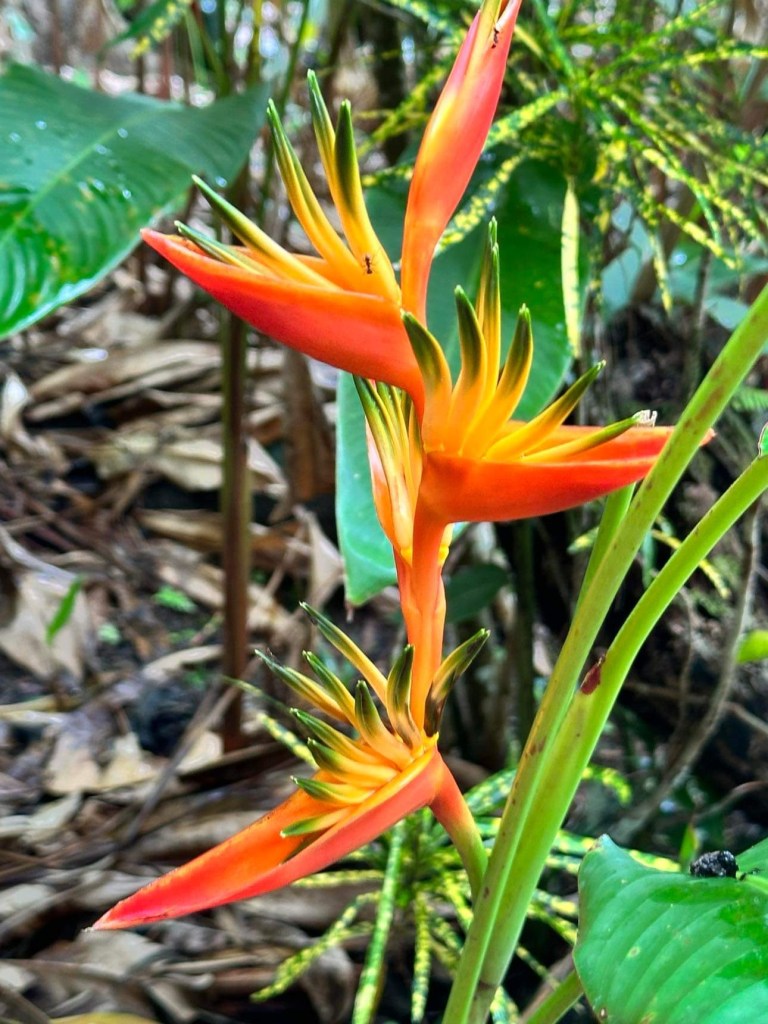
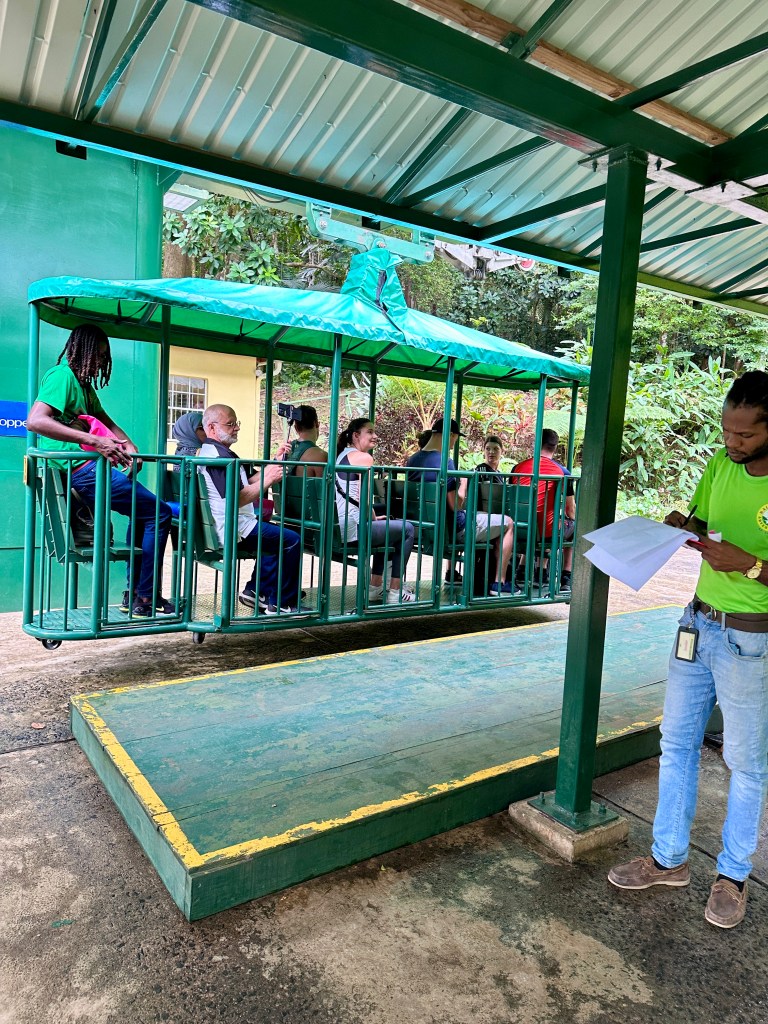
The tram (or gondola as the guide call it) crept up through the rainforest – again, shower, stop, shower, stop which made it a little chilly. We were able to get close to many varieties of tropical plants many I’ve never seen before. Vines and orchid-like flora clinging to the trunk of towering trees. Giant fronds of tropical ferns reaching out to us. Gurgling brooks cascading from a small waterfall – the sound violating the serenity in the damp surroundings. We passed several zip line platforms watching the apprehensive daredevils being harnessed to the cables getting ready for take off! Off they go some shouting “cowabunga” – never heard this for a long time!
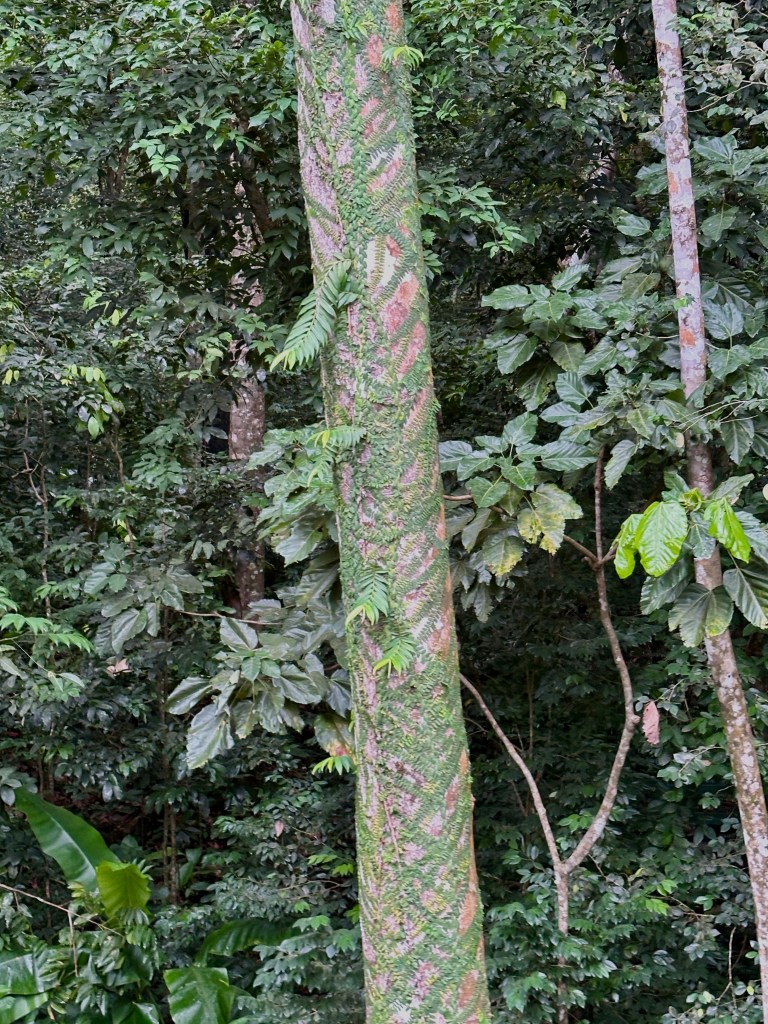
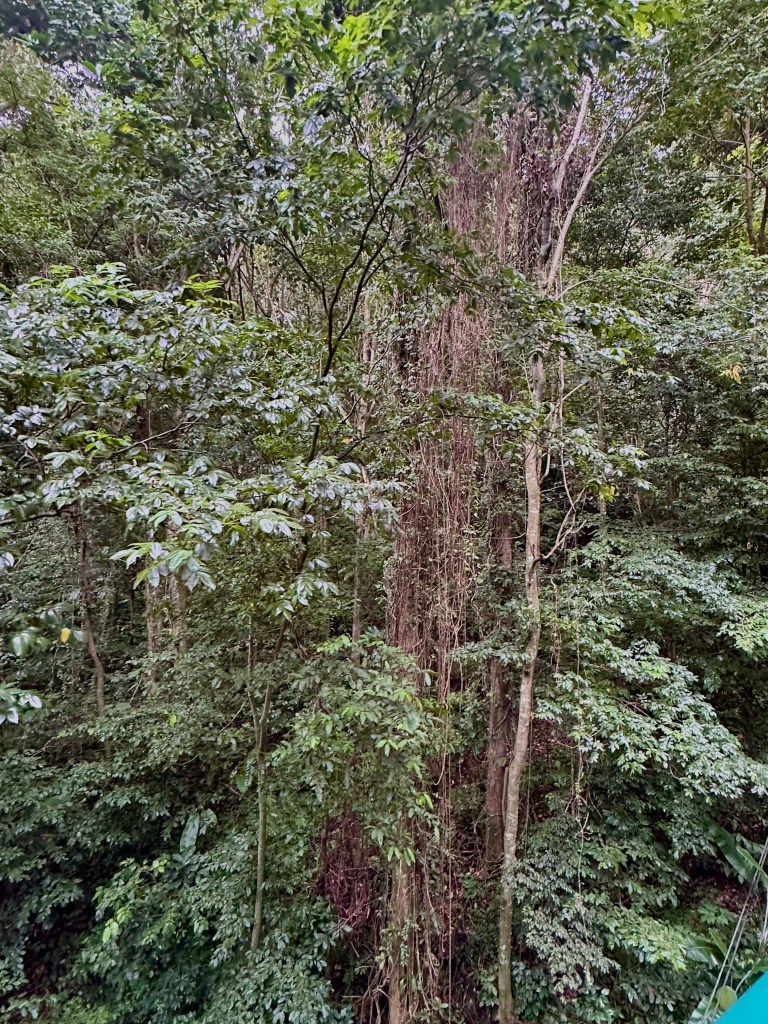

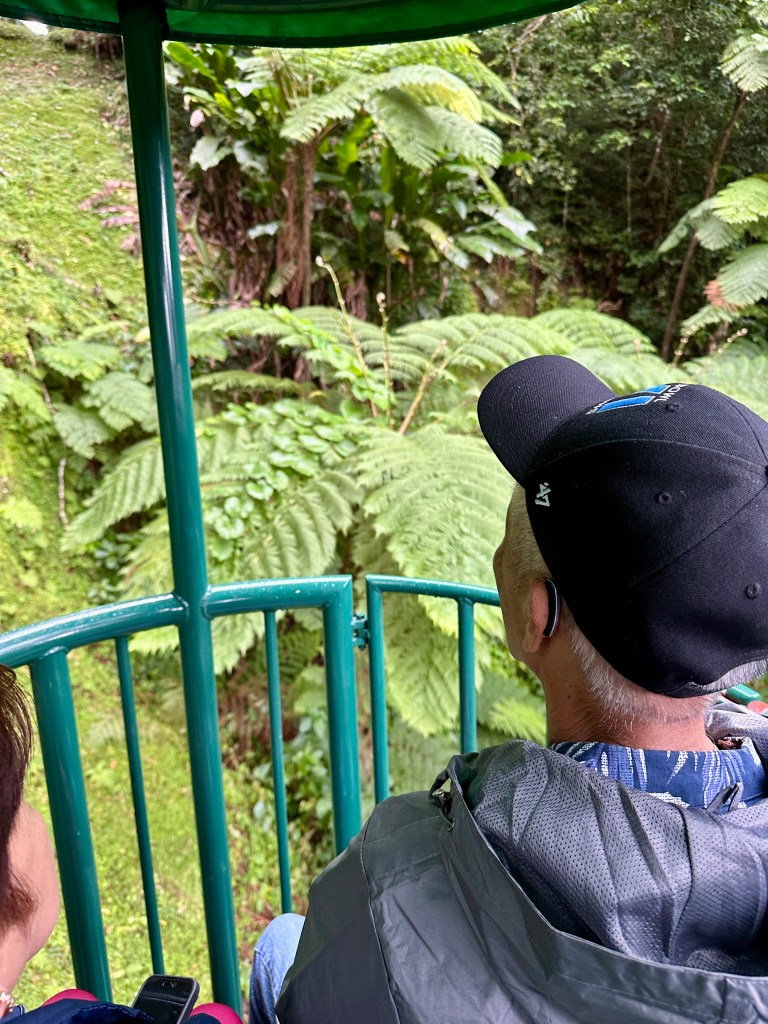
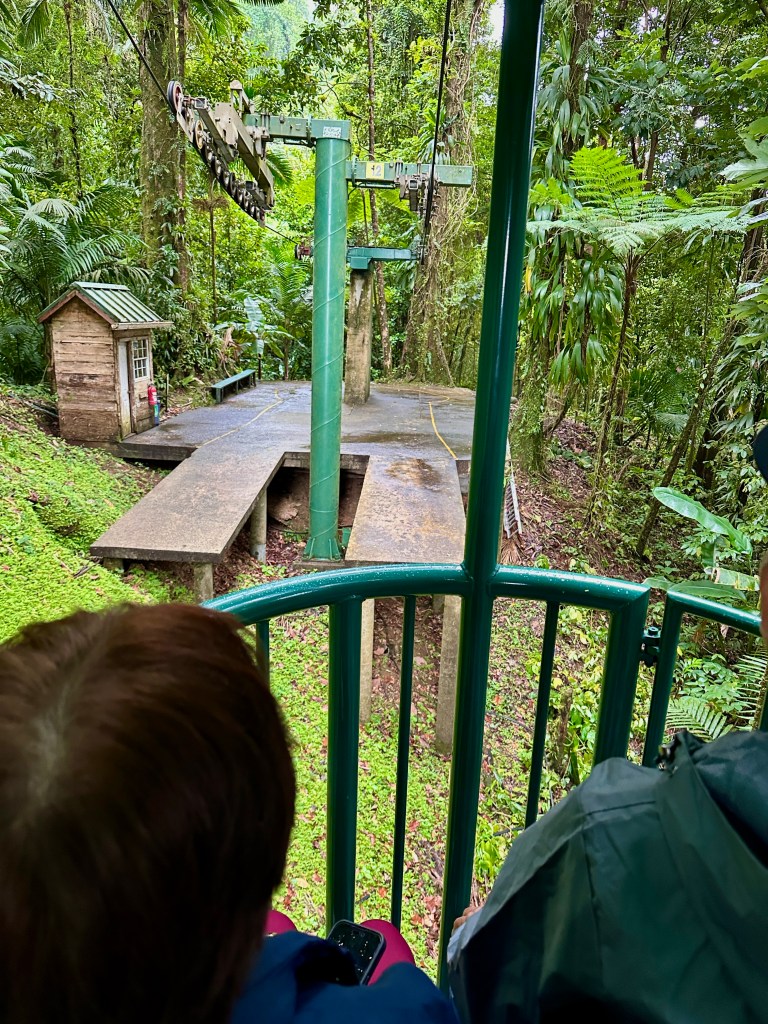
While the tram was in the opening of the forest, the guide pointed out where the Caribbean Sea and the Atlantic Ocean meet, it was cloudy (again) so it was difficult to see anything. Then suddenly the showers started again and the wind’s direction was coming right at us! Oya, Tommy already had their jackets on and I donned mine but Trini did not bring hers so she used the cheap poncho.
The aerial tram ride lasted more than an hour as it was a slow movement and would stop occasionally for us to admire the dense forest. We spotted a couple of colorful hummingbirds hovering near us but we were disappointed not to see any parrots.

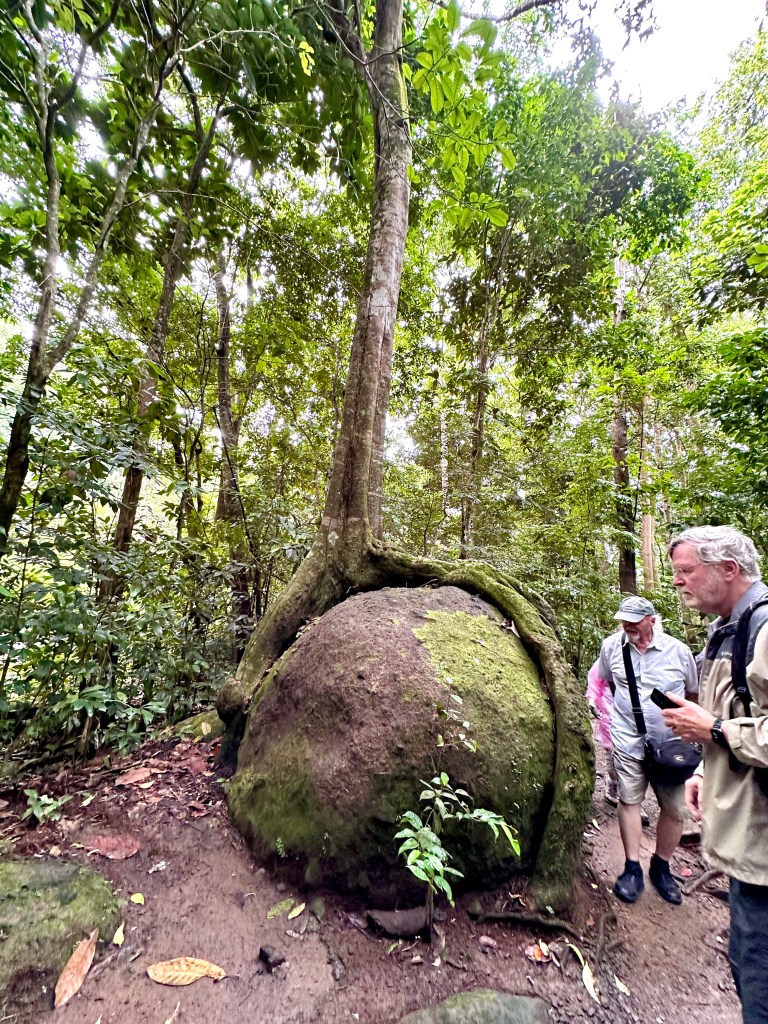

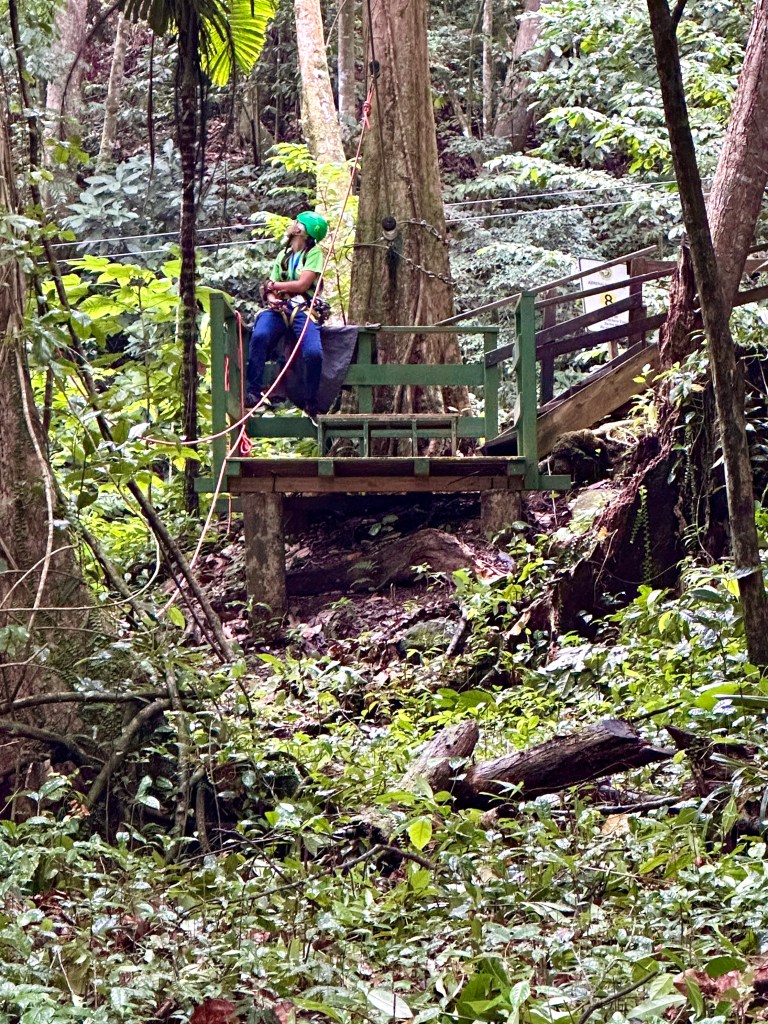

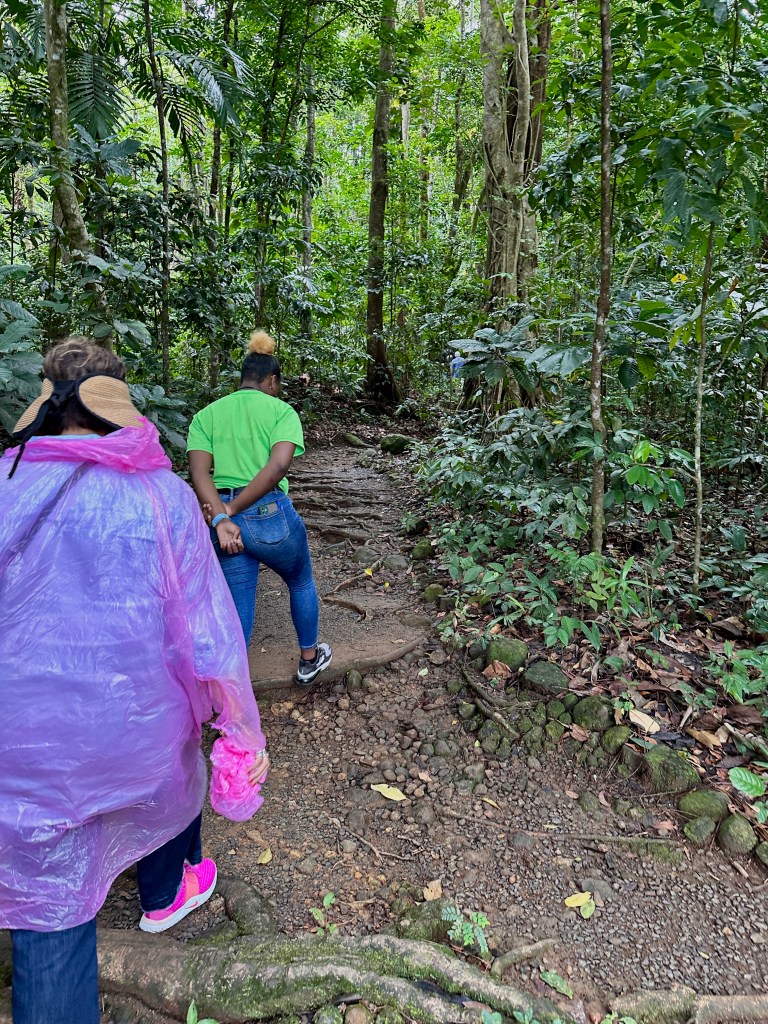
When we looped back to where we started we went to a short nature hike where we learned interesting facts about some of the plants. It was a treacherous walk since the ground was wet and slippery and the overgrown roots cutting through our paths. But we made it back unscathed.


 The Senior Travelers' Blog Site